Euchaetes perlevis
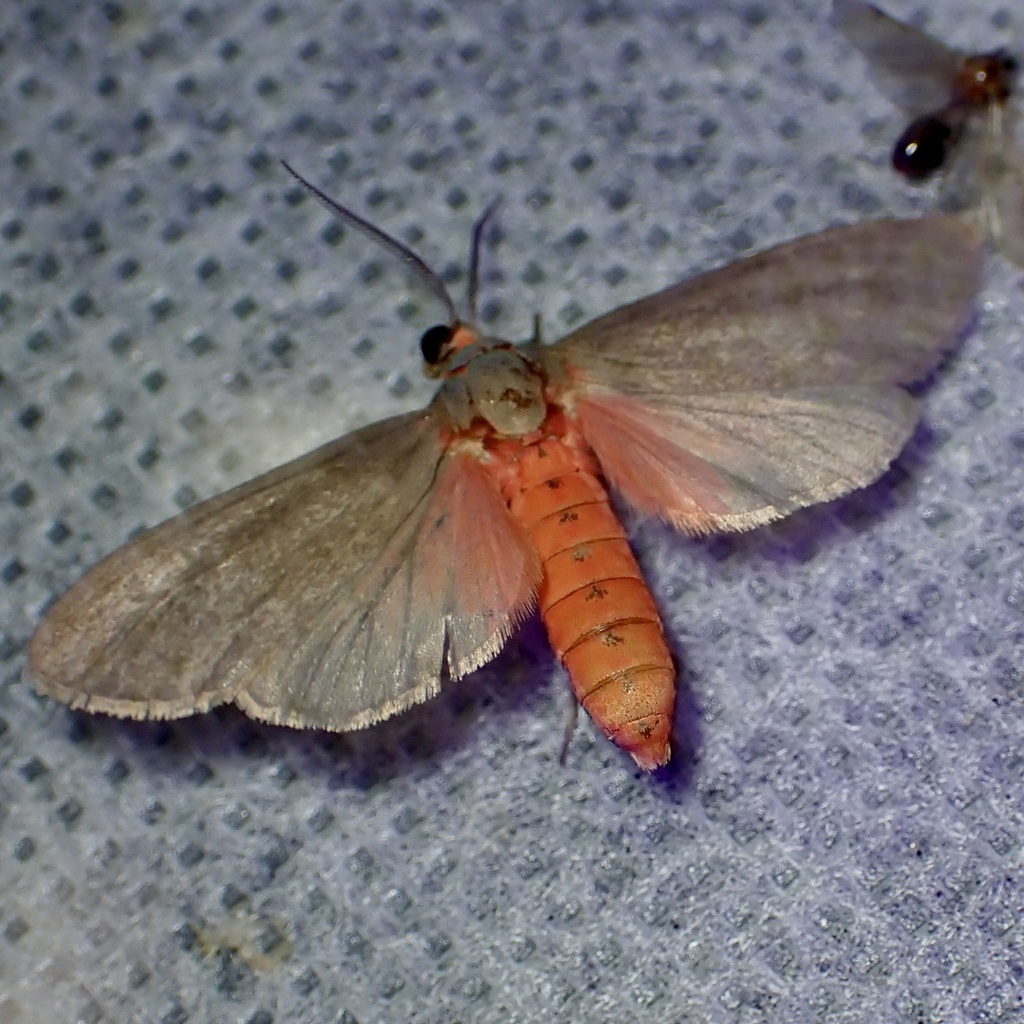
(c) Sue Carnahan, some rights reserved (CC BY) · licence
Family: Erebidae · Class: Insecta · Order: Lepidoptera
Euchaetes perlevis is a California animal in the Erebidae family.
Euchaetes perlevis is a moth species in the family Erebidae, subfamily Arctiinae. This species belongs to the genus Euchaetes, commonly known as tiger moths, which are characterized by their distinctive wing patterns and nocturnal habits. Adult moths typically display cryptic coloration patterns that vary among individuals, with forewings showing muted tones that provide camouflage against natural substrates. The historical and current distribution of Euchaetes perlevis in California remains poorly documented in available databases. Like other members of the genus Euchaetes, this species likely occupies specific habitat niches that support its host plant requirements and life cycle needs. The genus is generally associated with areas where suitable larval food sources are present. Habitat preferences for Euchaetes perlevis are not well-documented in current literature. Members of the genus Euchaetes typically inhabit areas with diverse plant communities that support their larval development. Tiger moths in this genus often require specific microhabitat conditions for successful reproduction, including appropriate moisture levels and protection from extreme weather conditions. The species may occupy elevations ranging from coastal areas to montane environments, depending on the distribution of suitable host plants. The ecology and behavior of Euchaetes perlevis follows typical patterns observed in related tiger moth species. Adults are nocturnal and likely attracted to light sources during their active periods. Mating typically occurs during specific seasonal windows when environmental conditions are optimal. Females deposit eggs on or near host plants where larvae will develop. The larval stage, commonly called woolly bears in this subfamily, feeds on various plant species depending on the specific requirements of each moth species. Larvae typically undergo multiple instars before pupating, with development timing influenced by temperature and photoperiod. Pupation occurs in protective locations, often in leaf litter or soil, where the species overwinters or undergoes diapause depending on seasonal patterns. Adult emergence is timed to coincide with favorable environmental conditions and the availability of nectar sources for adult feeding. The conservation status of Euchaetes perlevis is not well-established, with no current federal or state listing status documented. The species lacks comprehensive population assessments or trend data in available databases. As with many lesser-known moth species, potential threats may include habitat modification, pesticide use, light pollution affecting adult behavior, and climate change impacts on host plant distributions. The limited available information about this species highlights the need for additional taxonomic and ecological research to better understand its distribution, habitat requirements, and conservation needs. Systematic surveys and monitoring programs would be necessary to assess population status and identify specific conservation priorities for Euchaetes perlevis in California.
Classification
Class: Insecta · Order: Lepidoptera · Family: Erebidae
Frequently asked questions
How is Euchaetes perlevis classified?
Euchaetes perlevis belongs to class Insecta, order Lepidoptera, family Erebidae.
What family does Euchaetes perlevis belong to?
Euchaetes perlevis is in the Erebidae family.
What is Euchaetes perlevis?
Euchaetes perlevis is a moth species in the family Erebidae, subfamily Arctiinae.
Is Euchaetes perlevis found in California?
Yes. Euchaetes perlevis is recorded in California in The California Species Project's catalogue.
Related species
Other California species in the same genus, family, or bioregion.
Data from The California Species Project — 14,000+ California species with verified data from CNPS, CDFW, USFWS, and more.