Euchaetes zella
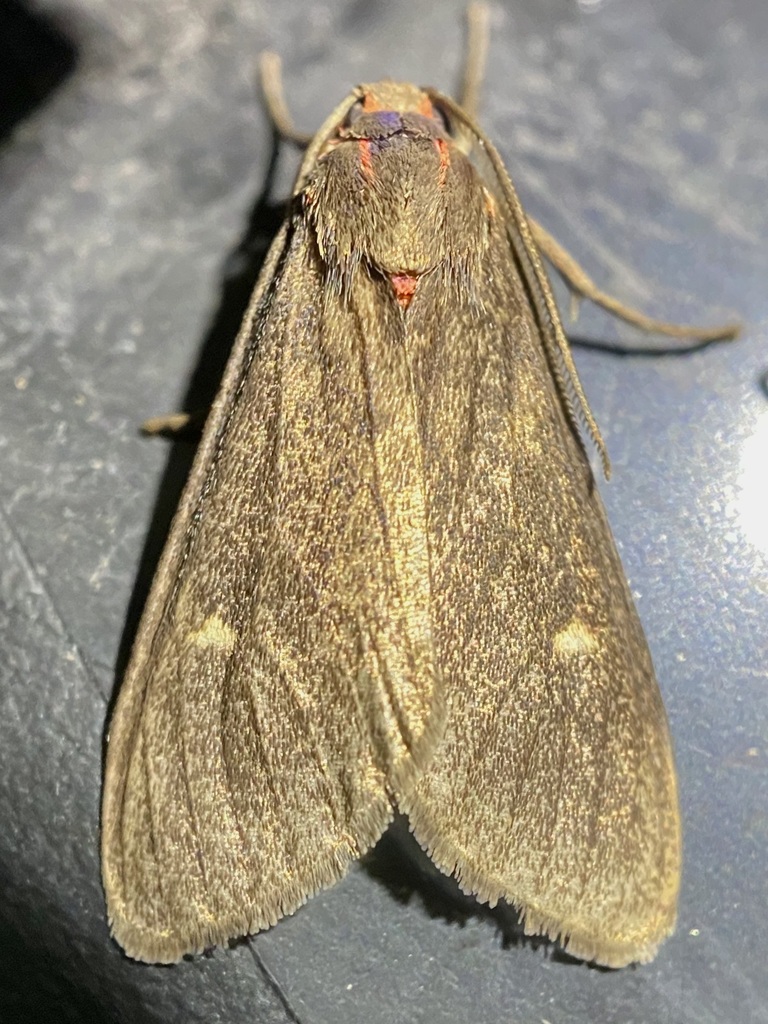
(c) Sue Carnahan, some rights reserved (CC BY) · licence
Family: Erebidae · Class: Insecta · Order: Lepidoptera
Euchaetes zella is a California animal in the Erebidae family.
Euchaetes zella is a moth species in the family Erebidae, subfamily Arctiinae, commonly known as tiger moths. This species belongs to the genus Euchaetes, which contains several North American moths characterized by their distinctive wing patterns and host plant associations with milkweeds and related plants. Adult Euchaetes zella moths display the typical erebid body plan with moderately broad wings and a robust thorax. The forewings are generally pale with dark markings, though specific coloration patterns vary within the species. Like other members of the genus Euchaetes, adults have well-developed antennae and legs adapted for nocturnal activity. Wing span measurements and detailed morphological descriptions require further taxonomic study to establish precise parameters. The geographic distribution of Euchaetes zella includes portions of western North America, with documented occurrences in California. The species' range extends through various elevational zones, though specific altitudinal limits and county-level distributions remain incompletely documented. Historical records suggest the species may have had a broader distribution that has contracted due to habitat modification. Euchaetes zella occupies habitats where appropriate larval host plants occur. Members of the genus Euchaetes typically utilize plants in the family Apocynaceae, particularly milkweeds (Asclepias species), though some species also feed on plants in related families. The larvae are adapted to process the toxic cardiac glycosides present in these host plants, sequestering these compounds for protection against predators. Habitat requirements likely include areas with sufficient host plant density and appropriate microclimatic conditions for larval development. Adult moths are nocturnal and attracted to artificial lights, following typical erebid behavioral patterns. Mating occurs during evening hours, with females subsequently locating suitable host plants for egg deposition. Larvae undergo complete metamorphosis through several instars before pupating, likely in soil or plant litter. The species probably has one generation per year in California, with adult flight periods timed to coincide with host plant availability and favorable environmental conditions. The conservation status of Euchaetes zella remains poorly documented, with no current federal or state listing designations. Population trends and specific threats have not been systematically assessed. Like many specialized herbivorous insects, the species likely faces challenges from habitat loss, host plant decline, and potential impacts from pesticide applications. Climate change may affect the species through altered precipitation patterns and temperature regimes that influence both the moth and its host plants. The lack of comprehensive distributional and ecological data limits effective conservation planning for this species. Further research is needed to establish baseline population data, refine habitat requirements, and assess conservation needs for Euchaetes zella. Standardized monitoring protocols and taxonomic verification of existing specimens would improve understanding of this species' status in California's lepidopteran fauna.
Classification
Class: Insecta · Order: Lepidoptera · Family: Erebidae
Frequently asked questions
How is Euchaetes zella classified?
Euchaetes zella belongs to class Insecta, order Lepidoptera, family Erebidae.
What family does Euchaetes zella belong to?
Euchaetes zella is in the Erebidae family.
What is Euchaetes zella?
Euchaetes zella is a moth species in the family Erebidae, subfamily Arctiinae, commonly known as tiger moths.
Is Euchaetes zella found in California?
Yes. Euchaetes zella is recorded in California in The California Species Project's catalogue.
Related species
Other California species in the same genus, family, or bioregion.
Data from The California Species Project — 14,000+ California species with verified data from CNPS, CDFW, USFWS, and more.