Euchlaena mollisaria
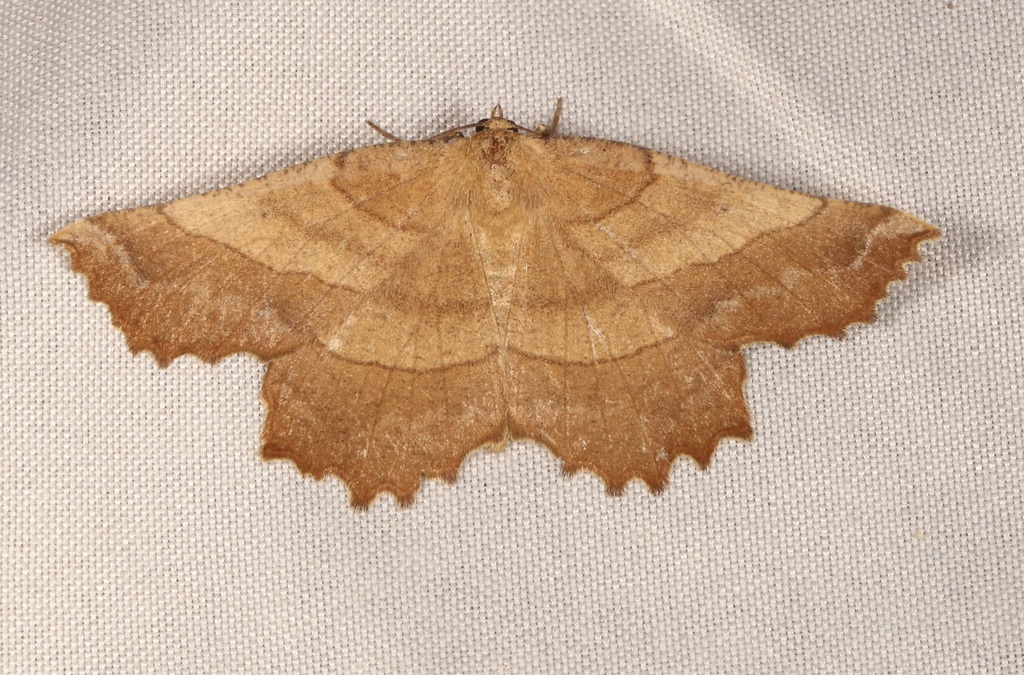
(c) Laura Gaudette, some rights reserved (CC BY) · licence
Family: Geometridae · Class: Insecta · Order: Lepidoptera
Euchlaena mollisaria is a California animal in the Geometridae family.
Euchlaena mollisaria is a species of moth in the family Geometridae, commonly known as geometrid moths or inchworms. This species belongs to a genus of North American geometrids that are part of the diverse lepidopteran fauna of western North America. Physical characteristics of E. mollisaria have not been extensively documented in the scientific literature. Like other members of the genus Euchlaena, this species likely exhibits the typical geometrid moth body plan with relatively broad wings and slender antennae. Adult wing span and specific coloration patterns require further documentation through systematic study. The range of E. mollisaria extends across western North America, where it has been recorded from southern California north to British Columbia and east to Colorado and Montana (iNaturalist). Within California, the species' specific distribution and county-level occurrences have not been comprehensively mapped, though it appears to be part of the state's diverse geometrid fauna that occupies various habitat types across different elevational zones. Habitat requirements for E. mollisaria remain poorly documented in the scientific literature. Many geometrid moths are associated with specific host plants during their larval stage, but the larval host plants for this species have not been definitively identified or published in accessible sources. The broad geographic range suggests potential adaptation to multiple habitat types, possibly including forest, woodland, and shrubland communities that characterize the western North American landscape. The life history and ecological behavior of E. mollisaria require further scientific investigation. Like other Geometridae, this species likely undergoes complete metamorphosis with egg, larval, pupal, and adult stages. Adult flight periods, mating behaviors, and larval feeding ecology have not been well documented in the literature. Many geometrid moths are nocturnal and attracted to artificial lights, suggesting similar behavior patterns may occur in this species. Conservation status information is not available for E. mollisaria. The species does not appear on federal or state listing databases, suggesting it may not face immediate conservation concerns. However, the lack of comprehensive biological and ecological data makes it difficult to assess population trends or potential threats. Many western North American moths face challenges from habitat loss, climate change, and light pollution, though specific impacts on this species have not been studied. Scientific documentation for this species remains limited. The information presented here is based on available sources including iNaturalist observations and taxonomic databases. The species was originally described by Hulst in 1886, but detailed biological studies appear lacking in the modern literature. Systematic surveys and life history studies would contribute significantly to understanding this species' role in western North American ecosystems and its conservation needs.
Classification
Class: Insecta · Order: Lepidoptera · Family: Geometridae
Frequently asked questions
How is Euchlaena mollisaria classified?
Euchlaena mollisaria belongs to class Insecta, order Lepidoptera, family Geometridae.
What family does Euchlaena mollisaria belong to?
Euchlaena mollisaria is in the Geometridae family.
What is Euchlaena mollisaria?
Euchlaena mollisaria is a species of moth in the family Geometridae, commonly known as geometrid moths or inchworms.
Is Euchlaena mollisaria found in California?
Yes. Euchlaena mollisaria is recorded in California in The California Species Project's catalogue.
Related species
Other California species in the same genus, family, or bioregion.
Data from The California Species Project — 14,000+ California species with verified data from CNPS, CDFW, USFWS, and more.