Euchloe ausonides insulanus
Island marble Butterfly
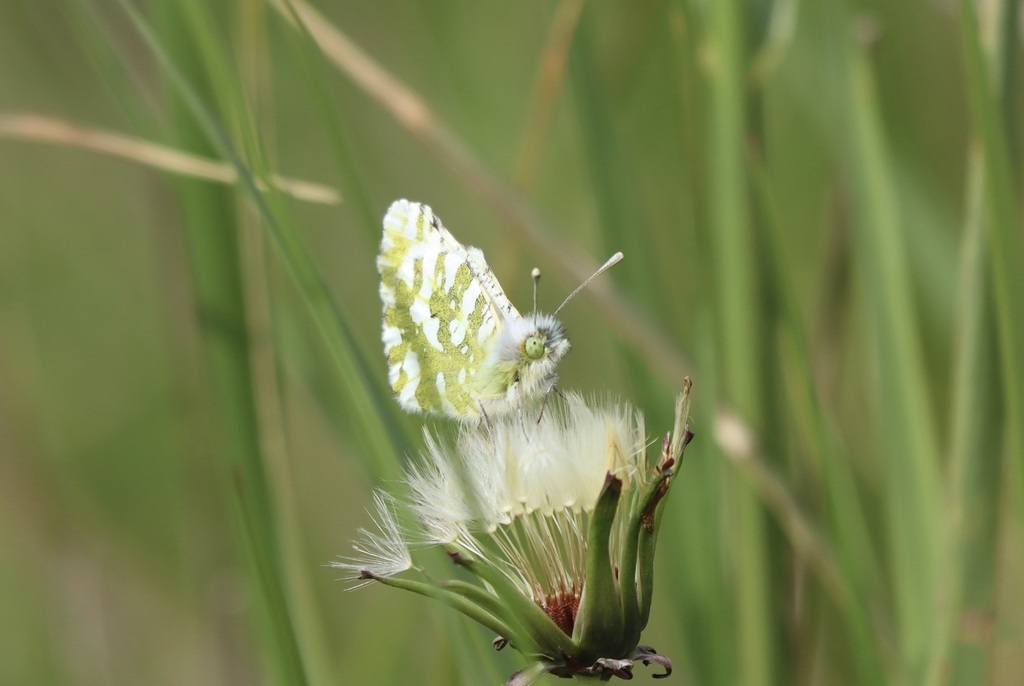
no rights reserved · CC0
Family: Pieridae · Class: Insecta · Order: Lepidoptera
Conservation status: Endangered
Euchloe ausonides insulanus (Island marble Butterfly) is a California animal in the Pieridae family.
The Island marble butterfly is a small subspecies of the large marble butterfly (Euchloe ausonides) endemic to the San Juan Islands of Washington State. Adults have a wingspan of 32-38 mm (1.3-1.5 inches) and are characterized by complex green marbling with white spots across the hindwing undersides (USFWS 2020). As a member of the Pieridae family, commonly called the white family of butterflies, the Island marble displays the typical white and yellow coloration of this group. The subspecies is distinguished from the nominate large marble butterfly by specific physical and behavioral differences that warranted its taxonomic recognition. Historically, the Island marble butterfly occurred in both Washington's San Juan Islands and southern Vancouver Island in British Columbia, Canada. However, the subspecies now appears to be extirpated from its Canadian range and is restricted to San Juan Island, Washington. This represents a dramatic range reduction from its historical distribution across the Salish Sea region. The species inhabits grasslands, open meadows, and areas with native mustard family plants that serve as larval host plants. Preferred microhabitats include streamsides, berms, and weedy flats where both adult nectar sources and caterpillar food plants are available. The butterfly requires open, sunny locations that support populations of its cruciferous host plants. Like other Euchloe species, the Island marble typically overwinters as a pupa, emerging as an adult during spring and early summer flight periods. Adults are active fliers that visit flowers for nectar, while females seek appropriate host plants in the mustard family (Brassicaceae) for egg-laying. Caterpillars feed exclusively on various cruciferous plants, making them dependent on the presence and abundance of these native species. The subspecies appears to have specific habitat requirements that differ from the more widespread large marble butterfly populations. The U.S. Fish and Wildlife Service listed the Island marble butterfly as endangered under the Endangered Species Act on May 5, 2020 (USFWS 2020). The subspecies was rediscovered in 1998 during biological surveys on San Juan Island after being considered extinct for decades (USFWS 2020). Current population estimates suggest fewer than 300 individuals may remain, making this one of the most critically imperiled butterflies in North America (USFWS 2020). Primary threats include habitat loss and degradation, invasive plant species that displace native host plants, potential pesticide exposure, and the species' extremely limited range making it vulnerable to catastrophic events. Climate change poses additional risks through altered precipitation patterns and temperature increases that could affect both the butterfly and its host plants. The subspecies received critical habitat designation covering approximately 812 acres in 2018 (USFWS 2018). Recovery efforts focus on habitat restoration, invasive species control, and population monitoring to prevent extinction of this unique Pacific Northwest endemic.
Classification
Class: Insecta · Order: Lepidoptera · Family: Pieridae
Conservation status
Endangered
Frequently asked questions
How is Euchloe ausonides insulanus classified?
Euchloe ausonides insulanus belongs to class Insecta, order Lepidoptera, family Pieridae.
What family does Euchloe ausonides insulanus belong to?
Euchloe ausonides insulanus is in the Pieridae family.
Is Euchloe ausonides insulanus protected or of conservation concern?
Euchloe ausonides insulanus carries the following status: Endangered.
What is Euchloe ausonides insulanus?
The Island marble butterfly is a small subspecies of the large marble butterfly (Euchloe ausonides) endemic to the San Juan Islands of Washington State.
Is Euchloe ausonides insulanus found in California?
Yes. Euchloe ausonides insulanus is recorded in California in The California Species Project's catalogue.
Related species
Other California species in the same genus, family, or bioregion.
Data from The California Species Project — 14,000+ California species with verified data from CNPS, CDFW, USFWS, and more.