Euchloe hyantis
California Marble
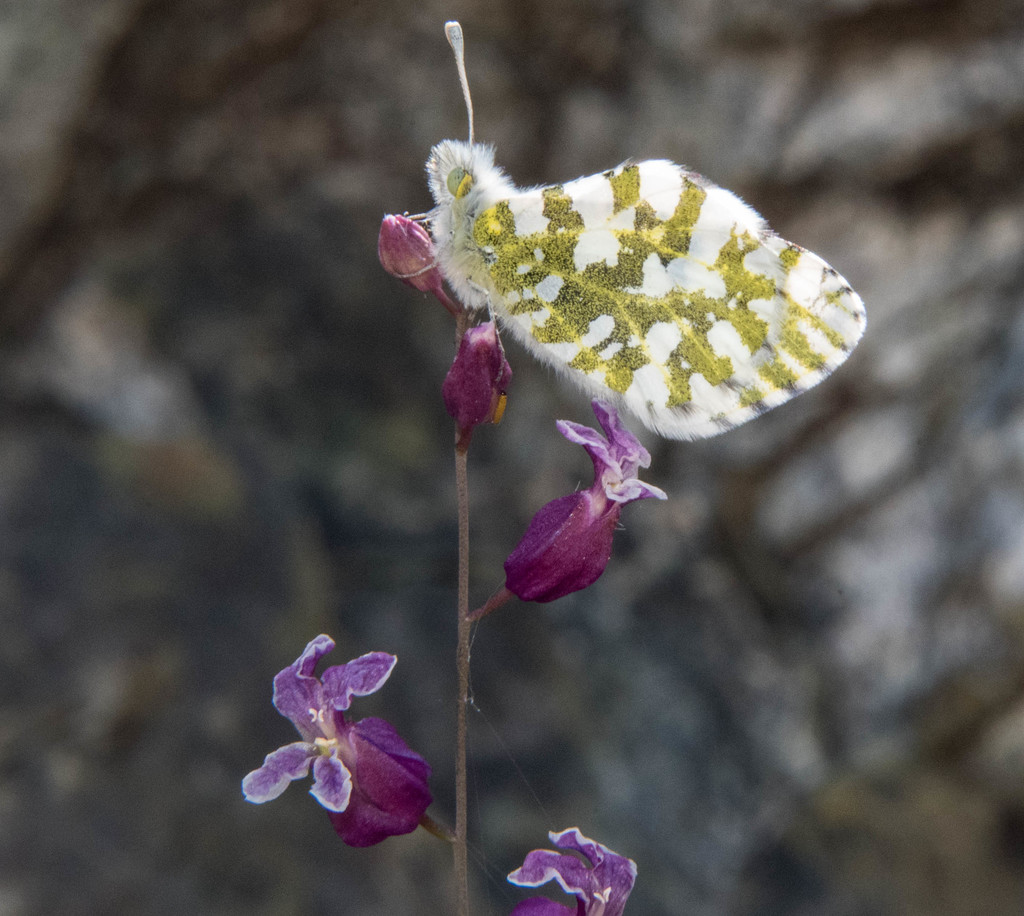
(c) Don Loarie, some rights reserved (CC BY) · licence
Family: Pieridae · Class: Insecta · Order: Lepidoptera
Euchloe hyantis (California Marble) is a California animal in the Pieridae family.
The California marble (Euchloe hyantis) is a small to medium-sized butterfly in the white and sulphur family Pieridae. Adults have a wingspan of 35-50 mm (1.4-2.0 inches). The dorsal wing surfaces are white with distinctive dark markings along the wing margins and apex of the forewings. Males typically display brighter white coloration than females. The ventral hindwings exhibit the species' most characteristic feature: intricate green marbling patterns created by scales that create a mottled appearance resembling veined marble, which gives the species its common name. The ventral forewings are white with yellow-green mottling near the apex. The California marble ranges from southern Oregon south through California west of the Sierra Nevada crest to northern Baja California. Within California, populations occur in the Coast Ranges, Central Valley foothills, and Transverse and Peninsular Ranges. The species is typically found at elevations from near sea level to approximately 2,000 meters (6,600 feet), though most populations occur below 1,500 meters (4,900 feet). This butterfly inhabits chaparral, oak woodlands, coastal scrub, and grassland areas where its host plants are present. The species shows a strong association with rocky outcrops, canyon walls, and steep hillsides where jewel-flower species thrive. These areas often have sparse vegetation cover and well-drained soils. Adults are most commonly observed on south-facing slopes and in areas with morning sun exposure. California marble larvae feed exclusively on plants in the mustard family (Brassicaceae), with a particular preference for jewel-flower (Streptanthus) species. Females lay single eggs on flower buds or young seed pods of host plants. The species is univoltine, producing one generation per year. Adults typically fly from March through June, with peak flight periods varying by elevation and local climate conditions. Males patrol territories near host plant colonies and engage in rapid, erratic flight patterns while searching for females. After mating, females deposit eggs individually on host plants, and larvae develop through five instars before pupating. The species overwinters in the pupal stage. The California marble is not federally or state listed, and specific population trend data are limited. However, like many butterflies dependent on specialized host plants, the species may face localized threats from habitat loss due to urban development, altered fire regimes, and invasive plant species. Coastal populations may be particularly vulnerable to development pressure. The species' association with rocky, steep terrain provides some protection from direct habitat conversion, but changes in plant community composition could affect host plant availability. Climate change may alter the distribution of suitable habitat, particularly at lower elevations where increased temperatures and altered precipitation patterns could stress both the butterfly and its host plants.
Classification
Class: Insecta · Order: Lepidoptera · Family: Pieridae
Frequently asked questions
How is Euchloe hyantis classified?
Euchloe hyantis belongs to class Insecta, order Lepidoptera, family Pieridae.
What family does Euchloe hyantis belong to?
Euchloe hyantis is in the Pieridae family.
What is Euchloe hyantis?
The California marble (Euchloe hyantis) is a small to medium-sized butterfly in the white and sulphur family Pieridae.
Is Euchloe hyantis found in California?
Yes. Euchloe hyantis is recorded in California in The California Species Project's catalogue.
Related species
Other California species in the same genus, family, or bioregion.
Data from The California Species Project — 14,000+ California species with verified data from CNPS, CDFW, USFWS, and more.