Euclidia ardita
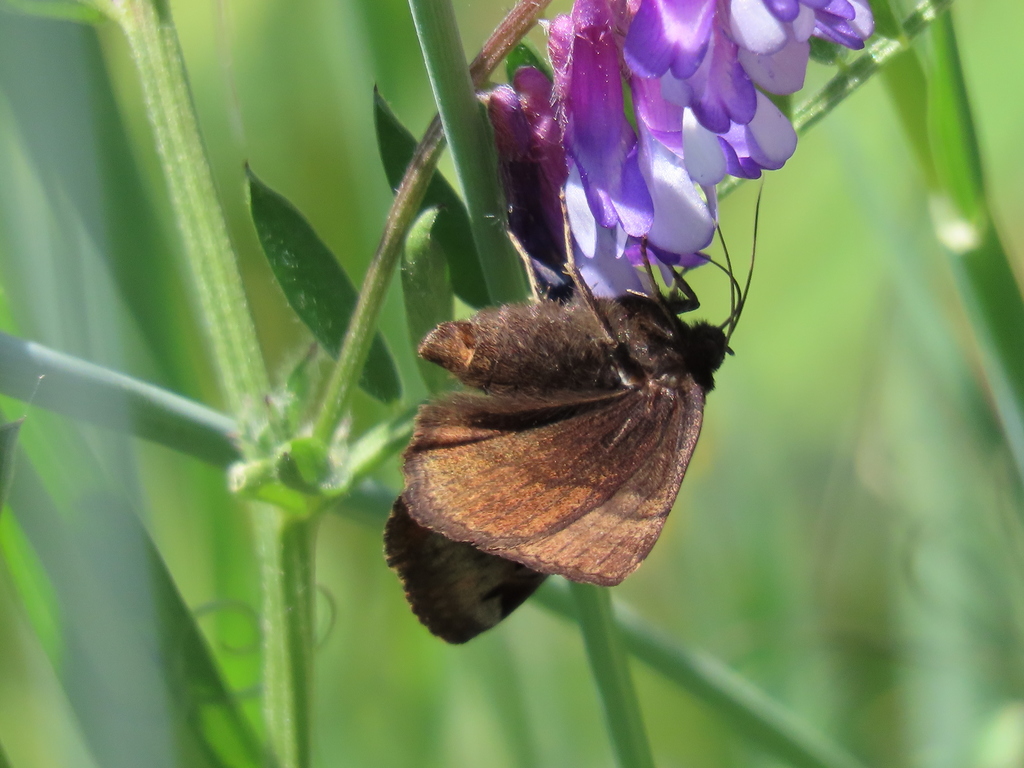
(c) John Hibbard, some rights reserved (CC BY) · licence
Family: Erebidae · Class: Insecta · Order: Lepidoptera
Euclidia ardita is a California animal in the Erebidae family.
Euclidia ardita is a moth in the family Erebidae, subfamily Euclidiinae. This species belongs to a group commonly known as herald moths or geometric moths, characterized by their triangular forewings and distinctive wing patterns. Adult moths typically measure 25 to 35 mm in wingspan, with forewings displaying a mottled brown and gray coloration that provides effective camouflage against tree bark and lichen-covered surfaces. The hindwings are lighter, often pale gray to whitish with darker marginal markings. The range of Euclidia ardita in North America extends across western regions, with documented populations in California, Oregon, Washington, and portions of the Rocky Mountain states. Within California, the species occurs primarily in montane and subalpine zones, typically at elevations between 1,500 and 3,000 meters. Populations have been recorded in the Sierra Nevada, Cascade Range, and higher elevations of the Coast Ranges. This species inhabits coniferous and mixed coniferous-deciduous forests, showing a preference for areas with Douglas fir, white fir, and pine species. Adults are commonly found in forest openings, clearings, and edges where flowering plants provide nectar sources. The species appears to favor cooler, moister microhabitats typical of higher elevation forest ecosystems. Euclidia ardita exhibits typical erebid moth behavior patterns, with adults active primarily during evening and nighttime hours. Flight period extends from late spring through early fall, with peak activity occurring in mid-summer months. Adults are attracted to artificial lights and sugar baits. Larvae feed on various herbaceous plants, though specific host plant preferences require further documentation. The species likely completes one generation per year in most of its range, overwintering in the pupal stage. Currently, Euclidia ardita does not appear on federal or California state lists of threatened or endangered species. Population trends and conservation status remain poorly documented, reflecting the limited research attention given to many non-game invertebrate species. The species may face habitat pressure from forest management practices, climate change effects on montane ecosystems, and development at lower elevations within its range. Fire management and logging activities could impact local populations, particularly where these activities alter forest structure and understory plant communities that support larval development. Like many forest-dwelling moth species, Euclidia ardita likely plays important ecological roles as both pollinator and prey species within montane forest food webs. Adults contribute to nocturnal pollination networks, while larvae and adults serve as food sources for insectivorous birds, bats, and other predators. Further research is needed to document population trends, habitat requirements, and potential conservation concerns for this species.
Classification
Class: Insecta · Order: Lepidoptera · Family: Erebidae
Frequently asked questions
How is Euclidia ardita classified?
Euclidia ardita belongs to class Insecta, order Lepidoptera, family Erebidae.
What family does Euclidia ardita belong to?
Euclidia ardita is in the Erebidae family.
What is Euclidia ardita?
Euclidia ardita is a moth in the family Erebidae, subfamily Euclidiinae.
Is Euclidia ardita found in California?
Yes. Euclidia ardita is recorded in California in The California Species Project's catalogue.
Related species
Other California species in the same genus, family, or bioregion.
Data from The California Species Project — 14,000+ California species with verified data from CNPS, CDFW, USFWS, and more.