Eucosma atomosana
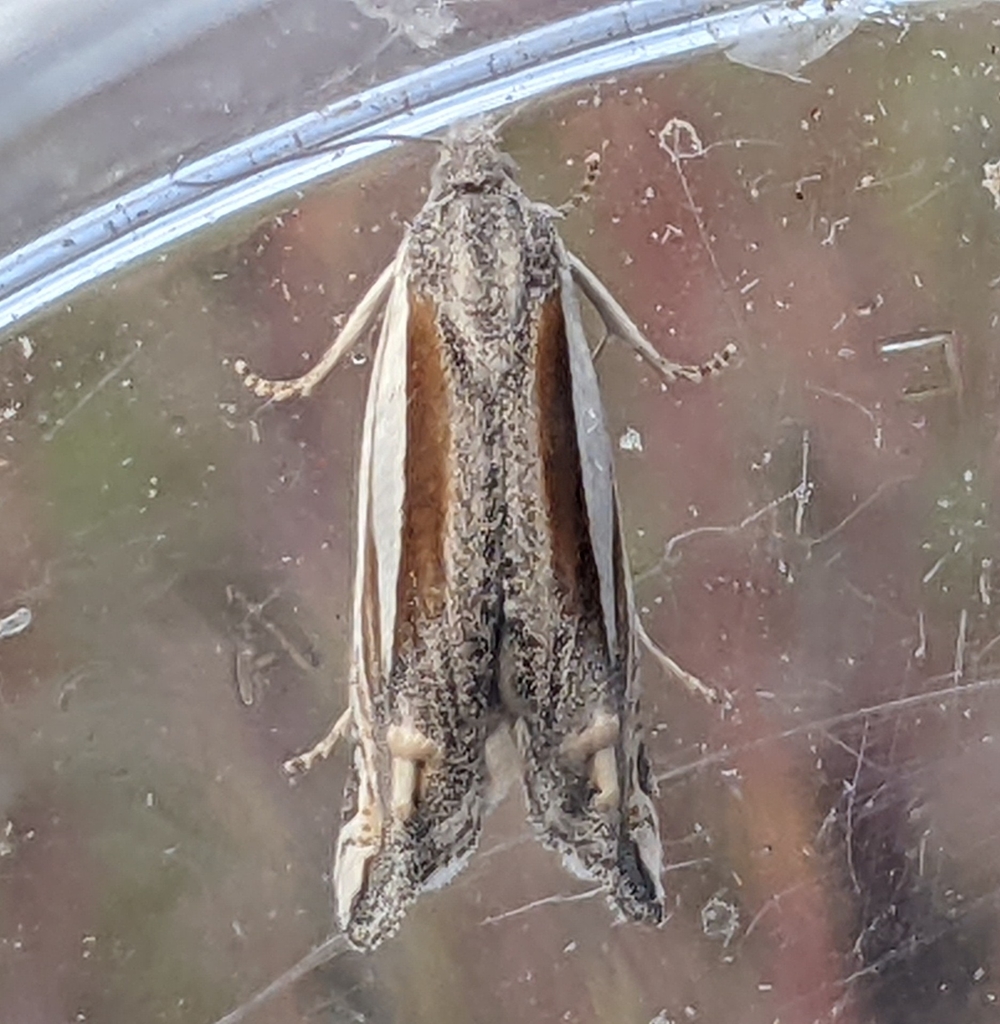
no rights reserved · CC0
Family: Tortricidae · Class: Insecta · Order: Lepidoptera
Eucosma atomosana is a California animal in the Tortricidae family.
Eucosma atomosana is a small moth species in the family Tortricidae, commonly known as tortrix moths or leafroller moths. This species belongs to the genus Eucosma, which comprises several hundred species of microlepidoptera distributed primarily across the Northern Hemisphere. Adult moths typically measure 8-12 mm in wingspan, characteristic of the genus. The forewings display a mottled pattern of brown, gray, and cream coloration with distinctive metallic scaling that creates a subtle iridescent appearance under certain lighting conditions. The hindwings are typically pale gray to whitish with reduced patterning compared to the forewings. The range and distribution of Eucosma atomosana remain poorly documented in the scientific literature. Limited collection records suggest the species occurs in western North America, though specific geographic boundaries have not been comprehensively established. The species appears to be associated with montane or submontane environments, based on collection localities of related Eucosma species in the region. Habitat preferences for Eucosma atomosana are not well-documented, though members of the genus Eucosma typically inhabit areas with diverse herbaceous vegetation. Many Eucosma species are associated with woodland edges, meadows, and riparian corridors where their host plants occur. Elevation ranges and specific microhabitat requirements for this species remain unknown, representing significant gaps in current knowledge. The life history and ecological behavior of Eucosma atomosana have not been thoroughly studied. Tortricidae larvae are typically leaf-feeders or stem-borers, creating characteristic feeding damage on their host plants. The larval stage likely overwinters, with adults emerging during spring or early summer months, following patterns observed in related species. Flight periods, mating behavior, and reproductive ecology require further investigation. Host plant associations, if any, have not been identified for this species, though many Eucosma species utilize herbaceous plants in families such as Asteraceae, Rosaceae, or Apiaceae. The conservation status of Eucosma atomosana has not been formally assessed by state or federal agencies. The species lacks federal or state listing status, and no population monitoring programs are currently in place. Limited collection records and taxonomic uncertainty surrounding this species make it difficult to evaluate population trends or conservation needs. The apparent rarity of museum specimens may reflect either genuine rarity in nature, limited collecting effort in appropriate habitats, or taxonomic confusion with closely related species. Climate change, habitat loss, and invasive species represent potential threats to microlepidoptera generally, though specific impacts on Eucosma atomosana cannot be assessed without better understanding of its distribution and habitat requirements. Further taxonomic work, field surveys, and ecological studies are needed to clarify the species' status and conservation needs within California and the broader western United States.
Classification
Class: Insecta · Order: Lepidoptera · Family: Tortricidae
Frequently asked questions
How is Eucosma atomosana classified?
Eucosma atomosana belongs to class Insecta, order Lepidoptera, family Tortricidae.
What family does Eucosma atomosana belong to?
Eucosma atomosana is in the Tortricidae family.
What is Eucosma atomosana?
Eucosma atomosana is a small moth species in the family Tortricidae, commonly known as tortrix moths or leafroller moths.
Is Eucosma atomosana found in California?
Yes. Eucosma atomosana is recorded in California in The California Species Project's catalogue.
Related species
Other California species in the same genus, family, or bioregion.
Data from The California Species Project — 14,000+ California species with verified data from CNPS, CDFW, USFWS, and more.