Eucosma pulveratana
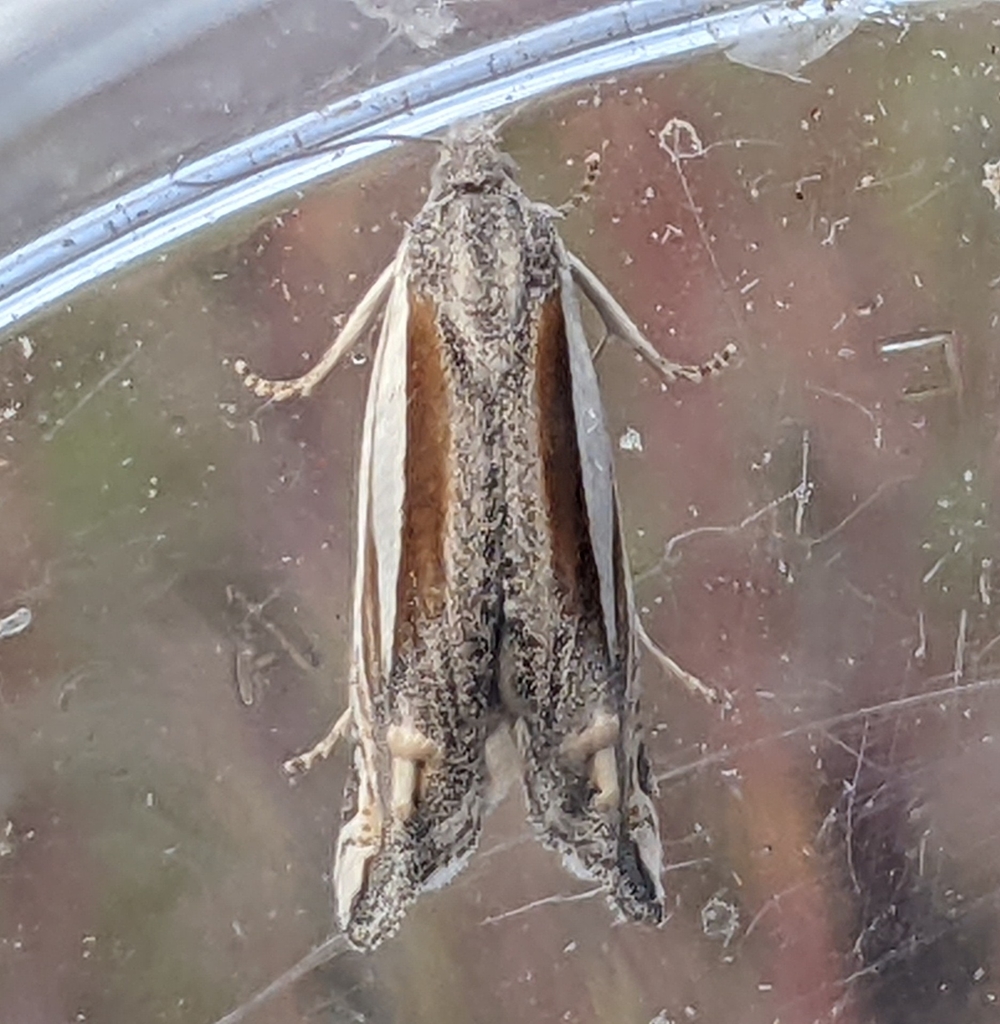
no rights reserved · CC0
Family: Tortricidae · Class: Insecta · Order: Lepidoptera
Eucosma pulveratana is a California animal in the Tortricidae family.
Eucosma pulveratana is a small moth in the family Tortricidae, commonly known as leafroller moths. This species belongs to the genus Eucosma, which contains numerous small moths characterized by their distinctive wing patterns and tortricid morphology. Adult moths typically measure 8 to 12 mm in wingspan, with forewings displaying the mottled gray and brown coloration characteristic of many Eucosma species. The forewings often exhibit a reticulated pattern with darker scaling that creates a powdery or dusty appearance, consistent with the species epithet 'pulveratana' which derives from the Latin meaning dusty or powdered. The hindwings are typically pale gray to whitish with reduced markings. The range and distribution of Eucosma pulveratana in California remains poorly documented in the scientific literature. Many Eucosma species have restricted ranges and specialized habitat requirements, often associated with specific host plant communities. The genus is represented by numerous species throughout North America, with several endemic to California's diverse ecosystems. Without comprehensive survey data, the precise distribution of E. pulveratana within the state cannot be definitively characterized. Habitat requirements for Eucosma pulveratana are closely tied to the presence of suitable host plants, as is typical for tortricid moths. Members of this genus commonly utilize herbaceous plants and shrubs as larval hosts, with many species showing high host specificity. The larvae typically develop as leaf tiers or borers within plant tissues, creating characteristic feeding damage patterns. Adults are generally active during warmer months, with flight periods varying by elevation and local climate conditions. The life cycle of Eucosma pulveratana follows the typical tortricid pattern, with complete metamorphosis through egg, larval, pupal, and adult stages. Females deposit eggs on or near host plants, and emerging larvae create shelters by folding or tying leaves together with silk. Pupation typically occurs within the larval shelter or in leaf litter. Adults are primarily nocturnal and may be attracted to artificial lights. The species likely produces one or two generations per year, depending on environmental conditions and elevation. The conservation status of Eucosma pulveratana has not been formally assessed by state or federal agencies. Many microlepidoptera species remain understudied, with limited data on population trends, distribution, and ecological requirements. The lack of comprehensive surveys for small moths creates challenges in determining conservation priorities. Potential threats to tortricid moths include habitat loss, pesticide applications, and climate change impacts on host plant communities. Urban development and agricultural intensification in California may affect populations if the species occurs in these landscapes. Additional research is needed to establish the species' current distribution, population status, and specific habitat requirements to inform any future conservation planning efforts.
Classification
Class: Insecta · Order: Lepidoptera · Family: Tortricidae
Frequently asked questions
How is Eucosma pulveratana classified?
Eucosma pulveratana belongs to class Insecta, order Lepidoptera, family Tortricidae.
What family does Eucosma pulveratana belong to?
Eucosma pulveratana is in the Tortricidae family.
What is Eucosma pulveratana?
Eucosma pulveratana is a small moth in the family Tortricidae, commonly known as leafroller moths.
Is Eucosma pulveratana found in California?
Yes. Eucosma pulveratana is recorded in California in The California Species Project's catalogue.
Related species
Other California species in the same genus, family, or bioregion.
Data from The California Species Project — 14,000+ California species with verified data from CNPS, CDFW, USFWS, and more.