Eucosma williamsi
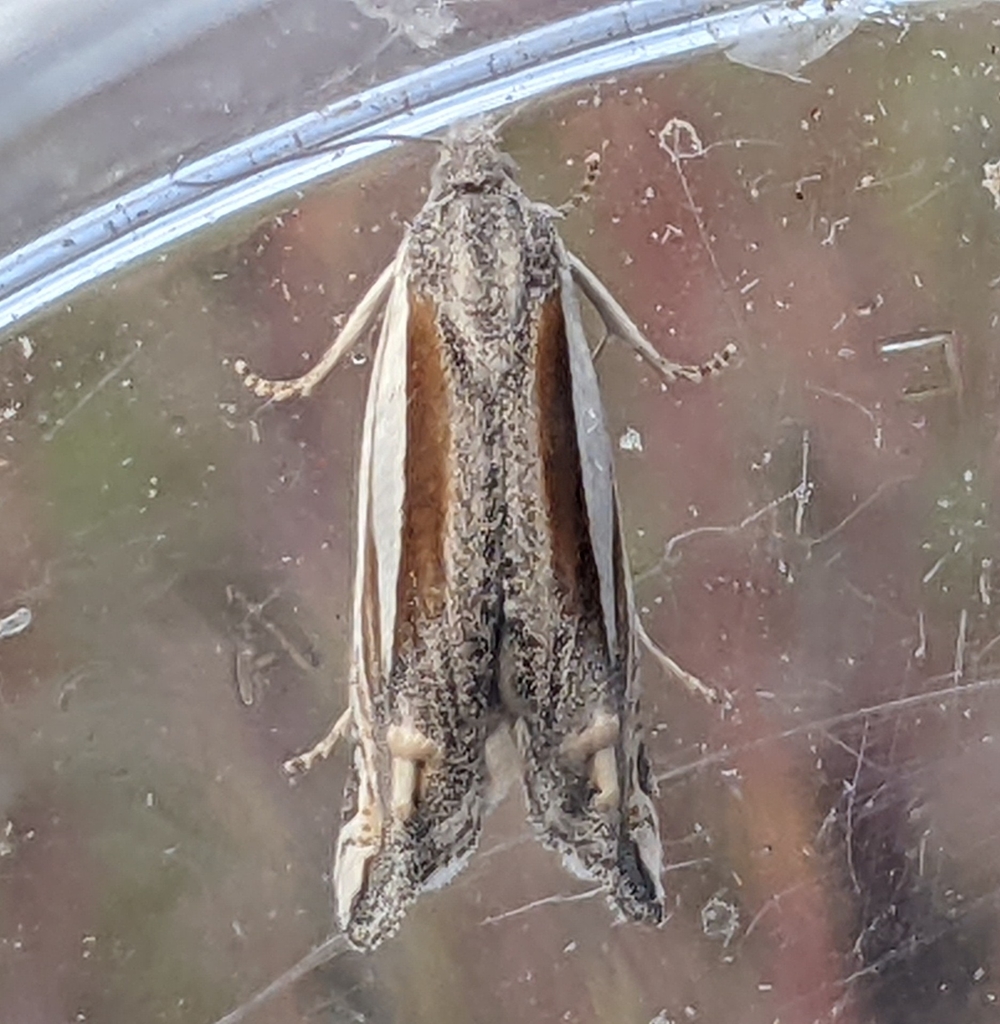
no rights reserved · CC0
Family: Tortricidae · Class: Insecta · Order: Lepidoptera
Eucosma williamsi is a California animal in the Tortricidae family.
Eucosma williamsi is a small moth in the family Tortricidae, commonly known as tortrix moths or leafroller moths. Like other members of this family, adults typically measure 8 to 15 millimeters in wingspan, with forewings that are often broader than the hindwings. The forewings display the characteristic tortricid pattern of mottled brown, gray, or tan coloration that provides camouflage when the moth rests on bark or vegetation. The hindwings are typically paler, ranging from light brown to grayish-white. When at rest, the wings are held in a bell-shaped or triangular profile over the body, a distinctive feature of the Tortricidae family. Eucosma williamsi occurs along the California coast from northern coastal counties south to San Diego County. This distribution spans approximately 800 kilometers of California's coastal region, encompassing diverse coastal and near-coastal environments. The species appears to be endemic to California, with no records documented from adjacent states or Mexico. The habitat requirements of E. williamsi are closely tied to the distribution of its larval host plant, Baccharis pilularis, commonly known as coyote brush. This native shrub occurs in coastal scrub, chaparral margins, and disturbed areas from sea level to approximately 1,500 meters elevation. Coyote brush thrives in Mediterranean climate conditions and is particularly abundant in coastal sage scrub and mixed chaparral communities. The moth likely inhabits areas where mature coyote brush provides both larval feeding opportunities and adult shelter. The life cycle of E. williamsi follows the typical tortricid pattern of complete metamorphosis. Larvae have been successfully reared on Baccharis pilularis, indicating this plant serves as the primary or possibly exclusive larval food source. Tortricid larvae typically feed as leaf tiers or borers, creating silk-lined shelters within folded leaves or stems. The larval stage likely occurs during spring and early summer when new growth on coyote brush provides optimal feeding conditions. Adults probably emerge in late summer or fall, timing their reproduction with the plant's flowering or seed production period. Like many tortricids, E. williamsi likely produces one generation per year, though the specific phenology has not been documented. The conservation status of Eucosma williamsi has not been formally assessed at federal or state levels, and the species lacks official protection status. The widespread distribution of its host plant, Baccharis pilularis, throughout coastal California suggests that suitable habitat remains relatively abundant. However, coastal development, habitat fragmentation, and invasive plant species pose potential threats to coastal scrub ecosystems where this moth occurs. Urban expansion in coastal areas has eliminated or degraded native plant communities, potentially reducing available habitat. Climate change may also affect the species through altered precipitation patterns and increased fire frequency in coastal scrub habitats. Without detailed population studies or long-term monitoring data, the current conservation needs of E. williamsi remain uncertain. The species would benefit from inclusion in broader surveys of coastal lepidoptera and assessment of its population trends across its California range.
Classification
Class: Insecta · Order: Lepidoptera · Family: Tortricidae
Frequently asked questions
How is Eucosma williamsi classified?
Eucosma williamsi belongs to class Insecta, order Lepidoptera, family Tortricidae.
What family does Eucosma williamsi belong to?
Eucosma williamsi is in the Tortricidae family.
What is Eucosma williamsi?
Eucosma williamsi is a small moth in the family Tortricidae, commonly known as tortrix moths or leafroller moths.
Is Eucosma williamsi found in California?
Yes. Eucosma williamsi is recorded in California in The California Species Project's catalogue.
Related species
Other California species in the same genus, family, or bioregion.
Data from The California Species Project — 14,000+ California species with verified data from CNPS, CDFW, USFWS, and more.