Eudistylia polymorpha
Giant Feather Duster Worm
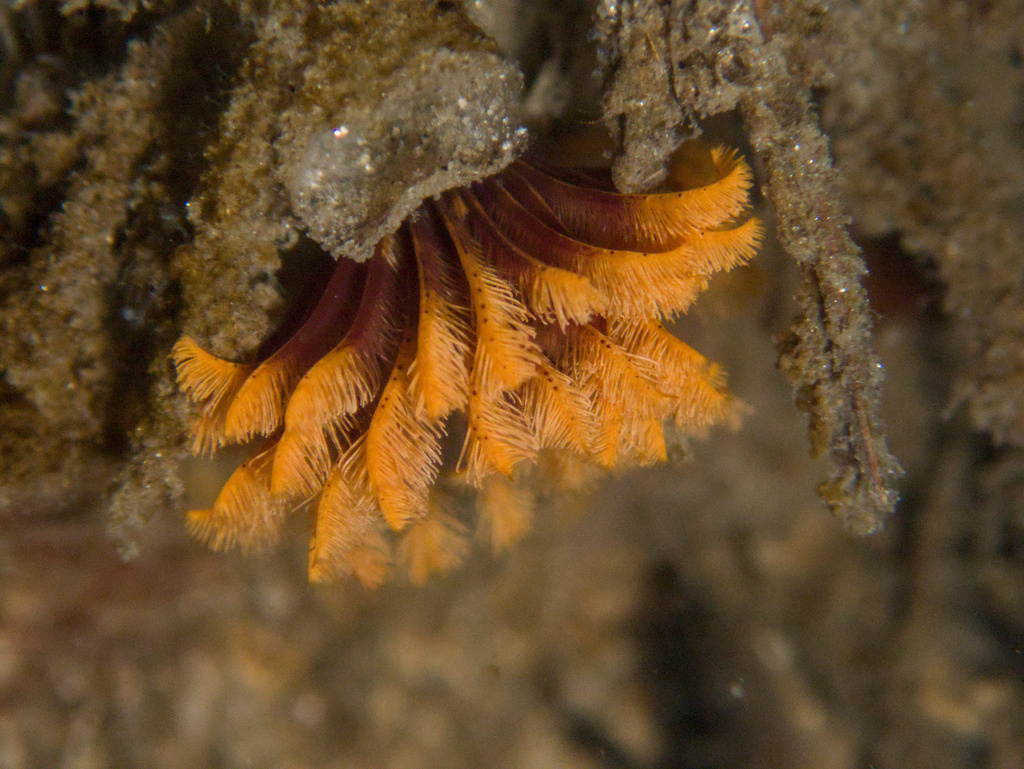
(c) Slunky, some rights reserved (CC BY) · licence
Family: Sabellidae · Class: Polychaeta · Order: Sabellida
Eudistylia polymorpha (Giant Feather Duster Worm) is a California animal in the Sabellidae family.
The giant feather duster worm is a large marine polychaete belonging to the family Sabellidae. This species reaches lengths of up to 25 centimeters (10 inches) including its characteristic feeding appendages, making it one of the largest tube-dwelling worms on the Pacific coast (Light et al. 2007). The most distinctive feature is its crown of feathery radioles, which can extend up to 15 centimeters (6 inches) in diameter when fully expanded (Brusca et al. 2016). These plume-like structures are typically orange, red, or purple in coloration with banded patterns, though color variation is common within populations (Abbott & Hollenberg 1976). The body consists of numerous segments enclosed within a parchment-like tube constructed from mucus and sediment particles. Eudistylia polymorpha occurs along the Pacific coast from British Columbia, Canada to Baja California, Mexico. In California, the species is documented from rocky intertidal zones to depths of approximately 30 meters (100 feet), with populations found in central and northern coastal waters (Morris et al. 1980). The species inhabits both protected bays and exposed coastlines, showing preference for areas with moderate to strong water flow. This species typically inhabits rocky substrates, pilings, and hard surfaces in marine environments. Giant feather duster worms construct permanent tubes in crevices, under ledges, or attached to vertical surfaces. They are commonly found in subtidal zones but can occur in lower intertidal areas during extreme low tides. The species prefers areas with good water circulation and minimal sedimentation, as their feeding strategy requires clean water for efficient filtration (Ricketts et al. 1985). Giant feather duster worms are suspension feeders that extend their radiolar crown to capture plankton, detritus, and dissolved organic matter from the water column. When disturbed, they can rapidly withdraw their feeding appendages into their protective tubes through muscular contraction. Reproduction involves broadcast spawning, with separate sexes releasing gametes into the water column during specific seasons, typically spring and summer months (Blake & Ruff 2007). Fertilized eggs develop into planktonic larvae that eventually settle and metamorphose into juvenile worms. The species demonstrates notable regenerative capabilities, able to regrow damaged or lost radioles (Fauchald & Jumars 1979). Currently, Eudistylia polymorpha has no federal or state listing status and appears to maintain stable populations throughout its range. However, the species faces potential threats from coastal development, water quality degradation, and ocean acidification. Sedimentation from terrestrial runoff can clog feeding structures and interfere with reproduction. Climate change impacts, including rising sea temperatures and altered ocean chemistry, may affect larval development and adult survival. The species serves as an important indicator of marine ecosystem health due to its sensitivity to water quality changes and its role in benthic community structure.
Classification
Class: Polychaeta · Order: Sabellida · Family: Sabellidae
Frequently asked questions
How is Eudistylia polymorpha classified?
Eudistylia polymorpha belongs to class Polychaeta, order Sabellida, family Sabellidae.
What family does Eudistylia polymorpha belong to?
Eudistylia polymorpha is in the Sabellidae family.
What is Eudistylia polymorpha?
The giant feather duster worm is a large marine polychaete belonging to the family Sabellidae.
Is Eudistylia polymorpha found in California?
Yes. Eudistylia polymorpha is recorded in California in The California Species Project's catalogue.
More California species
This species has no close relatives in our California data — here are other species to explore.
Data from The California Species Project — 14,000+ California species with verified data from CNPS, CDFW, USFWS, and more.