Eudonia commortalis
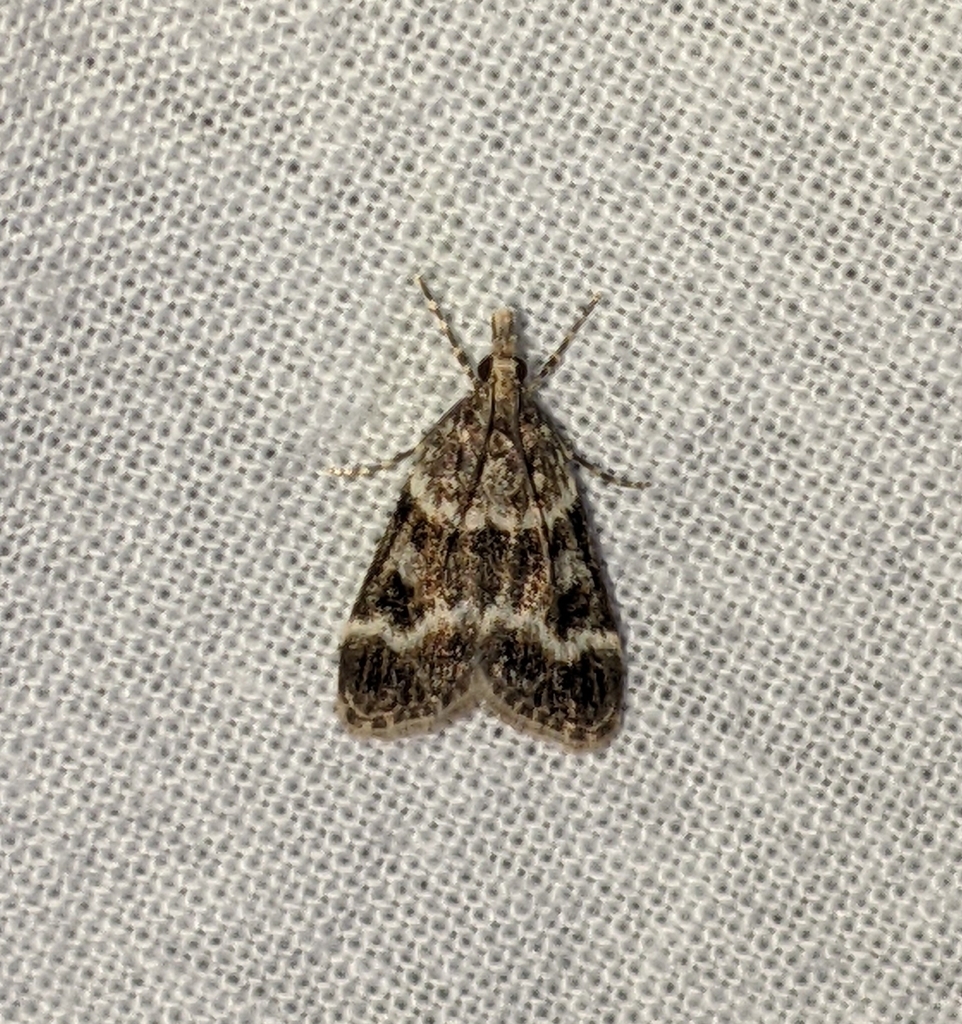
no rights reserved · CC0
Family: Crambidae · Class: Insecta · Order: Lepidoptera
Eudonia commortalis is a California animal in the Crambidae family.
Eudonia commortalis is a small moth in the family Crambidae, part of the grass moth subfamily Scopariinae. This species belongs to a genus of microlepidoptera characterized by narrow forewings and distinctive wing patterns. Adult moths typically measure 8 to 12 mm in wingspan, with forewings displaying mottled brown and gray coloration that provides effective camouflage against bark and dried vegetation. The hindwings are generally paler, often whitish or light gray with reduced markings. The distribution and range of Eudonia commortalis remain poorly documented in the scientific literature. Limited collection records suggest the species may be endemic to specific regions of western North America, though comprehensive surveys are needed to establish its full geographic extent. The type locality and detailed distribution data for this species are not readily available in current taxonomic databases, indicating it may be a recently described or rarely collected taxon. Habitat preferences for Eudonia commortalis are not well-established, though related species in the genus typically inhabit areas with abundant grasses and low-growing herbaceous vegetation. Many Eudonia species are associated with grasslands, meadows, and forest edges where their larval host plants occur. The elevation range and specific microhabitat requirements for this species have not been documented in available literature. Like other members of the Crambidae family, Eudonia commortalis likely undergoes complete metamorphosis with four distinct life stages. The larvae probably feed on grasses or other monocotyledonous plants, as is typical for the genus Eudonia. Larval feeding habits may include leaf-rolling or stem-boring behavior, though specific host plant relationships have not been confirmed for this species. Adult flight periods and reproductive biology remain undocumented. Most Eudonia species are univoltine, producing one generation per year, with adults typically active during late spring through early fall depending on local climate conditions. The conservation status of Eudonia commortalis is currently unknown, as the species lacks formal assessment by state or federal agencies. No population estimates or trend data are available in the literature. The absence of detailed ecological information and limited collection records suggest this species may be naturally rare, have a restricted distribution, or be understudied due to its small size and cryptic appearance. Many microlepidoptera face threats from habitat loss, pesticide use, and climate change, though specific threats to this species cannot be assessed without additional research. The taxonomic status and validity of Eudonia commortalis may require verification through molecular analysis and comparison with related species, as some names in this complex group represent synonyms or misidentifications.
Classification
Class: Insecta · Order: Lepidoptera · Family: Crambidae
Frequently asked questions
How is Eudonia commortalis classified?
Eudonia commortalis belongs to class Insecta, order Lepidoptera, family Crambidae.
What family does Eudonia commortalis belong to?
Eudonia commortalis is in the Crambidae family.
What is Eudonia commortalis?
Eudonia commortalis is a small moth in the family Crambidae, part of the grass moth subfamily Scopariinae.
Is Eudonia commortalis found in California?
Yes. Eudonia commortalis is recorded in California in The California Species Project's catalogue.
Related species
Other California species in the same genus, family, or bioregion.
Data from The California Species Project — 14,000+ California species with verified data from CNPS, CDFW, USFWS, and more.