Eudonia rectilinea
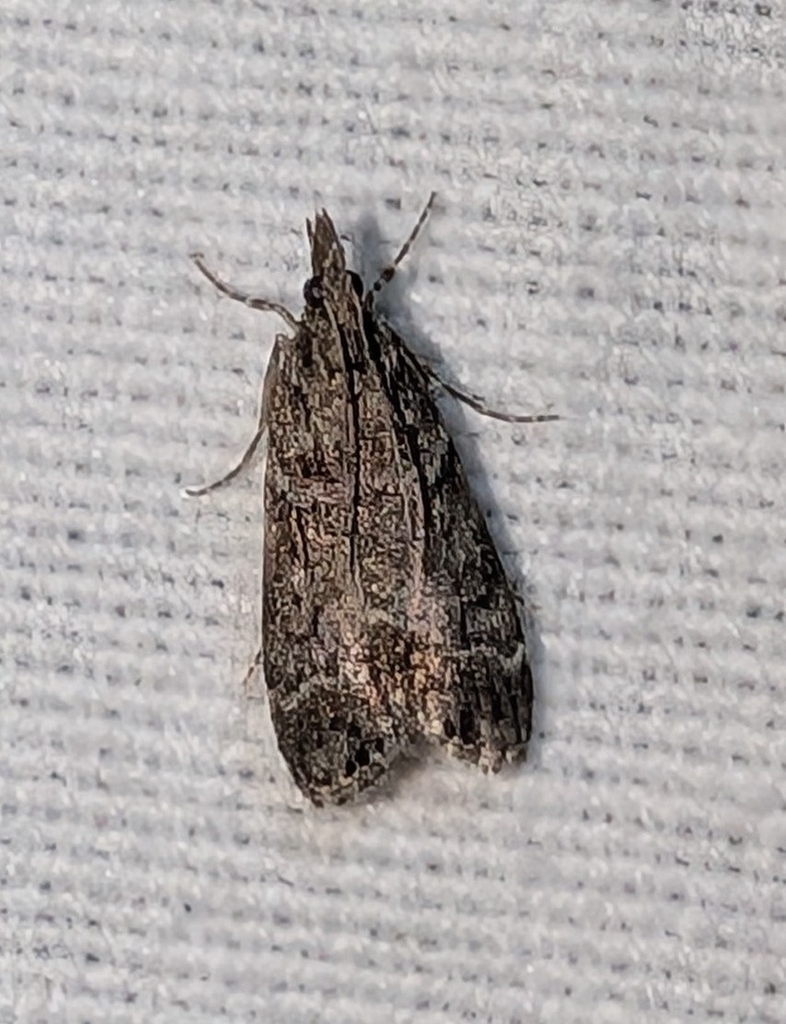
(c) Brodie Cass Talbott, some rights reserved (CC BY) · licence
Family: Crambidae · Class: Insecta · Order: Lepidoptera
Eudonia rectilinea is a California animal in the Crambidae family.
Eudonia rectilinea is a small moth in the grass moth family Crambidae, subfamily Scopariinae. Originally described by Zeller in 1874, this species exhibits the typical characteristics of the Eudonia genus with forewings measuring 8-10 mm in length (BugGuide). The forewings are gray with distinctive linear markings, though detailed morphological descriptions remain limited in the scientific literature. This species occurs across western North America, with documented records from British Columbia, California, Montana, Nevada, Oregon, and Washington (iNaturalist). Within California, E. rectilinea represents part of the state's diverse Lepidoptera fauna, though specific distributional patterns and county-level occurrence data have not been comprehensively documented. The species appears to have a relatively broad latitudinal range extending from the Pacific Northwest through the Intermountain West. Specific habitat preferences for E. rectilinea have not been well documented in available literature. Like other members of the genus Eudonia, this species likely occupies grassland or shrubland environments where larvae can develop on suitable host plants. The Scopariinae subfamily typically associates with graminoid plants, suggesting E. rectilinea may depend on native grasses or related monocotyledonous vegetation. Elevation ranges and microhabitat requirements remain largely unstudied. Life history information for E. rectilinea is extremely limited. As with other grass moths in the Crambidae family, larvae presumably feed within stems or root systems of herbaceous plants, while adults are likely active during specific seasonal periods. Flight times, mating behaviors, overwintering strategies, and generation number per year have not been documented in accessible sources. The species' role in local ecosystems and potential interactions with other species remain unknown. E. rectilinea currently holds no formal conservation status at federal or state levels. The species has been assigned an unranked global conservation status (GNR) by NatureServe, indicating insufficient data exists for precise threat assessment (Grokipedia). This data deficiency reflects the broader challenge of documenting and monitoring small moth species, particularly those without obvious economic significance or charismatic appeal. No specific threats have been identified for this species, though habitat loss from development, agricultural conversion, and climate change may potentially affect populations as with other specialized herbivorous insects. The genus Eudonia contains approximately 250 species worldwide, with 18 species documented from North America (BugGuide). This taxonomic diversity suggests considerable ecological specialization within the group, though species-specific research on most taxa remains limited. Scientific documentation for E. rectilinea remains sparse despite its relatively broad geographic range. The information presented here is based on available sources including BugGuide, iNaturalist, and taxonomic databases. Additional research is needed to understand this species' biology, distribution patterns, and conservation needs. If you have verified information about this species' ecology, host plants, or California distribution, please contact us to help improve this species account.
Classification
Class: Insecta · Order: Lepidoptera · Family: Crambidae
Frequently asked questions
How is Eudonia rectilinea classified?
Eudonia rectilinea belongs to class Insecta, order Lepidoptera, family Crambidae.
What family does Eudonia rectilinea belong to?
Eudonia rectilinea is in the Crambidae family.
What is Eudonia rectilinea?
Eudonia rectilinea is a small moth in the grass moth family Crambidae, subfamily Scopariinae.
Is Eudonia rectilinea found in California?
Yes. Eudonia rectilinea is recorded in California in The California Species Project's catalogue.
Related species
Other California species in the same genus, family, or bioregion.
Data from The California Species Project — 14,000+ California species with verified data from CNPS, CDFW, USFWS, and more.