Eudrepanulatrix rectifascia
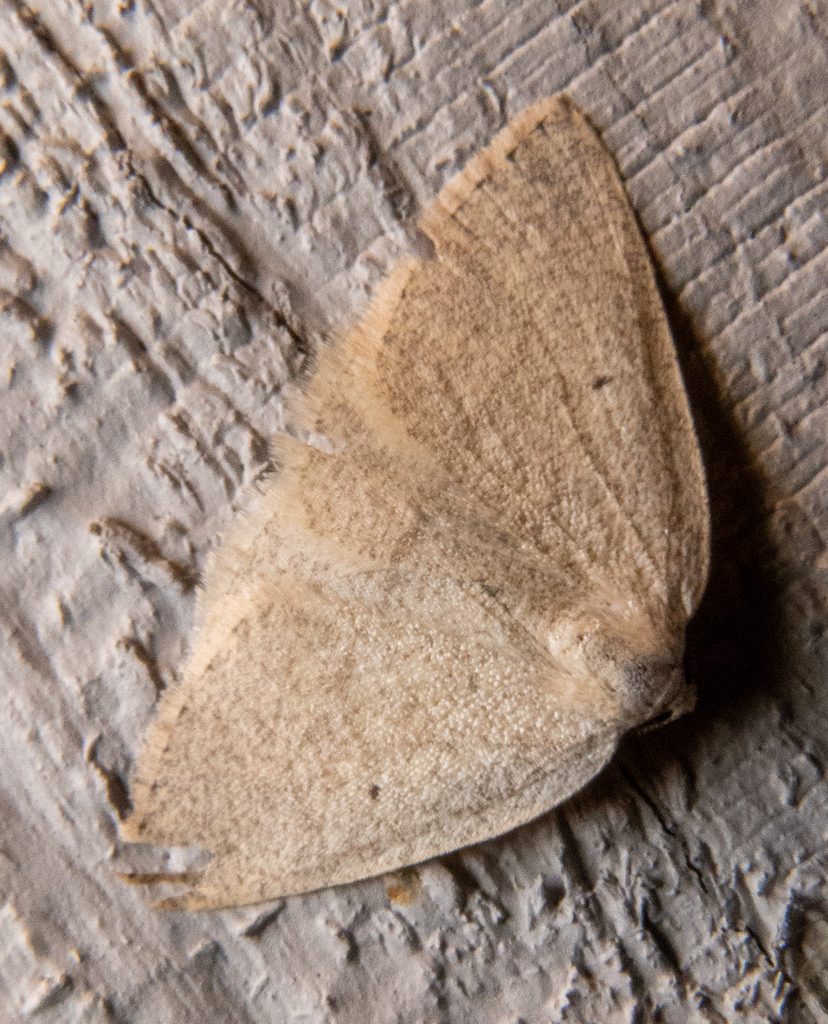
(c) Michael Warner, some rights reserved (CC BY) · licence
Family: Geometridae · Class: Insecta · Order: Lepidoptera
Eudrepanulatrix rectifascia is a California animal in the Geometridae family.
Eudrepanulatrix rectifascia is a moth in the family Geometridae, commonly known as geometrids or inchworm moths. This species belongs to a genus of moths found primarily in western North America. As with most geometrid moths, adults likely have a wingspan measuring between 20 to 35 millimeters, though specific measurements for this species are not well documented in the literature. The wings typically display the muted earth tones characteristic of many geometrids, with the species name 'rectifascia' suggesting the presence of straight bands or stripes across the wing surfaces. The range and distribution of Eudrepanulatrix rectifascia remain poorly documented in current scientific literature. The genus Eudrepanulatrix includes several species found across western North America, suggesting this species likely occurs somewhere within this broader geographic region. However, specific locality records and detailed distribution maps for E. rectifascia are not readily available in major entomological databases or recent taxonomic publications. Habitat preferences for this species are not well established in the available literature. Most geometrid moths occupy diverse habitats ranging from forests to shrublands, with many species showing preferences for specific elevation ranges or plant communities. Without detailed ecological studies, the specific microhabitat requirements and environmental preferences of E. rectifascia remain uncertain. Like other members of the Geometridae family, adult E. rectifascia likely exhibit nocturnal activity patterns, being attracted to artificial light sources during evening hours. The larvae, commonly called inchworms or loopers due to their distinctive locomotion, probably feed on the foliage of specific host plants, though the exact host plant relationships for this species are not documented in current literature. Geometrid larvae typically undergo several molts before pupating, with adults emerging to mate and continue the life cycle. The timing of adult flight periods and reproductive behavior for this particular species requires further study. The conservation status of Eudrepanulatrix rectifascia is not well established, as the species lacks formal assessment by major conservation organizations. It does not appear on federal or California state endangered species lists, nor does it have a designated conservation ranking from NatureServe or the International Union for Conservation of Nature. This absence from conservation databases may reflect either a stable population status or, more likely, insufficient data to assess population trends and threats. Many moth species, particularly those with limited distribution data or specialized habitat requirements, remain poorly studied from a conservation perspective. The lack of comprehensive information about E. rectifascia highlights the broader challenge of documenting and understanding the ecology of many moth species. Further taxonomic research, field surveys, and ecological studies would be necessary to better understand this species' distribution, habitat requirements, life history, and conservation needs. Such research would be valuable for both scientific understanding and potential conservation planning efforts in regions where this species occurs.
Classification
Class: Insecta · Order: Lepidoptera · Family: Geometridae
Frequently asked questions
How is Eudrepanulatrix rectifascia classified?
Eudrepanulatrix rectifascia belongs to class Insecta, order Lepidoptera, family Geometridae.
What family does Eudrepanulatrix rectifascia belong to?
Eudrepanulatrix rectifascia is in the Geometridae family.
What is Eudrepanulatrix rectifascia?
Eudrepanulatrix rectifascia is a moth in the family Geometridae, commonly known as geometrids or inchworm moths.
Is Eudrepanulatrix rectifascia found in California?
Yes. Eudrepanulatrix rectifascia is recorded in California in The California Species Project's catalogue.
Related species
Other California species in the same genus, family, or bioregion.
Data from The California Species Project — 14,000+ California species with verified data from CNPS, CDFW, USFWS, and more.