Euleia fratria
Parsnip Leaf Miner
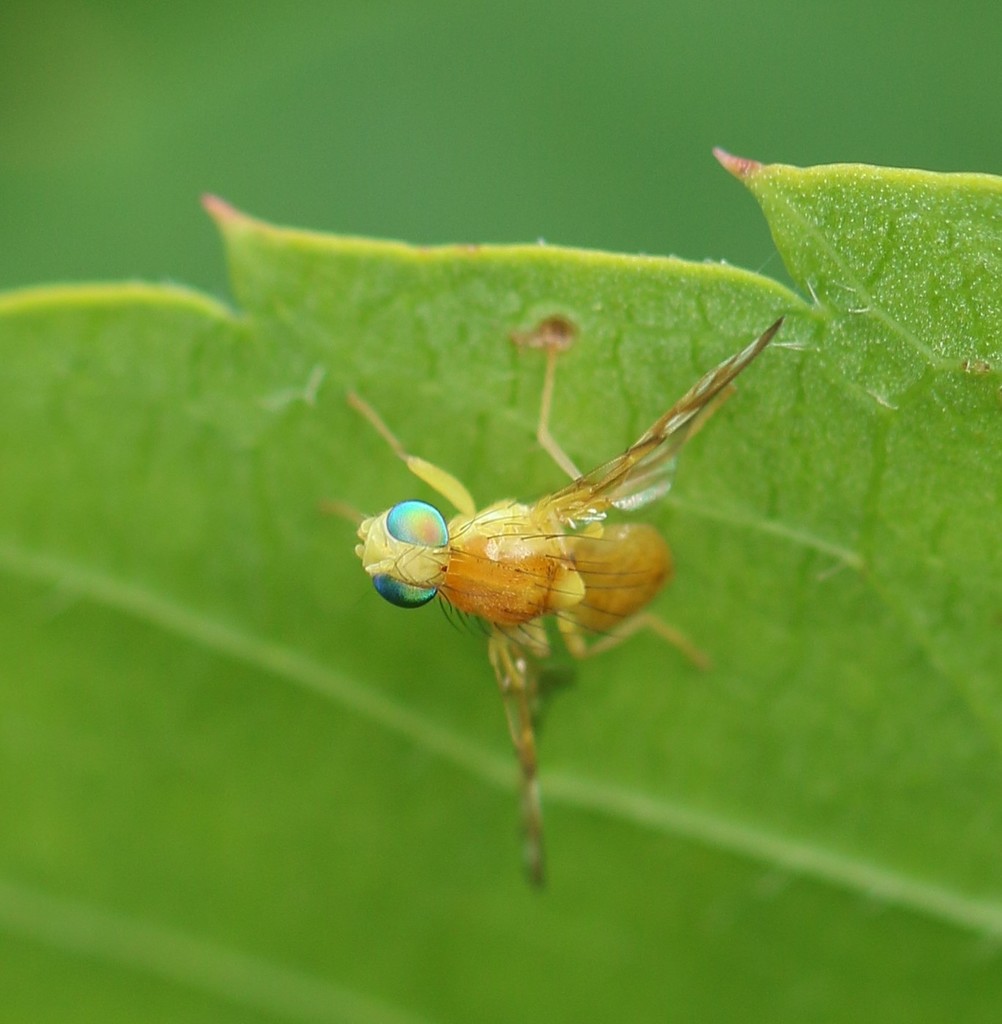
(c) Barry Cottam, some rights reserved (CC BY) · licence
Family: Tephritidae · Class: Insecta · Order: Diptera
Euleia fratria (Parsnip Leaf Miner) is a California animal in the Tephritidae family.
Euleia fratria, commonly known as the Parsnip Leaf Miner, is a small dipteran fly belonging to the family Tephritidae, commonly referred to as fruit flies or peacock flies. Adults are typically 3-5 mm in length with the characteristic wing patterns and body coloration typical of tephritid flies. The wings display distinctive dark banding or spotting patterns that help distinguish this species from related Euleia species. Like other members of the genus, adults have relatively robust bodies with well-developed bristles and compound eyes. The range and distribution of Euleia fratria in California and broader North America remains poorly documented in the scientific literature. According to NatureServe Explorer, the species has a global conservation rank of G4, indicating it is apparently secure globally, though specific distributional data for California populations is limited. The species appears to have a broader North American distribution, but comprehensive surveys documenting its presence across specific California counties or regions have not been well-established in available databases. Habitat requirements for Euleia fratria are closely tied to the presence of its host plants in the family Apiaceae (carrot family), particularly wild parsnip and related umbelliferous plants. The species typically occurs in areas where these native and naturalized host plants are present, including meadows, field margins, disturbed areas, and forest edges. Adults are active during the warmer months when host plants are actively growing and producing the flower heads and developing seeds that larvae require for development. The life cycle of Euleia fratria follows the typical pattern of leaf-mining tephritids. Adult females deposit eggs directly into the developing flower heads or young seeds of apiaceous host plants. The larvae develop as internal feeders, creating mines or galleries within the plant tissue. This leaf-mining behavior gives the species its common name and represents a specialized feeding strategy that has evolved in several tephritid lineages. Development from egg to adult typically requires several weeks, with timing closely synchronized to host plant phenology. Adults emerge to mate and begin the next generation, with the number of annual generations likely depending on local climate conditions and host plant availability. Euleia fratria does not appear on federal or state endangered species lists and currently lacks formal conservation status designations. The species' global rank of G4 (apparently secure) suggests stable populations across its range, though this assessment may reflect limited survey data rather than comprehensive population monitoring. As with many small, specialized insects, the primary conservation concerns would likely relate to habitat loss or degradation affecting host plant communities. Changes in land use that eliminate native apiaceous plants or alter the ecological communities where they occur could potentially impact local populations. However, the species' apparent ability to utilize both native and some naturalized host plants may provide some resilience to habitat changes. Detailed ecological studies and systematic surveys are needed to better understand the species' distribution, population trends, and specific conservation needs in California.
Classification
Class: Insecta · Order: Diptera · Family: Tephritidae
Frequently asked questions
How is Euleia fratria classified?
Euleia fratria belongs to class Insecta, order Diptera, family Tephritidae.
What family does Euleia fratria belong to?
Euleia fratria is in the Tephritidae family.
What is Euleia fratria?
Euleia fratria, commonly known as the Parsnip Leaf Miner, is a small dipteran fly belonging to the family Tephritidae, commonly referred to as fruit flies or peacock flies.
Is Euleia fratria found in California?
Yes. Euleia fratria is recorded in California in The California Species Project's catalogue.
Related species
Other California species in the same genus, family, or bioregion.
Data from The California Species Project — 14,000+ California species with verified data from CNPS, CDFW, USFWS, and more.