Eumenes bollii
Boll's Potter Wasp
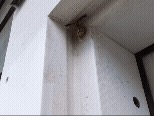
no rights reserved · CC0
Family: Vespidae · Class: Insecta · Order: Hymenoptera
Eumenes bollii (Boll's Potter Wasp) is a California animal in the Vespidae family.
Eumenes bollii, commonly known as Boll's Potter Wasp, is a solitary wasp in the family Vespidae, subfamily Eumeninae. This species belongs to the potter and mason wasp group, characterized by their distinctive nest-building behavior using mud or clay to construct pot-shaped structures. Adult potter wasps typically measure 10-15 mm in length, with the characteristic narrow waist (petiole) connecting the thorax and abdomen that gives wasps their distinctive silhouette. Boll's Potter Wasp was historically documented in the southwestern United States, with records from Arizona and California. According to BugGuide, observations have been made in chaparral and live oak habitats, particularly in Arizona locations such as King's Canyon in the Tucson Mountains of Pima County. However, the current distribution and population status of this species remains poorly documented in recent scientific literature. The species inhabits arid and semi-arid environments typical of the southwestern United States, including chaparral scrublands and oak woodland associations. These habitats provide the clay-rich soils necessary for nest construction and support diverse arthropod communities that serve as prey for developing larvae. The dry climate and sparse vegetation of these ecosystems create suitable conditions for solitary wasp species that require exposed soil surfaces for nesting activities. Like other members of the genus Eumenes, Boll's Potter Wasp exhibits solitary nesting behavior. Females construct characteristic pot-shaped mud nests attached to vegetation or rock surfaces, provisioning each cell with paralyzed caterpillars or other soft-bodied arthropod larvae to feed their developing offspring. The female typically lays a single egg in each cell, suspended from the ceiling by a thin thread to prevent the egg from being damaged by the prey items. Adult wasps are active during warmer months and feed on nectar from various flowering plants, serving as minor pollinators in their ecosystems. The conservation status of Eumenes bollii is concerning, with NatureServe listing the species as "GX - Presumed Extinct" in their database (NatureServe Explorer). This classification indicates that the species has not been reliably documented in recent decades despite targeted surveys. The absence of recent confirmed records suggests potential population decline or extirpation, possibly related to habitat loss, climate change, or other environmental factors affecting southwestern ecosystems. However, given the difficulty of surveying small, solitary wasp species and their often sporadic activity patterns, additional field research would be needed to confirm the current status of this species. The limited available documentation emphasizes the need for comprehensive surveys of native wasp fauna in southwestern North America.
Classification
Class: Insecta · Order: Hymenoptera · Family: Vespidae
Frequently asked questions
How is Eumenes bollii classified?
Eumenes bollii belongs to class Insecta, order Hymenoptera, family Vespidae.
What family does Eumenes bollii belong to?
Eumenes bollii is in the Vespidae family.
What is Eumenes bollii?
Eumenes bollii, commonly known as Boll's Potter Wasp, is a solitary wasp in the family Vespidae, subfamily Eumeninae.
Is Eumenes bollii found in California?
Yes. Eumenes bollii is recorded in California in The California Species Project's catalogue.
Related species
Other California species in the same genus, family, or bioregion.
Data from The California Species Project — 14,000+ California species with verified data from CNPS, CDFW, USFWS, and more.