Eumops perotis californicus
Western Mastiff Bat
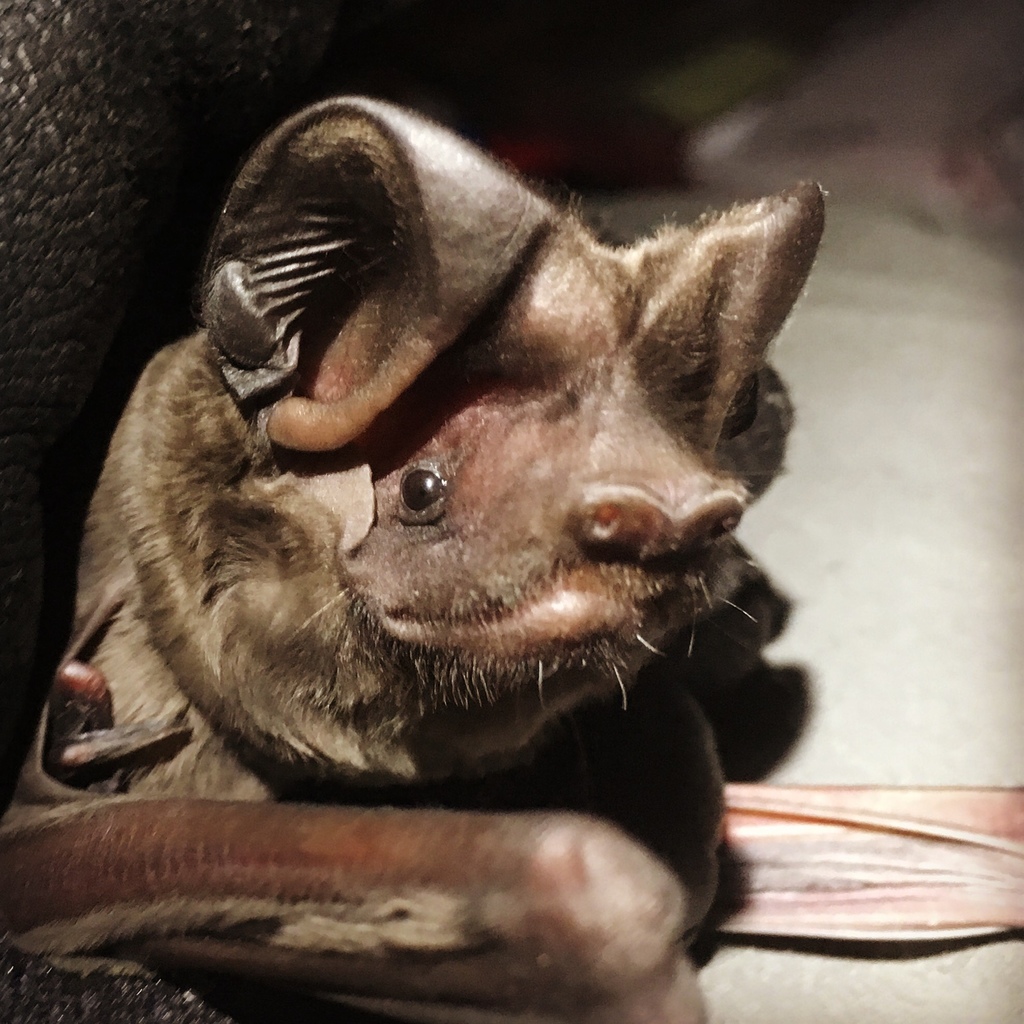
(c) Shalana Gray, some rights reserved (CC BY) · licence
Family: Molossidae · Class: Mammalia · Order: Chiroptera
Conservation status: G4G5T4 S3S4
Eumops perotis californicus (Western Mastiff Bat) is a California animal in the Molossidae family.
The western mastiff bat (Eumops perotis californicus) is a subspecies of the greater mastiff bat and one of North America's largest bat species, with a wingspan reaching 56 centimeters (22 inches) and weighing 45 to 70 grams. The body measures 64 to 83 millimeters in length, with distinctively large ears that extend beyond the nose when laid forward. The pelage is dark brown to blackish on the dorsal surface, with slightly paler coloration ventrally. The species possesses a characteristic wrinkled upper lip and a free tail that extends well beyond the tail membrane, distinguishing it from other California bat species. The western mastiff bat ranges from central California south to Baja California, Mexico, and east through Arizona and New Mexico to western Texas. In California, this subspecies occurs from the Mexican border north to approximately Mendocino County, though it is most common in southern California. The species inhabits diverse elevation zones from sea level to approximately 2,000 meters in mixed conifer forests. This subspecies occupies grasslands, shrublands, woodlands, and forests, showing strong preference for open, dry habitats with accessible rocky areas for roosting. Roost sites include cliff faces, rock crevices, abandoned buildings, bird boxes, areas under exfoliating bark, and bridge structures. The species requires high, unobstructed flight paths due to its large size and high wing loading, making it dependent on open foraging areas adjacent to suitable roosting habitat. Western mastiff bats are insectivorous, specializing in large moths and other flying insects captured during high-speed aerial pursuit. Their echolocation calls are audible to humans, producing distinctive chattering sounds during flight. The species is highly social, forming colonies that may contain several hundred individuals in optimal roost sites. Reproduction typically occurs in spring, with females giving birth to a single pup after a gestation period of approximately 80 to 90 days. Mating occurs in fall and winter, with delayed implantation allowing birth timing to coincide with peak insect availability. The western mastiff bat is designated as a California Species of Special Concern, reflecting population declines attributed to habitat loss and roost site disturbance. The species faces threats from urban development, which eliminates foraging habitat and roost sites, particularly in coastal southern California where human population density is highest. Wind energy development poses additional mortality risks due to the species' flight patterns and foraging behavior. Climate change may affect prey availability and suitable habitat distribution across the species' range. Conservation efforts focus on protecting known roost sites and maintaining connectivity between foraging and roosting habitats. The species' dependence on specific microhabitat features for roosting makes it particularly vulnerable to habitat modification and human disturbance.
Classification
Class: Mammalia · Order: Chiroptera · Family: Molossidae
Conservation status
G4G5T4 S3S4
Frequently asked questions
How is Eumops perotis californicus classified?
Eumops perotis californicus belongs to class Mammalia, order Chiroptera, family Molossidae.
What family does Eumops perotis californicus belong to?
Eumops perotis californicus is in the Molossidae family.
Is Eumops perotis californicus protected or of conservation concern?
Eumops perotis californicus carries the following status: G4G5T4 S3S4.
What is Eumops perotis californicus?
The western mastiff bat (Eumops perotis californicus) is a subspecies of the greater mastiff bat and one of North America's largest bat species, with a wingspan reaching 56 centimeters (22 inches) and weighing 45 to 70 grams.
Is Eumops perotis californicus found in California?
Yes. Eumops perotis californicus is recorded in California in The California Species Project's catalogue.
Related species
Other California species in the same genus, family, or bioregion.
Data from The California Species Project — 14,000+ California species with verified data from CNPS, CDFW, USFWS, and more.