Eumorpha achemon
Achemon sphinx
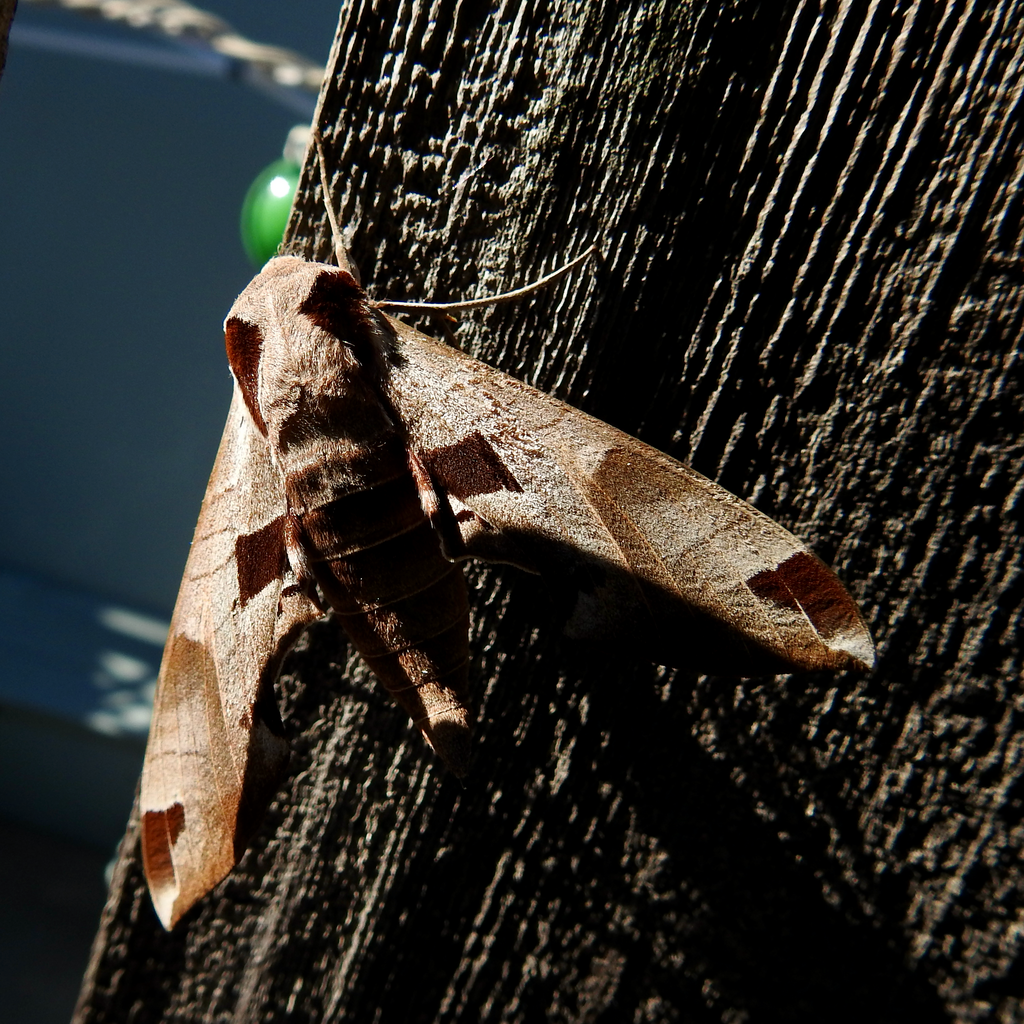
(c) Daniel Levitis, some rights reserved (CC BY) · licence
Family: Sphingidae · Class: Insecta · Order: Lepidoptera
Eumorpha achemon (Achemon sphinx) is a California animal in the Sphingidae family.
The Achemon sphinx is a large moth in the family Sphingidae, commonly known as hawk moths or hummingbird moths. Adults measure 80 to 95 mm (3.1 to 3.7 inches) in wingspan. The forewings are grayish-brown with darker brown or blackish patches and lines, while the hindwings display pink or rose-colored patches bordered by black bands. The body is robust and streamlined, typical of sphinx moths, with a pointed abdomen and thick thorax adapted for rapid flight. Males possess feathery antennae and are generally smaller than females. The species ranges from Maine west to North Dakota and southern Oregon, extending south to southern Florida, southern California, and Mexico. This transcontinental distribution makes the Achemon sphinx one of the more widespread North American sphinx moths. In California, the species occurs primarily in the southern regions where suitable host plants are present. Achemon sphinx inhabits areas where its primary host plants grow, including vineyards, riparian zones, and woodland edges. The species shows a preference for elevations below 1,500 meters (4,900 feet) and is commonly found in agricultural areas, suburban gardens, and natural areas supporting wild grapes. Adults are attracted to night-blooming flowers and are frequently observed at artificial lights during their active period. Adults are nocturnal and active from late spring through early fall, with peak flight periods varying by latitude. The species typically produces one to two generations per year, depending on climate conditions. Females lay spherical, pale green eggs singly on host plant leaves. Larvae, known as hornworms, are large green caterpillars reaching 75 to 100 mm (3.0 to 3.9 inches) in length when mature. The caterpillars feed exclusively on grape species (Vitis) and Virginia creeper (Ampelopsis). Fifth-instar larvae develop a distinctive horn at the posterior end and may display color variations from green to brown. Pupation occurs in underground chambers, with pupae overwintering in colder regions. Larvae are capable of causing significant defoliation of grapevines when populations are high, though they rarely reach pest status. Natural enemies include parasitic wasps, tachinid flies, and various predators that help regulate populations. Adults are important pollinators of night-blooming plants and feed on nectar from flowers including tobacco, four o'clocks, and petunias using their long proboscis. The Achemon sphinx is not listed under federal or state endangered species acts and appears to maintain stable populations across its range. The species benefits from the widespread cultivation of grapes and ornamental vines, though intensive vineyard management practices may locally impact populations. No specific conservation measures are currently needed, as the species demonstrates adaptability to both natural and modified habitats. Climate change may potentially affect the northern extent of its range, but the broad distribution and host plant availability suggest continued population stability.
Classification
Class: Insecta · Order: Lepidoptera · Family: Sphingidae
Frequently asked questions
How is Eumorpha achemon classified?
Eumorpha achemon belongs to class Insecta, order Lepidoptera, family Sphingidae.
What family does Eumorpha achemon belong to?
Eumorpha achemon is in the Sphingidae family.
What is Eumorpha achemon?
The Achemon sphinx is a large moth in the family Sphingidae, commonly known as hawk moths or hummingbird moths.
Is Eumorpha achemon found in California?
Yes. Eumorpha achemon is recorded in California in The California Species Project's catalogue.
Related species
Other California species in the same genus, family, or bioregion.
Data from The California Species Project — 14,000+ California species with verified data from CNPS, CDFW, USFWS, and more.