Euparagia unidentata
Algodones Euparagia
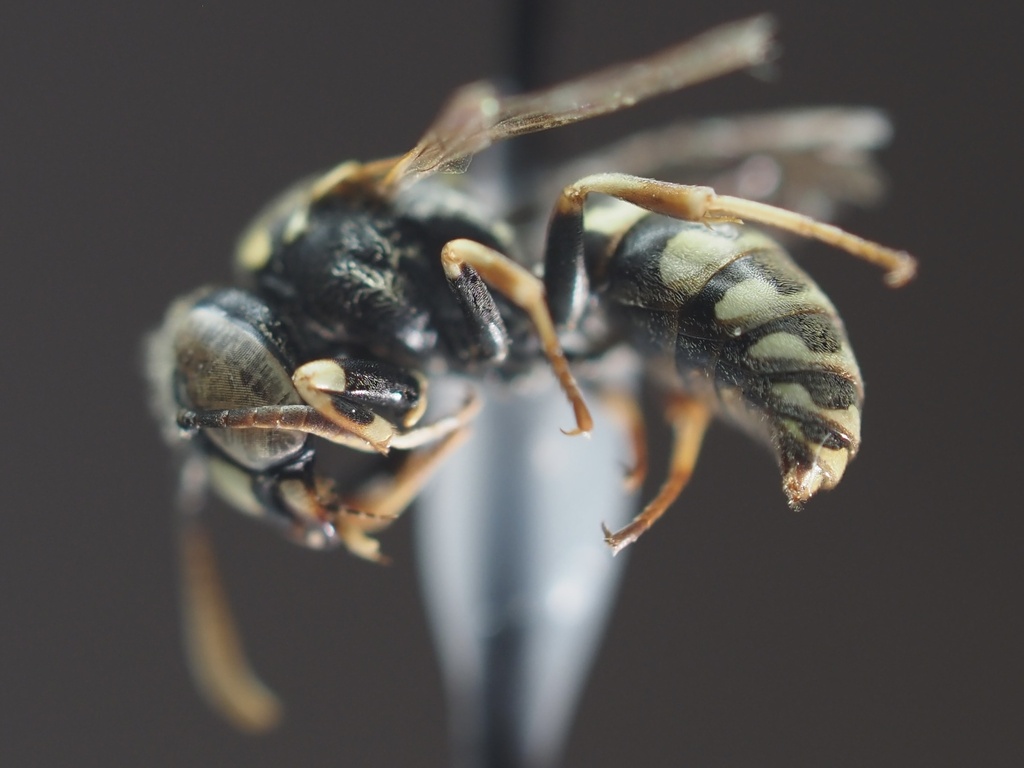
(c) Peter Abrahamsen, some rights reserved (CC BY) · licence
Family: Vespidae · Class: Insecta · Order: Hymenoptera
Conservation status: G1G2 S1S2
Euparagia unidentata (Algodones Euparagia) is a California animal in the Vespidae family.
Euparagia unidentata is a solitary wasp in the family Vespidae, subfamily Euparagiinae, first described by Carpenter and Kimsey in 2009. This species is part of a small genus of desert-adapted wasps distributed across the southwestern United States and Mexico. As a member of the genus Euparagia, this wasp exhibits the typical characteristics of the group, though specific morphological details for E. unidentata have not been extensively documented in the literature. Euparagia unidentata is endemic to California, with its distribution apparently restricted to the Algodones Dunes system in Imperial County. According to BugGuide, this species is found only in California, distinguishing it from most other Euparagia species which have broader ranges extending into Arizona, Nevada, Utah, and other southwestern states. The Algodones Dunes represent a unique desert ecosystem along the California-Mexico border, characterized by extensive sand dune formations. Like other members of the genus Euparagia, E. unidentata inhabits arid desert regions. The genus is most commonly found in southwestern desert environments, and E. unidentata follows this pattern by occupying the sandy dune habitat of the Algodones system. These wasps typically construct underground nests, a behavior adaptation to the harsh desert environment that provides protection from extreme temperatures and predators. Euparagia species are specialized predators that primarily hunt beetle larvae (Coleoptera larvae) to provision their nests. Adults are frequently observed on buckwheat flowers (Eriogonum species), where they likely feed on nectar and potentially encounter mates. The genus exhibits typical solitary wasp behavior, with females constructing individual underground burrows where they place paralyzed beetle larvae as food for their developing offspring. Specific details about E. unidentata's seasonal activity patterns, reproduction timing, and prey preferences remain undocumented. Euparagia unidentata carries a global rank of G1G2 and state rank of S1S2, indicating it is critically imperiled to imperiled both globally and within California. These rankings reflect the species' extremely limited distribution and small population size. The restriction to the Algodones Dunes system makes this wasp particularly vulnerable to habitat modification and disturbance. The Algodones Dunes face ongoing pressures from recreational vehicle use, which can disrupt the soil structure and vegetation communities that support the specialized invertebrate fauna. As an apparently endemic species with a highly restricted range, E. unidentata represents a significant component of the unique biodiversity found within California's desert ecosystems, though comprehensive population assessments and detailed ecological studies are needed to better understand its conservation requirements.
Classification
Class: Insecta · Order: Hymenoptera · Family: Vespidae
Conservation status
G1G2 S1S2
Frequently asked questions
How is Euparagia unidentata classified?
Euparagia unidentata belongs to class Insecta, order Hymenoptera, family Vespidae.
What family does Euparagia unidentata belong to?
Euparagia unidentata is in the Vespidae family.
Is Euparagia unidentata protected or of conservation concern?
Euparagia unidentata carries the following status: G1G2 S1S2.
What is Euparagia unidentata?
Euparagia unidentata is a solitary wasp in the family Vespidae, subfamily Euparagiinae, first described by Carpenter and Kimsey in 2009.
Is Euparagia unidentata found in California?
Yes. Euparagia unidentata is recorded in California in The California Species Project's catalogue.
Related species
Other California species in the same genus, family, or bioregion.
Data from The California Species Project — 14,000+ California species with verified data from CNPS, CDFW, USFWS, and more.