Eupentacta quinquesemita
Stiff-footed sea cucumber
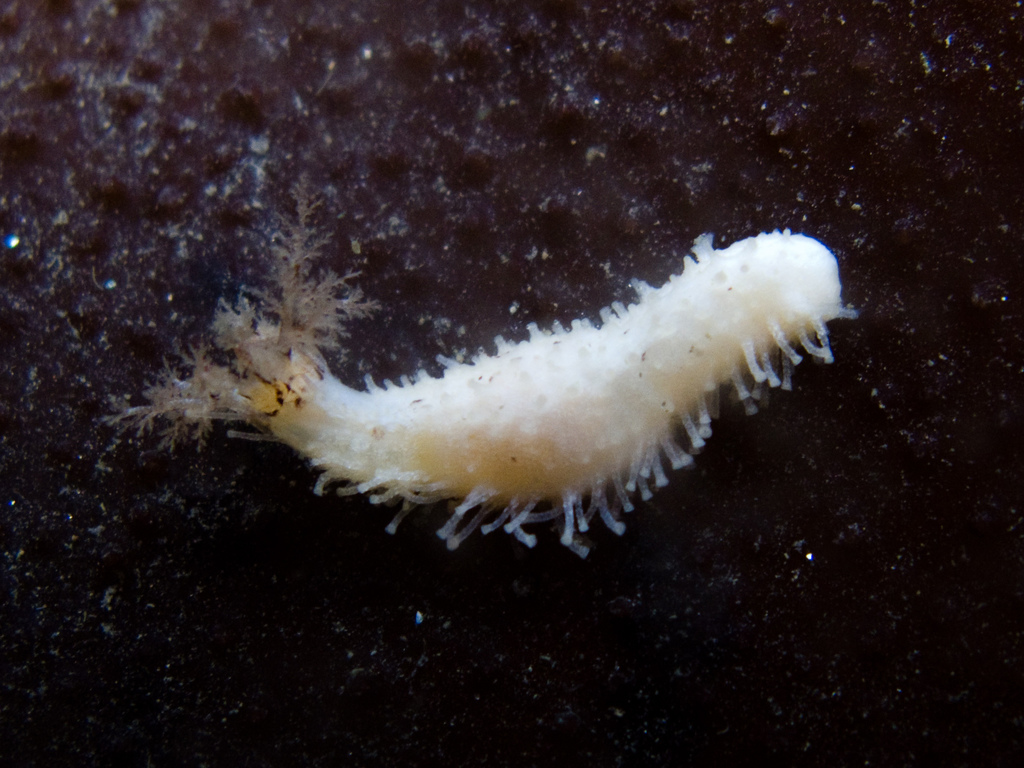
(c) Ken-ichi Ueda, some rights reserved (CC BY) · licence
Family: Sclerodactylidae · Class: Holothuroidea · Order: Dendrochirotida
Eupentacta quinquesemita (Stiff-footed sea cucumber) is a California animal in the Sclerodactylidae family.
The stiff-footed sea cucumber (Eupentacta quinquesemita) is a marine echinoderm characterized by an elongated, cylindrical body with leathery skin and a crown of branched tentacles surrounding the mouth. Adults typically measure 5 to 15 centimeters (2 to 6 inches) in length, with a robust body that tapers at both ends. The species displays variable coloration ranging from pale yellow to reddish-brown or purple, often with darker mottled patterns. Ten rows of tube feet run along the body length, giving the species its common name reference to "stiff-footed" locomotion. Eupentacta quinquesemita occurs along the Pacific coast from British Columbia to central California. The species is abundant throughout much of this range, inhabiting both protected bays and exposed coastal areas (E-Flora BC). In California, populations are documented from intertidal zones to subtidal depths, representing an important component of rocky reef ecosystems. This species occupies rocky substrates in low intertidal areas extending to depths of 15 meters, though some sources indicate it may occur to 55 meters in subtidal habitats (SeaLifeBase, Grokipedia). The stiff-footed sea cucumber shows strong preference for hard bottom environments, particularly rocky reefs and boulder fields where it can anchor securely using its tube feet. It tolerates a range of wave exposure conditions, from sheltered coves to moderately exposed coastlines. As a deposit feeder, Eupentacta quinquesemita extends its branched tentacles to collect organic particles, detritus, and microorganisms from surrounding sediments and surfaces. The species exhibits distinct diurnal behavior, retracting its feeding tentacles during daylight hours and extending them primarily during darkness (SeaLifeBase). Like other sea cucumbers, this species serves an important ecological role in nutrient cycling, processing organic matter and contributing to sediment turnover in benthic communities. Reproduction occurs through broadcast spawning, with males and females releasing gametes into the water column for external fertilization. Larvae undergo planktonic development before settling and metamorphosing into juvenile forms. The species demonstrates considerable regenerative capacity, able to regrow body parts if damaged by predation or environmental stress. Currently, Eupentacta quinquesemita appears to maintain stable populations throughout its range, with no apparent conservation concerns. The species is classified as "Secure" by NatureServe, indicating no immediate threats to population viability (Wikipedia). Its broad distribution, habitat flexibility, and abundance in suitable rocky intertidal and shallow subtidal environments suggest resilience to moderate environmental changes. However, like other marine invertebrates, populations may face long-term challenges from ocean acidification, warming sea temperatures, and coastal development impacts on rocky shore habitats. The species' role in marine protected areas along the California coast may provide important refugia for maintaining healthy population levels.
Classification
Class: Holothuroidea · Order: Dendrochirotida · Family: Sclerodactylidae
Frequently asked questions
How is Eupentacta quinquesemita classified?
Eupentacta quinquesemita belongs to class Holothuroidea, order Dendrochirotida, family Sclerodactylidae.
What family does Eupentacta quinquesemita belong to?
Eupentacta quinquesemita is in the Sclerodactylidae family.
What is Eupentacta quinquesemita?
The stiff-footed sea cucumber (Eupentacta quinquesemita) is a marine echinoderm characterized by an elongated, cylindrical body with leathery skin and a crown of branched tentacles surrounding the mouth.
Is Eupentacta quinquesemita found in California?
Yes. Eupentacta quinquesemita is recorded in California in The California Species Project's catalogue.
More California species
This species has no close relatives in our California data — here are other species to explore.
Data from The California Species Project — 14,000+ California species with verified data from CNPS, CDFW, USFWS, and more.