Eupeodes fumipennis
Western Aphideater
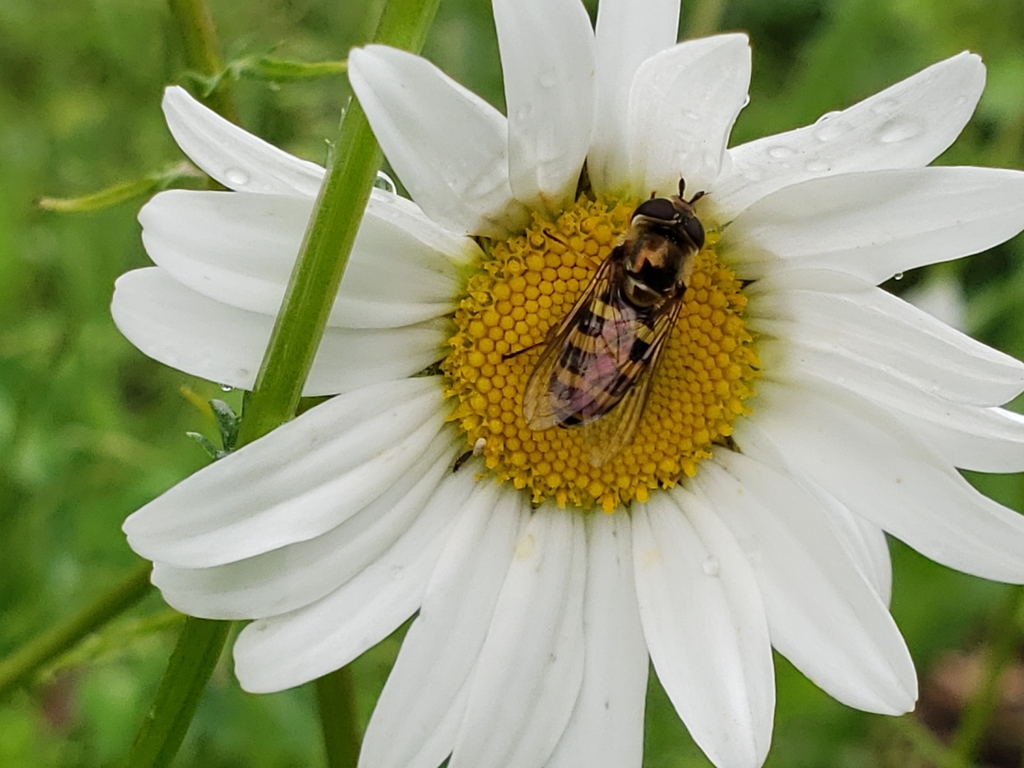
(c) Gavin Slater, some rights reserved (CC BY) · licence
Family: Syrphidae · Class: Insecta · Order: Diptera
Eupeodes fumipennis (Western Aphideater) is a California animal in the Syrphidae family.
The Western Aphideater (Eupeodes fumipennis) is a hover fly in the family Syrphidae, characterized by its distinctive appearance and beneficial ecological role as both pollinator and biological control agent. Adults typically measure 8-12 mm in length with a robust, moderately hairy body. The species displays the characteristic yellow and black striped pattern common to many syrphid flies, with distinctive wing markings that include darkened areas along the wing margins, giving rise to the 'fumipennis' (smoky-winged) designation. The large compound eyes are prominent, and males can be distinguished from females by their holoptic eyes that meet at the top of the head. Eupeodes fumipennis occurs across western North America, with documented populations in California extending through multiple counties. According to the U.S. Fish and Wildlife Service, the species is present in both Sonoma and Santa Barbara counties, with populations also documented at several National Wildlife Refuges including Don Edwards San Francisco Bay, Ellicott Slough, and Grasslands Wildlife Management Area (USFWS ECOS 2025). The species' range extends beyond California into other western states, though current distribution data focuses primarily on California populations. This hover fly inhabits diverse habitat types, demonstrating considerable ecological flexibility. According to NatureServe, the species occurs in grasslands, coastal prairies, sandhill chaparral, urban and suburban gardens, croplands, orchards, and riparian woodlands (NatureServe Explorer 2025). This broad habitat tolerance allows the species to persist in both natural and human-modified environments, from sea level coastal areas to inland valley systems. The species shows particular affinity for areas with abundant flowering plants that provide nectar resources for adults. Adult Western Aphideaters are active pollinators, visiting a wide variety of flowering plants for nectar. Their larvae are aphidophagous, feeding exclusively on aphids, which makes them valuable biological control agents in both natural ecosystems and agricultural settings. Females lay eggs near aphid colonies, and the developing larvae consume substantial numbers of aphids during their development. Adults are most active during warmer months, with peak flight activity typically occurring from late spring through early fall. The species overwinters as pupae in soil or leaf litter. Currently, Eupeodes fumipennis has no federal or state conservation listing status, indicating stable populations across its range as of December 2025. However, like many native pollinators, the species may face pressures from habitat modification, pesticide use, and climate change. The species' presence in both natural habitats and human-modified landscapes, including agricultural areas and urban gardens, suggests some resilience to environmental changes. Conservation efforts that maintain diverse flowering plant communities and reduce pesticide applications benefit this species along with other beneficial insects. The species' dual role as pollinator and aphid predator makes it particularly valuable for integrated pest management strategies in agricultural systems.
Classification
Class: Insecta · Order: Diptera · Family: Syrphidae
Frequently asked questions
How is Eupeodes fumipennis classified?
Eupeodes fumipennis belongs to class Insecta, order Diptera, family Syrphidae.
What family does Eupeodes fumipennis belong to?
Eupeodes fumipennis is in the Syrphidae family.
What is Eupeodes fumipennis?
The Western Aphideater (Eupeodes fumipennis) is a hover fly in the family Syrphidae, characterized by its distinctive appearance and beneficial ecological role as both pollinator and biological control agent.
Is Eupeodes fumipennis found in California?
Yes. Eupeodes fumipennis is recorded in California in The California Species Project's catalogue.
Related species
Other California species in the same genus, family, or bioregion.
Data from The California Species Project — 14,000+ California species with verified data from CNPS, CDFW, USFWS, and more.