Euphagus cyanocephalus
Brewer's Blackbird
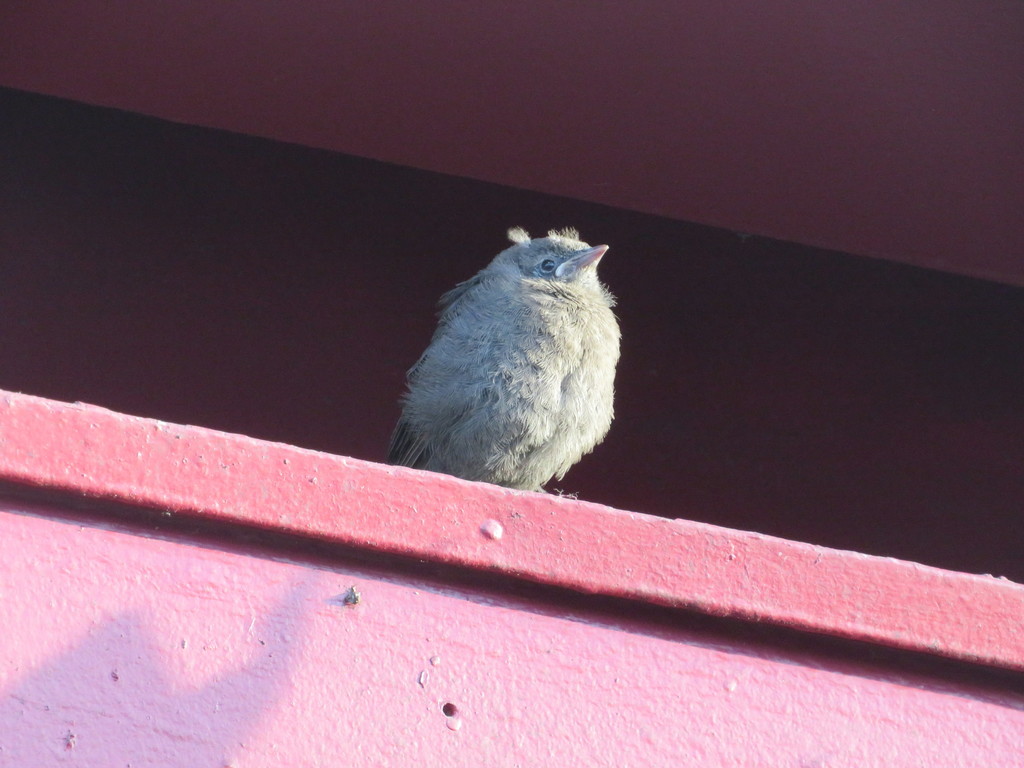
(c) Linzy L., some rights reserved (CC BY-SA) · licence
Family: Icteridae · Class: Aves · Order: Passeriformes
Euphagus cyanocephalus (Brewer's Blackbird) is a California animal in the Icteridae family.
Brewer's Blackbird is a medium-sized songbird measuring 20 to 25 centimeters (8 to 10 inches) in length with a wingspan of 36 to 39 centimeters (14 to 15 inches). Males weigh approximately 63 grams (2.2 ounces), while females are slightly smaller at 56 grams (2.0 ounces). Breeding males display glossy black plumage with iridescent purple and green highlights on the head and neck, and bright yellow eyes. Females and non-breeding males are brownish-gray with darker wings and tail, and brown eyes. The bill is straight and pointed, typical of icterids, measuring approximately 2 centimeters in length. Brewer's Blackbird ranges across western North America from British Columbia south to Baja California and east to the Great Lakes region. In California, the species occurs throughout the state from sea level to elevations of 3,000 meters (9,800 feet). The species is present year-round in most of California, though northern populations may move to lower elevations or more southern areas during winter months. Dense breeding populations occur in the Central Valley, coastal regions, and mountain meadows. The species inhabits diverse open and semi-open environments including agricultural fields, grasslands, parks, golf courses, shopping center parking lots, and residential areas. Brewer's Blackbirds prefer areas with scattered trees or shrubs for nesting and roosting, combined with open ground for foraging. The species has adapted well to human-modified landscapes and is commonly found in urban and suburban environments. During breeding season, they favor areas near water sources including irrigation ditches, ponds, and streams. Brewer's Blackbirds are opportunistic omnivores with a diet consisting of insects, seeds, fruits, and grains. Common prey items include beetles, caterpillars, grasshoppers, and fly larvae, particularly during the breeding season when protein demands are higher. They frequently forage on the ground, walking rather than hopping, and often follow livestock to capture disturbed insects. The species breeds from April through July, constructing bulky cup nests in trees, shrubs, or occasionally on building ledges. Females lay 3 to 7 pale gray or greenish eggs marked with brown spots and incubate them for 12 to 14 days. Young fledge after 13 to 14 days but remain dependent on parents for several additional weeks. Brewer's Blackbird is not federally or state listed and maintains stable populations across most of its range. According to the North American Breeding Bird Survey, continental populations have remained relatively stable since 1970, with some regional variations. The species has benefited from agricultural expansion and urban development, which have created favorable foraging habitats. Christmas Bird Count data indicates consistent wintering populations in California. Climate change may affect the species through altered precipitation patterns and temperature regimes, but current population trends do not indicate conservation concern. The species' adaptability to human environments and diverse diet contribute to its continued success across western North America.
Classification
Class: Aves · Order: Passeriformes · Family: Icteridae
Frequently asked questions
How is Euphagus cyanocephalus classified?
Euphagus cyanocephalus belongs to class Aves, order Passeriformes, family Icteridae.
What family does Euphagus cyanocephalus belong to?
Euphagus cyanocephalus is in the Icteridae family.
What is Euphagus cyanocephalus?
Brewer's Blackbird is a medium-sized songbird measuring 20 to 25 centimeters (8 to 10 inches) in length with a wingspan of 36 to 39 centimeters (14 to 15 inches).
Is Euphagus cyanocephalus found in California?
Yes. Euphagus cyanocephalus is recorded in California in The California Species Project's catalogue.
Related species
Other California species in the same genus, family, or bioregion.
Data from The California Species Project — 14,000+ California species with verified data from CNPS, CDFW, USFWS, and more.