Euphilotes intermedia
Intermediate Dotted-Blue
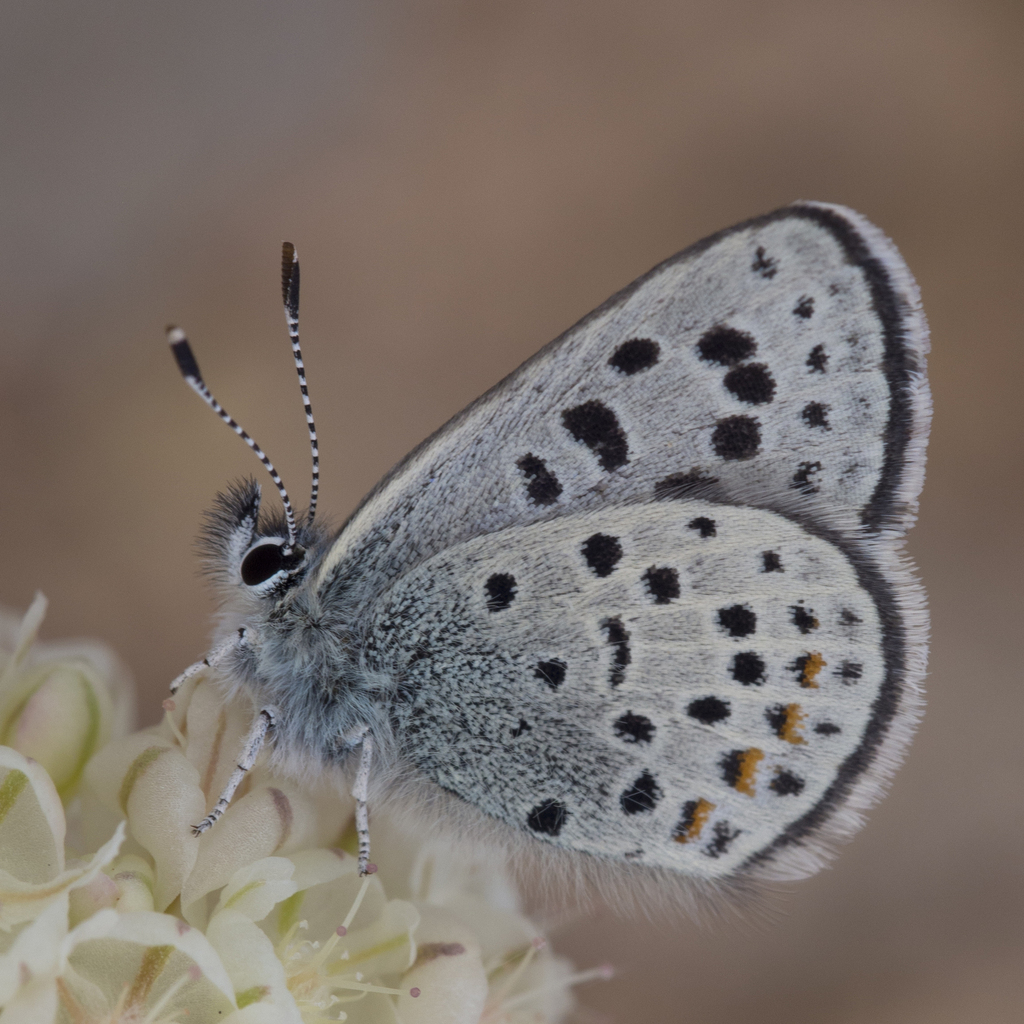
no rights reserved · CC0
Family: Lycaenidae · Class: Insecta · Order: Lepidoptera
Euphilotes intermedia (Intermediate Dotted-Blue) is a California animal in the Lycaenidae family.
The Intermediate Dotted-Blue (Euphilotes intermedia) is a small butterfly in the family Lycaenidae, measuring approximately 20-25 mm (0.8-1.0 inches) in wingspan. Males display blue dorsal wing surfaces with narrow black margins, while females are typically brownish-gray above. Both sexes exhibit white-fringed wings and distinctive orange submarginal spots on the hindwing undersides, which appear as small dotted patterns that give the species its common name. The ventral wing surfaces are pale gray to white with black spots and orange crescents near the wing margins. The species occurs in western Oregon south to northern California, with an isolated population documented in northern Arizona. Within California, the butterfly is found primarily in the Sierra Nevada foothills and Cascade Range, typically at elevations between 900 and 2,100 meters (3,000-7,000 feet). The disjunct Arizona population represents a significant range extension from the main Pacific Coast distribution. Intermediate Dotted-Blue butterflies inhabit dry, open areas including sagebrush scrub, chaparral margins, and rocky slopes where their host plants occur. The species shows strong habitat fidelity to areas supporting sulphur-flower buckwheat (Eriogonum umbellatum) and Lobb's buckwheat (Eriogonum lobbii). These habitats are characterized by well-drained soils, full sun exposure, and sparse to moderate shrub cover. The butterfly typically occurs in patchy distributions corresponding to host plant availability. Adults are active from May through August, with peak flight periods varying by elevation and local climate conditions. Males establish territories near host plants and engage in perching behavior to intercept passing females. Mating occurs on or near the buckwheat flowers, where females subsequently deposit eggs singly on flower heads or developing seed clusters. Larvae feed exclusively on flowers and developing seeds of their Eriogonum hosts, with development closely synchronized to the plants' flowering and fruiting cycles. The species completes one generation per year, overwintering in the egg stage. Larvae are attended by ants, particularly species in the genus Formica, which provide protection in exchange for honeydew secretions. This mutualistic relationship is typical of many Lycaenidae species and may influence habitat selection and population dynamics. The conservation status of Euphilotes intermedia appears secure across most of its range, with no current federal or state listing designations. However, like many specialized butterflies dependent on specific host plants, the species may be vulnerable to habitat fragmentation, altered fire regimes, and climate change impacts on buckwheat phenology. The isolated Arizona population warrants particular attention due to its geographic separation and potential genetic distinctiveness. Grazing pressure and recreational development in montane areas could affect local populations by impacting host plant abundance and habitat quality.
Classification
Class: Insecta · Order: Lepidoptera · Family: Lycaenidae
Frequently asked questions
How is Euphilotes intermedia classified?
Euphilotes intermedia belongs to class Insecta, order Lepidoptera, family Lycaenidae.
What family does Euphilotes intermedia belong to?
Euphilotes intermedia is in the Lycaenidae family.
What is Euphilotes intermedia?
The Intermediate Dotted-Blue (Euphilotes intermedia) is a small butterfly in the family Lycaenidae, measuring approximately 20-25 mm (0.8-1.0 inches) in wingspan.
Is Euphilotes intermedia found in California?
Yes. Euphilotes intermedia is recorded in California in The California Species Project's catalogue.
Related species
Other California species in the same genus, family, or bioregion.
Data from The California Species Project — 14,000+ California species with verified data from CNPS, CDFW, USFWS, and more.