Euphydryas anicia
Anicia Checkerspot
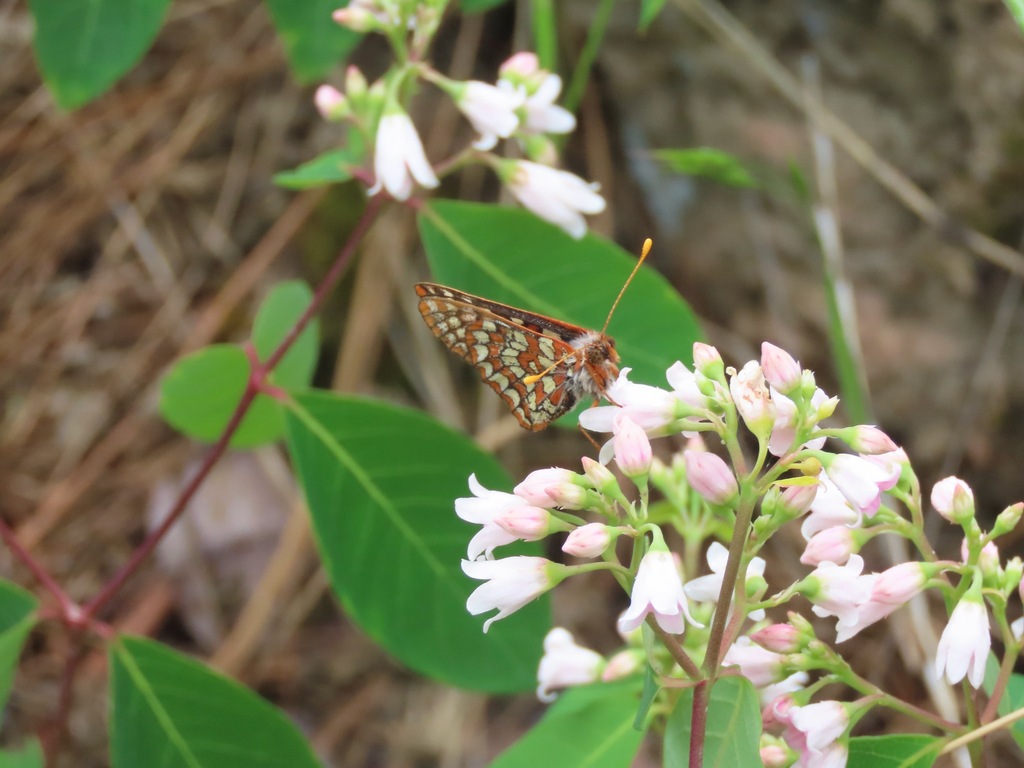
no rights reserved · CC0
Family: Nymphalidae · Class: Insecta · Order: Lepidoptera
Euphydryas anicia (Anicia Checkerspot) is a California animal in the Nymphalidae family.
The Anicia checkerspot is a medium-sized butterfly in the family Nymphalidae, characterized by distinctive checkered wing patterns. Adults typically measure 40 to 55 mm (1.6 to 2.2 inches) in wingspan. The dorsal wing surfaces display a complex pattern of orange, red, and cream-colored patches bordered by black lines, creating the characteristic checkerboard appearance. The ventral surfaces are generally paler with more subdued coloration. Sexual dimorphism is present, with females typically larger than males and displaying slightly different wing patterns. Euphydryas anicia has a broad distribution across western North America, extending from British Columbia south to northern Mexico and from the Pacific Coast east to the Rocky Mountains. In California, populations occur throughout the Sierra Nevada, Cascade Range, and Coast Ranges, typically at elevations ranging from 300 to 3,400 meters (1,000 to 11,200 feet). The species shows considerable geographical variation across its range, with multiple subspecies recognized based on morphological and ecological differences. The species inhabits diverse montane environments including meadows, forest clearings, alpine zones, and subalpine areas. Adults are commonly found in areas with abundant wildflower nectar sources and suitable larval host plants. Habitat preferences vary by elevation and region, with populations adapting to local environmental conditions. The species occurs in both natural and moderately disturbed habitats, including areas near hiking trails and forest roads. Anicia checkerspots are univoltine, producing one generation per year. Adults typically emerge from late May through August, with timing varying by elevation and local climate conditions. Females deposit eggs in clusters on host plants, primarily members of the Plantaginaceae family, including Penstemon, Collinsia, and Castilleja species. Some populations also utilize Scrophularia and other related genera. Larvae develop through five instars, overwintering as partially grown caterpillars that resume feeding in spring. The species exhibits complex population dynamics with natural fluctuations in abundance. Males engage in hilltoping behavior, congregating on elevated terrain to locate mates. Adults feed primarily on flower nectar from a variety of plant species, showing preferences for composite flowers including asters, fleabanes, and thistles. The species demonstrates strong site fidelity, with adults typically remaining within a few hundred meters of their emergence sites. Currently, Euphydryas anicia does not hold federal or state listing status in California. The species maintains stable populations across much of its range, though local populations may face pressures from habitat modification, climate change, and altered fire regimes. High-elevation populations may be particularly vulnerable to warming temperatures that could shift suitable habitat upslope. Conservation efforts focus primarily on maintaining natural habitat connectivity and preserving diverse montane ecosystems that support both adult and larval requirements.
Classification
Class: Insecta · Order: Lepidoptera · Family: Nymphalidae
Frequently asked questions
How is Euphydryas anicia classified?
Euphydryas anicia belongs to class Insecta, order Lepidoptera, family Nymphalidae.
What family does Euphydryas anicia belong to?
Euphydryas anicia is in the Nymphalidae family.
What is Euphydryas anicia?
The Anicia checkerspot is a medium-sized butterfly in the family Nymphalidae, characterized by distinctive checkered wing patterns.
Is Euphydryas anicia found in California?
Yes. Euphydryas anicia is recorded in California in The California Species Project's catalogue.
Related species
Other California species in the same genus, family, or bioregion.
Data from The California Species Project — 14,000+ California species with verified data from CNPS, CDFW, USFWS, and more.