Euphydryas colon
Colon Checkerspot
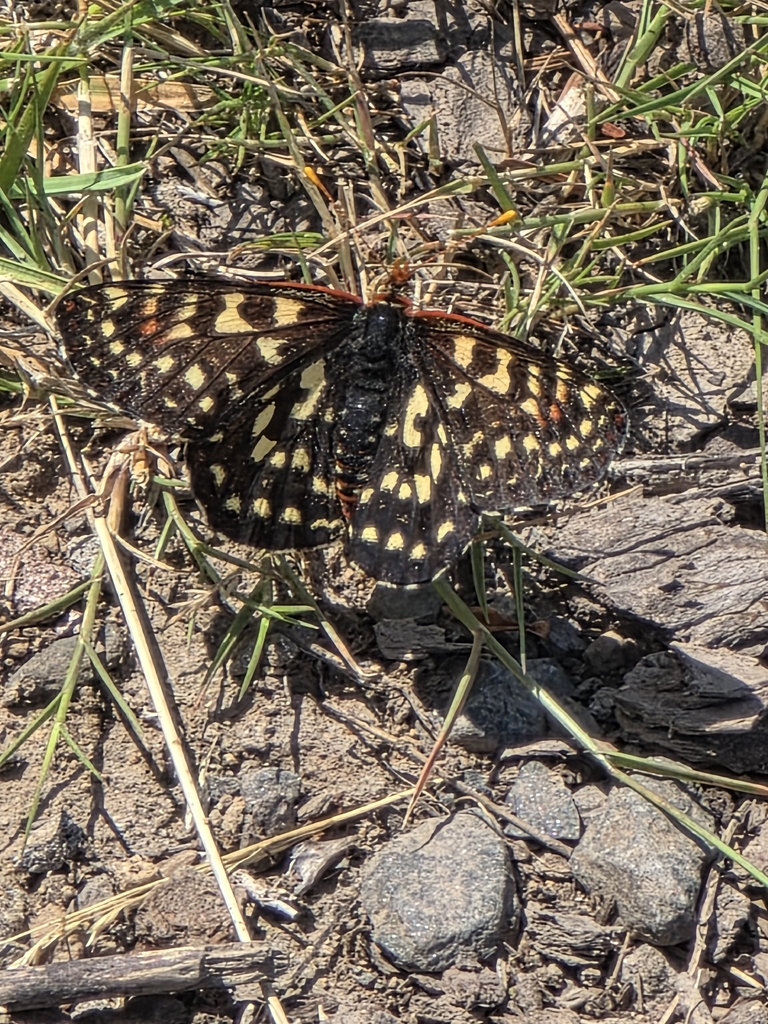
(c) Merlla McLaughlin, some rights reserved (CC BY) · licence
Family: Nymphalidae · Class: Insecta · Order: Lepidoptera
Euphydryas colon (Colon Checkerspot) is a California animal in the Nymphalidae family.
The Colon Checkerspot (Euphydryas colon), also known as the Snowberry Checkerspot, is a medium-sized butterfly in the family Nymphalidae. Adults have a wingspan ranging from 32 to 50 mm (1.3 to 2.0 inches), with females typically larger than males. The dorsal wing surfaces display a distinctive checkerboard pattern of orange-red, cream, and dark brown markings arranged in alternating rows. The forewings feature prominent orange patches near the apex, while the hindwings show cream-colored spots bordered by dark lines. The ventral surfaces are lighter, with intricate patterns of white, orange, and brown markings that provide camouflage when the butterfly rests with wings closed. The Colon Checkerspot occurs across western North America, from southern British Columbia through the western United States to northern Mexico. In California, populations are found primarily in the Sierra Nevada, Cascade Range, and northern Coast Ranges, typically at elevations between 1,200 and 3,000 meters (3,900 to 9,800 feet). The species also occurs in scattered locations in the Rocky Mountains and intermountain regions. This checkerspot inhabits open meadows, forest clearings, and edges of coniferous forests where its host plants are abundant. The species shows a strong preference for areas with partial shade and moderate moisture, often near streams or seasonal wetlands. Adults are commonly observed in subalpine and montane zones dominated by fir, pine, and aspen forests. The butterfly requires a mosaic of habitat types, including both sunny openings for nectaring and partially shaded areas where host plants thrive. Colon Checkerspots are univoltine, producing one generation per year. Adults emerge in late spring to early summer, typically from May through July depending on elevation and local climate conditions. Females lay clusters of 50 to 200 eggs on the underside of host plant leaves, primarily species in the honeysuckle family (Caprifoliaceae). The primary larval host plants include snowberry (Symphoricarpos species), twinberry (Lonicera involucrata), and elderberry (Sambucus species). Caterpillars feed gregariously in early instars before dispersing to feed individually. The species overwinters as partially grown larvae, resuming feeding and development the following spring after snowmelt. Adults are active during warm, sunny periods and are frequently observed nectaring on wildflowers including paintbrush (Castilleja), lupine (Lupinus), and composites. Males exhibit territorial behavior, perching on prominent vegetation and pursuing potential mates or rival males that enter their territory. The Colon Checkerspot currently holds no federal or state listing status in California. However, like many montane species, populations may face challenges from climate change, which could shift suitable habitat to higher elevations. Forest management practices that maintain the mosaic of open meadows and forest edges are important for sustaining populations. The species benefits from periodic disturbance that maintains early successional habitats where host plants flourish. Localized threats may include habitat fragmentation from development and recreational activities in mountain areas.
Classification
Class: Insecta · Order: Lepidoptera · Family: Nymphalidae
Frequently asked questions
How is Euphydryas colon classified?
Euphydryas colon belongs to class Insecta, order Lepidoptera, family Nymphalidae.
What family does Euphydryas colon belong to?
Euphydryas colon is in the Nymphalidae family.
What is Euphydryas colon?
The Colon Checkerspot (Euphydryas colon), also known as the Snowberry Checkerspot, is a medium-sized butterfly in the family Nymphalidae.
Is Euphydryas colon found in California?
Yes. Euphydryas colon is recorded in California in The California Species Project's catalogue.
Related species
Other California species in the same genus, family, or bioregion.
Data from The California Species Project — 14,000+ California species with verified data from CNPS, CDFW, USFWS, and more.