Euphydryas editha monoensis
Mono Checkerspot Butterfly
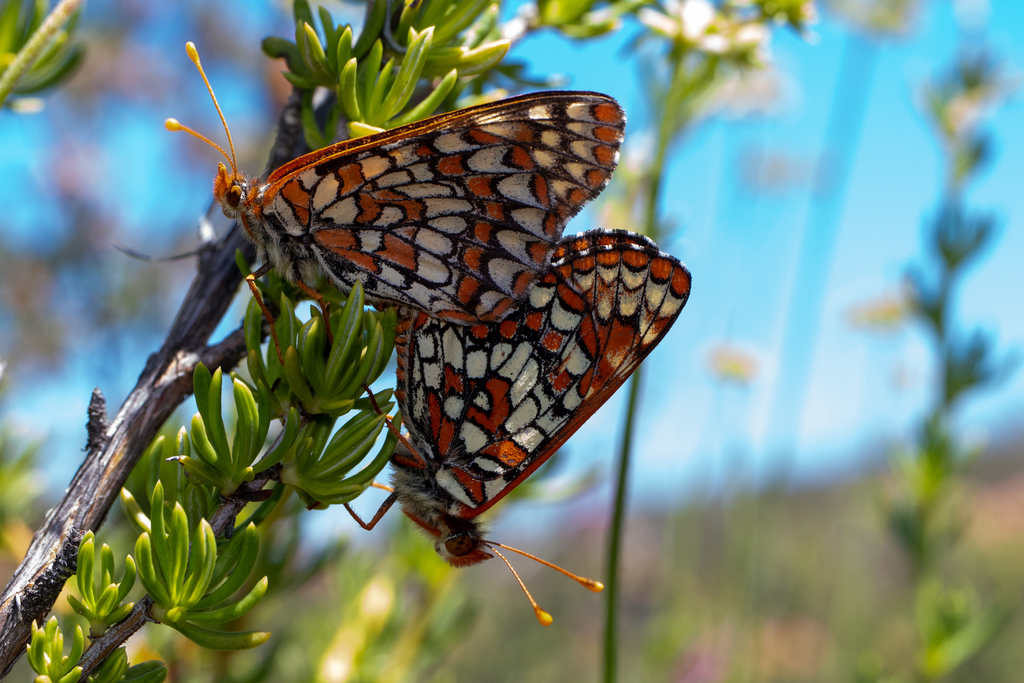
(c) Jess Mullins, some rights reserved (CC BY) · licence
Family: Nymphalidae · Class: Insecta · Order: Lepidoptera
Conservation status: G4G5T2 S1S2
Euphydryas editha monoensis (Mono Checkerspot Butterfly) is a California animal in the Nymphalidae family.
The Mono Checkerspot Butterfly (Euphydryas editha monoensis) is a subspecies of the Edith's checkerspot butterfly endemic to the eastern Sierra Nevada region of California. Adults display the characteristic checkerspot pattern with orange, black, and white markings arranged in a checkered design across the forewings and hindwings. The wingspan typically measures 32 to 44 mm (1.3 to 1.7 inches). Males are generally smaller and more brightly colored than females, with more pronounced orange patches on the upper wing surfaces. The underside of the hindwings shows a distinctive pattern of white spots bordered by black bands. Historically, the Mono Checkerspot occurred in montane meadows and sagebrush habitats throughout the Mono Basin and adjacent areas of the eastern Sierra Nevada. The subspecies is currently known from a limited number of locations in Mono County, representing a significant range reduction from historical distributions. Populations persist in scattered meadow systems between approximately 1,980 and 2,440 meters (6,500 to 8,000 feet) elevation. The species inhabits montane meadow communities characterized by native bunch grasses and forb species. Primary habitat includes wet and dry meadows within sagebrush steppe and Jeffrey pine forest zones. Adults require open areas with abundant nectar sources, while larvae depend on specific host plant communities. The butterflies show strong fidelity to meadow edges and areas with moderate moisture levels, avoiding both the wettest and driest portions of meadow systems. Mono Checkerspot butterflies are univoltine, completing one generation per year. Adults typically emerge from late May through July, with peak flight activity occurring in June. Females deposit clusters of 50 to 200 eggs on or near host plants, primarily species in the Plantaginaceae family, including owl's clover (Castilleja species) and penstemon species. Larvae feed communally during early instars before dispersing. The species overwinters as third or fourth instar larvae in silk shelters, resuming feeding the following spring. Adults are active during daylight hours and feed on nectar from various wildflowers including lupines, buckwheat, and native thistles. The Mono Checkerspot carries a global rank of G4G5T2, indicating the subspecies is imperiled globally, while the full species is secure. In California, it ranks S1S2, reflecting its critically imperiled to imperiled status. The subspecies faces significant conservation challenges from habitat degradation, livestock grazing, recreational activities, and climate change impacts on montane meadow systems. Drought conditions and altered precipitation patterns particularly threaten the moisture-dependent meadow habitats essential for larval development. Urban development and water diversions in the Mono Basin have further reduced available habitat. Conservation efforts focus on habitat protection and restoration of degraded meadow systems, though no formal recovery plan currently exists for this subspecies.
Classification
Class: Insecta · Order: Lepidoptera · Family: Nymphalidae
Conservation status
G4G5T2 S1S2
Frequently asked questions
How is Euphydryas editha monoensis classified?
Euphydryas editha monoensis belongs to class Insecta, order Lepidoptera, family Nymphalidae.
What family does Euphydryas editha monoensis belong to?
Euphydryas editha monoensis is in the Nymphalidae family.
Is Euphydryas editha monoensis protected or of conservation concern?
Euphydryas editha monoensis carries the following status: G4G5T2 S1S2.
What is Euphydryas editha monoensis?
The Mono Checkerspot Butterfly (Euphydryas editha monoensis) is a subspecies of the Edith's checkerspot butterfly endemic to the eastern Sierra Nevada region of California.
Is Euphydryas editha monoensis found in California?
Yes. Euphydryas editha monoensis is recorded in California in The California Species Project's catalogue.
Related species
Other California species in the same genus, family, or bioregion.
Data from The California Species Project — 14,000+ California species with verified data from CNPS, CDFW, USFWS, and more.