Euphyes vestris harbisoni
Dun Skipper
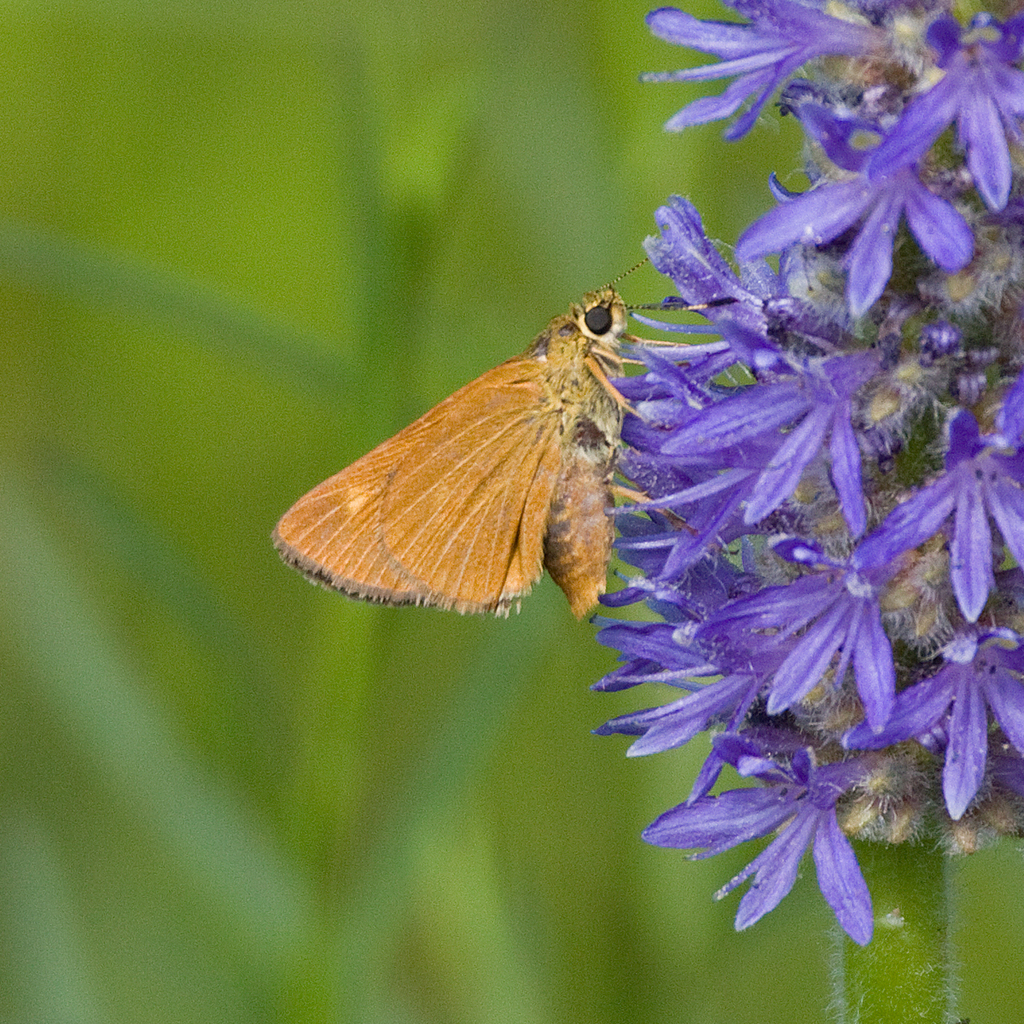
(c) Dan Vickers, some rights reserved (CC BY) · licence
Family: Hesperiidae · Class: Insecta · Order: Lepidoptera
Conservation status: G5T1 S1S2
Euphyes vestris harbisoni (Dun Skipper) is a California animal in the Hesperiidae family.
Harbison's Dun Skipper is a subspecies of the Dun Skipper butterfly, distinguished from other subspecies by its Pacific Coast distribution and specific ecological adaptations. Adults are small, brown butterflies measuring approximately 25-32 mm (1.0-1.3 inches) in wingspan. Males typically exhibit a dark brown dorsal surface with a distinctive stigma (scent patch) on the forewings, while females are slightly larger with more uniform brown coloration. The underside of the hindwings shows a lighter brown to grayish-brown coloration with subtle spotting patterns that help distinguish this subspecies from related taxa. The subspecies occurs along the Pacific Coast as part of the broader range of Euphyes vestris, which extends from Nova Scotia west across southern Canada to southern Alberta, south to Florida, the Gulf Coast, and eastern Texas, with separate populations in the high plains and Rocky Mountains, and on the Pacific Coast. Harbison's Dun Skipper represents the Pacific Coast population, found in suitable habitat from California northward. According to NatureServe, this subspecies has extremely limited distribution with a global rank of G5T1, indicating it is critically imperiled despite the parent species being secure overall (NatureServe Explorer). This subspecies inhabits wetland margins, marshy areas, and moist grasslands where its host plants occur. The butterflies require areas with various sedges including chufa flatsedge (Cyperus esculentus) and sun sedge (Carex heliophila). Adults are typically found in close association with these sedge communities, often in coastal marshes, stream margins, and seasonally wet meadows. The species shows strong fidelity to sedge-dominated habitats and rarely strays far from suitable host plant communities. Harbison's Dun Skipper exhibits typical hesperiid behavior, with males establishing territories near host plants and engaging in perching behavior to locate potential mates. Adults have a rapid, darting flight pattern characteristic of skippers, making them challenging to observe and photograph. Females lay eggs singly on or near host sedges, with larvae developing within protective shelters created by rolling or tying sedge leaves together. The species likely has one generation per year in its Pacific Coast range, with adults flying during summer months. Larvae overwinter as partially grown caterpillars within their leaf shelters. The U.S. Fish and Wildlife Service maintains a species profile for Harbison's Dun Skipper, reflecting conservation concern for this subspecies (USFWS Species Profile). The subspecies faces significant threats from habitat loss due to wetland development, agricultural conversion, and urban expansion along the Pacific Coast. Climate change poses additional risks through altered precipitation patterns affecting sedge habitat and increased wildfire frequency. Water management practices that alter natural hydrology of wetland systems also threaten remaining populations. The extremely restricted range and small population size make this subspecies particularly vulnerable to extinction from stochastic events or localized habitat destruction.
Classification
Class: Insecta · Order: Lepidoptera · Family: Hesperiidae
Conservation status
G5T1 S1S2
Frequently asked questions
How is Euphyes vestris harbisoni classified?
Euphyes vestris harbisoni belongs to class Insecta, order Lepidoptera, family Hesperiidae.
What family does Euphyes vestris harbisoni belong to?
Euphyes vestris harbisoni is in the Hesperiidae family.
Is Euphyes vestris harbisoni protected or of conservation concern?
Euphyes vestris harbisoni carries the following status: G5T1 S1S2.
What is Euphyes vestris harbisoni?
Harbison's Dun Skipper is a subspecies of the Dun Skipper butterfly, distinguished from other subspecies by its Pacific Coast distribution and specific ecological adaptations.
Is Euphyes vestris harbisoni found in California?
Yes. Euphyes vestris harbisoni is recorded in California in The California Species Project's catalogue.
Related species
Other California species in the same genus, family, or bioregion.
Data from The California Species Project — 14,000+ California species with verified data from CNPS, CDFW, USFWS, and more.