Eupithecia cognizata
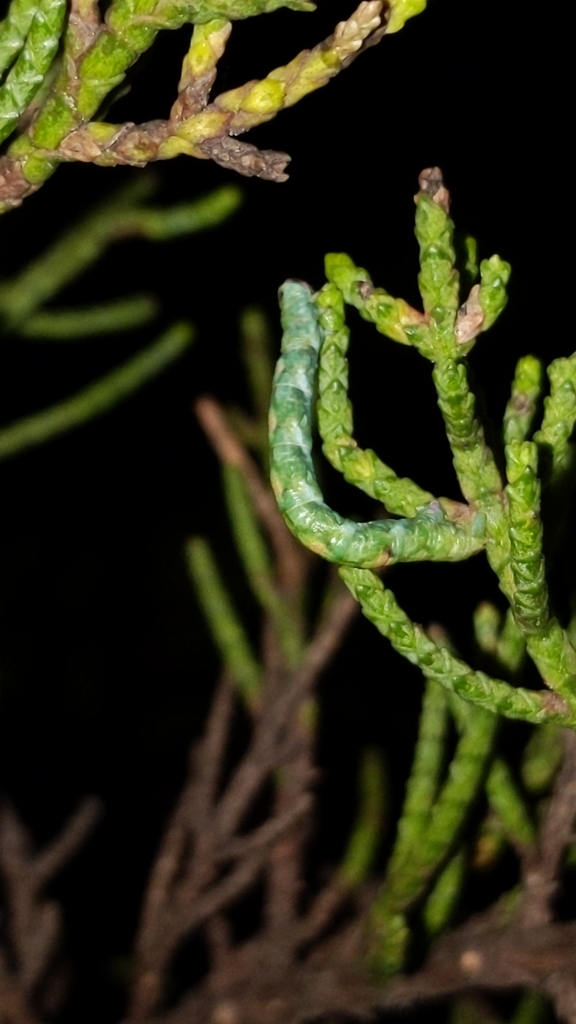
(c) Alan Rockefeller, some rights reserved (CC BY) · licence
Family: Geometridae · Class: Insecta · Order: Lepidoptera
Eupithecia cognizata is a California animal in the Geometridae family.
Eupithecia cognizata is a small moth in the family Geometridae, commonly known as geometrids or inchworm moths. This species belongs to the genus Eupithecia, which comprises numerous small, cryptically colored moths that are often difficult to distinguish from one another. Adults typically measure 15-25 mm (0.6-1.0 inches) in wingspan, displaying the characteristic narrow forewings and broad hindwings of the Geometridae family. The forewings are typically grayish-brown with subtle banding patterns and fine cross-lines that provide effective camouflage against tree bark and lichen-covered surfaces. The hindwings are usually paler with less distinct markings. The distribution and range of Eupithecia cognizata in California requires verification from current taxonomic databases, as detailed range information is not readily available in standard references. Many Eupithecia species have restricted distributions tied to specific host plant communities, particularly in montane and coastal regions of the state. The species likely occurs in areas where suitable host plants are present, though specific elevation ranges and county-level distribution data need confirmation from specialized lepidopteran surveys. Habitat requirements for E. cognizata are closely linked to the presence of larval host plants. Eupithecia larvae are typically oligophagous, feeding on flowers, fruits, or developing seeds of specific plant families. Many species in this genus are associated with shrubs and herbaceous plants in the families Rosaceae, Asteraceae, or Ericaceae. Adults are attracted to flowers for nectar feeding and may be found in a variety of plant communities including chaparral, mixed evergreen forest, and riparian woodland where host plants occur. The life cycle follows the typical moth pattern with complete metamorphosis. Adults are primarily nocturnal and are attracted to artificial lights, making them occasional subjects of moth surveys and citizen science projects. Flight periods vary among Eupithecia species but many have single or double broods per year, with adults emerging in spring through fall depending on the species and local climate conditions. Larvae pupate in soil or leaf litter, overwintering as pupae in most temperate species. Mating behavior involves pheromone release by females to attract males, typical of most moth species. The conservation status of Eupithecia cognizata has not been formally assessed by state or federal agencies. Many small moth species remain poorly studied regarding population trends and conservation needs. The primary threats to Eupithecia species generally include habitat loss from development, altered fire regimes, invasive plant species that displace native host plants, and climate change effects on plant phenology. Light pollution may also affect adult behavior and reproduction in nocturnal moths. Without comprehensive surveys and taxonomic work, the conservation needs of this species remain uncertain. Further research is needed to establish baseline population data, confirm host plant relationships, and assess habitat requirements for effective conservation planning.
Classification
Class: Insecta · Order: Lepidoptera · Family: Geometridae
Frequently asked questions
How is Eupithecia cognizata classified?
Eupithecia cognizata belongs to class Insecta, order Lepidoptera, family Geometridae.
What family does Eupithecia cognizata belong to?
Eupithecia cognizata is in the Geometridae family.
What is Eupithecia cognizata?
Eupithecia cognizata is a small moth in the family Geometridae, commonly known as geometrids or inchworm moths.
Is Eupithecia cognizata found in California?
Yes. Eupithecia cognizata is recorded in California in The California Species Project's catalogue.
Related species
Other California species in the same genus, family, or bioregion.
Data from The California Species Project — 14,000+ California species with verified data from CNPS, CDFW, USFWS, and more.