Eupithecia lafontaineata
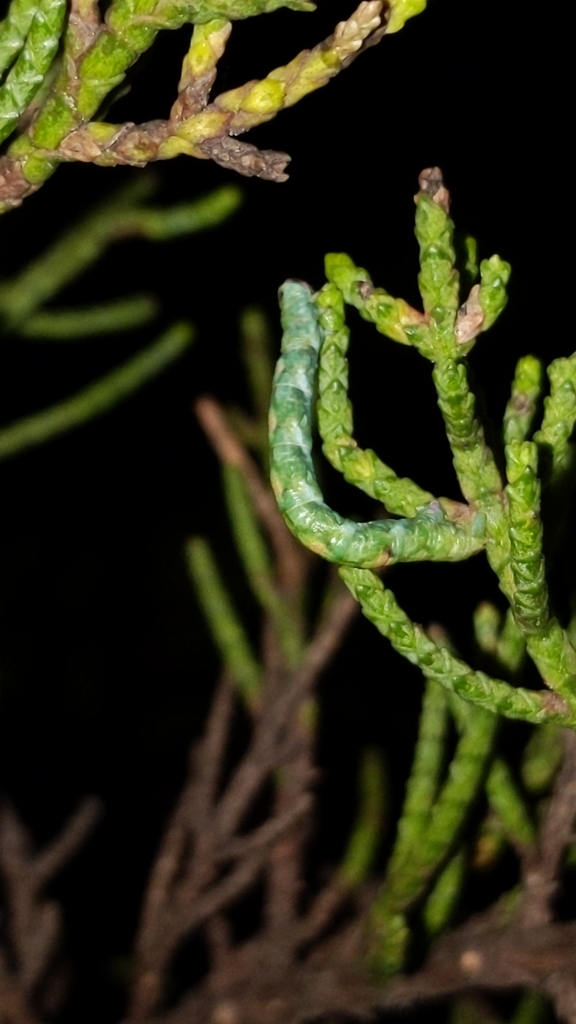
(c) Alan Rockefeller, some rights reserved (CC BY) · licence
Family: Geometridae · Class: Insecta · Order: Lepidoptera
Eupithecia lafontaineata is a California animal in the Geometridae family.
Eupithecia lafontaineata is a small moth species in the family Geometridae, commonly known as geometrid moths or measuring worms. This species belongs to the genus Eupithecia, which comprises numerous small, cryptically colored moths that are often difficult to distinguish from one another without detailed examination of wing patterns and genitalic structures. As a geometrid moth, E. lafontaineata likely measures 15 to 25 mm (0.6 to 1.0 inches) in wingspan, typical for the genus Eupithecia. The forewings are generally muted in coloration, ranging from gray to brown with subtle crosslines and markings that provide camouflage when the moth rests on bark or other substrates. The hindwings are typically paler than the forewings. Like other Eupithecia species, the antennae are thread-like in both sexes, and the body is slender with relatively long legs adapted for resting in a characteristic stretched posture. The distribution and range of E. lafontaineata in California remains poorly documented in available literature. Many Eupithecia species have restricted ranges and specific habitat requirements, often associated with particular host plant communities. Without comprehensive survey data, the current extent of occurrence for this species within the state is uncertain. Habitat preferences for E. lafontaineata are not well-established in published sources. Most Eupithecia species are associated with specific vegetation types and elevation zones, often occurring in mountainous or foothill regions where their larval host plants are present. The larvae typically feed on flowers, developing seeds, or young shoots of particular plant families, making habitat availability closely tied to the distribution of suitable host plants. The life history and behavior of E. lafontaineata follows the typical pattern for geometrid moths. Adults are likely nocturnal and attracted to artificial lights. Females deposit eggs on or near the larval host plants, and the caterpillars are characterized by the looping locomotion that gives geometrid moths their common name. Larvae feed by consuming flowers, fruits, or young foliage of the host plant, with development likely requiring one generation per year in California's climate. Pupation typically occurs in soil or leaf litter near the host plant. The conservation status of E. lafontaineata has not been formally assessed by state or federal agencies. Like many small moth species, this taxon may face threats from habitat loss, particularly if it has narrow host plant requirements or limited distribution. Urban development, agricultural conversion, and altered fire regimes could potentially impact populations if the species occurs in areas subject to these pressures. Climate change may also affect the species through shifts in host plant phenology or suitable habitat zones. Comprehensive surveys would be needed to determine population status, distribution, and specific conservation needs for this species in California.
Classification
Class: Insecta · Order: Lepidoptera · Family: Geometridae
Frequently asked questions
How is Eupithecia lafontaineata classified?
Eupithecia lafontaineata belongs to class Insecta, order Lepidoptera, family Geometridae.
What family does Eupithecia lafontaineata belong to?
Eupithecia lafontaineata is in the Geometridae family.
What is Eupithecia lafontaineata?
Eupithecia lafontaineata is a small moth species in the family Geometridae, commonly known as geometrid moths or measuring worms.
Is Eupithecia lafontaineata found in California?
Yes. Eupithecia lafontaineata is recorded in California in The California Species Project's catalogue.
Related species
Other California species in the same genus, family, or bioregion.
Data from The California Species Project — 14,000+ California species with verified data from CNPS, CDFW, USFWS, and more.