Eupithecia miserulata
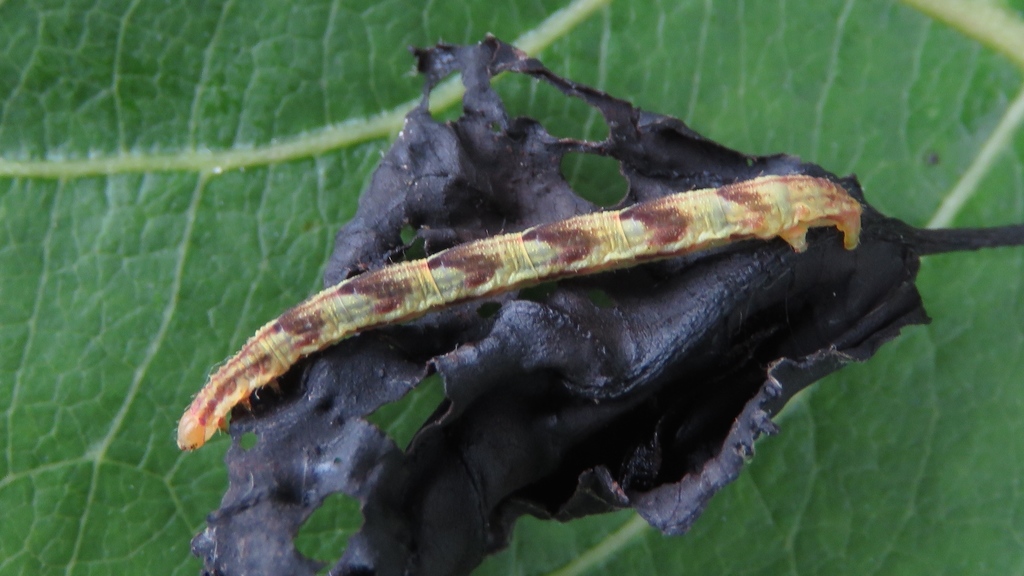
(c) Dan MacNeal, some rights reserved (CC BY) · licence
Family: Geometridae · Class: Insecta · Order: Lepidoptera
Eupithecia miserulata is a California animal in the Geometridae family.
Eupithecia miserulata is a small moth species belonging to the family Geometridae, commonly known as geometer moths or inchworm moths. This species is part of the diverse genus Eupithecia, which contains numerous small, cryptically colored moths found throughout North America. Adult moths typically measure 15 to 20 mm in wingspan, displaying the characteristic triangular wing shape of the Geometridae family. The forewings are generally gray to brown with subtle darker markings and cross-lines, providing effective camouflage against bark and vegetation surfaces. The hindwings are typically paler than the forewings, often with faint banding patterns. The current distribution of Eupithecia miserulata in California remains poorly documented in accessible scientific literature. Like many Eupithecia species, this moth likely has a localized distribution pattern, potentially occurring in mountainous or foothill regions where suitable host plants are present. The genus Eupithecia is known for its high degree of host plant specificity, with many species dependent on particular plant families or even individual species for larval development. Habitat requirements for E. miserulata are not well-established in current literature, though members of the genus Eupithecia typically inhabit areas where their specific host plants occur. These moths generally prefer environments with adequate cover and moisture, including forest edges, chaparral, woodland clearings, and areas with diverse native vegetation. Elevation preferences and specific microhabitat requirements for this species require further research to establish definitive patterns. Like other Eupithecia species, E. miserulata likely follows an annual life cycle with distinct seasonal activity patterns. Adults probably emerge during specific months when temperatures and daylight conditions are optimal for mating and reproduction. Larvae, known as inchworms due to their distinctive looping locomotion, likely feed internally on flower buds, developing fruits, or seeds of their host plants. This feeding strategy, called cryptophagous behavior, is characteristic of many Eupithecia species and often makes larvae difficult to detect. Pupation typically occurs in soil or leaf litter, with the species overwintering in this stage. The conservation status of Eupithecia miserulata has not been formally assessed by state or federal agencies. This species does not currently appear on endangered species lists or receive special conservation designation. However, like many specialized moth species, E. miserulata may face threats from habitat loss, urban development, pesticide use, and climate change. The potential narrow host plant requirements typical of Eupithecia species could make this moth particularly vulnerable to environmental changes that affect its larval food sources. Light pollution may also impact adult activity patterns and reproductive behavior. Further research is needed to establish basic ecological information about E. miserulata, including definitive host plant associations, flight periods, distribution patterns within California, and population trends. Such information would be essential for any future conservation assessments and management decisions regarding this species.
Classification
Class: Insecta · Order: Lepidoptera · Family: Geometridae
Frequently asked questions
How is Eupithecia miserulata classified?
Eupithecia miserulata belongs to class Insecta, order Lepidoptera, family Geometridae.
What family does Eupithecia miserulata belong to?
Eupithecia miserulata is in the Geometridae family.
What is Eupithecia miserulata?
Eupithecia miserulata is a small moth species belonging to the family Geometridae, commonly known as geometer moths or inchworm moths.
Is Eupithecia miserulata found in California?
Yes. Eupithecia miserulata is recorded in California in The California Species Project's catalogue.
Related species
Other California species in the same genus, family, or bioregion.
Data from The California Species Project — 14,000+ California species with verified data from CNPS, CDFW, USFWS, and more.