Eupithecia nevadata
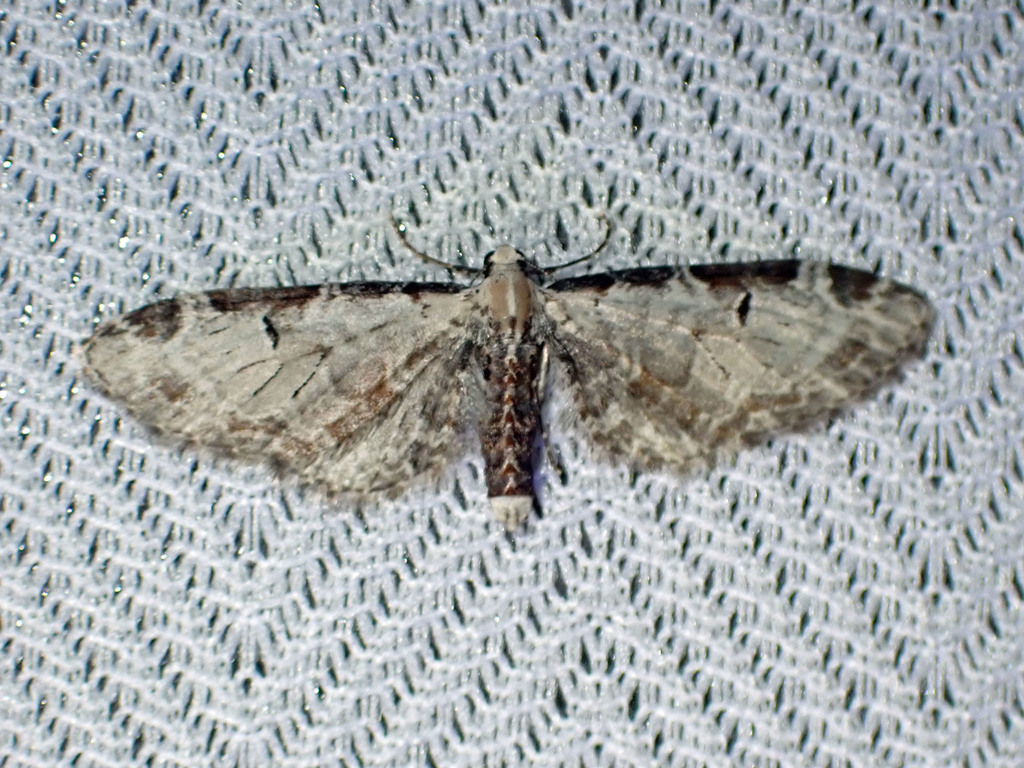
(c) Louis Imbeau, some rights reserved (CC BY) · licence
Family: Geometridae · Class: Insecta · Order: Lepidoptera
Eupithecia nevadata is a California animal in the Geometridae family.
Eupithecia nevadata is a moth in the family Geometridae first described by Alpheus Spring Packard in 1871. This species belongs to the genus Eupithecia, commonly known as pugs, which comprises small geometrid moths typically measuring 15-25 mm in wingspan. The species exhibits the characteristic features of its genus, with relatively narrow forewings and cryptic coloration that provides effective camouflage against bark and lichen substrates. Eupithecia nevadata occurs across a broad range of western North America, extending from British Columbia south through California and east to Colorado. This distribution encompasses diverse montane and submontane ecosystems across the western cordillera. In California, the species likely occurs in mountainous regions where suitable host plants and habitat conditions are present, though specific county-level distribution records require further documentation. The species inhabits areas where its documented host plants occur, particularly ecosystems supporting Ceanothus (wild lilac) and Purshia (antelope brush) species. In the Pacific Northwest, these host plant associations have been well documented. Ceanothus species are prominent shrubs in chaparral, oak woodland, and mixed conifer forest communities, while Purshia typically occurs in sagebrush steppe and pinyon-juniper woodland habitats. This suggests E. nevadata occupies diverse habitat types ranging from Mediterranean-climate shrublands to high desert environments, likely at elevations where these shrub communities are well developed. As with other Eupithecia species, the larvae are specialized feeders that consume flowers and developing seeds of their host plants rather than foliage. This feeding strategy, known as anthophagy, requires precise timing of larval development with host plant flowering periods. Adult moths are typically active during spring and early summer months, coinciding with the blooming periods of Ceanothus and Purshia species. The cryptic wing patterns and behavior of adults, which rest with wings spread flat against substrate surfaces during daylight hours, provide protection from predation. The taxonomic complexity of E. nevadata is indicated by the recognition of multiple subspecies, including E. n. nevadata, E. n. morensata, and E. n. geneura. These subspecific designations likely reflect geographic variation across the species' extensive range, with different populations adapted to local environmental conditions and host plant availability. No specific conservation status has been assigned to E. nevadata at federal or state levels. However, like many specialized herbivorous insects, the species may face localized threats from habitat modification, particularly in areas where chaparral and shrubland communities experience conversion or degradation. Climate change may also affect the synchronization between larval development and host plant phenology, potentially impacting population dynamics across the species' range. The broad geographic distribution and apparent use of multiple host plant species may provide some resilience against environmental changes, though population monitoring would be valuable to assess current status and trends.
Classification
Class: Insecta · Order: Lepidoptera · Family: Geometridae
Frequently asked questions
How is Eupithecia nevadata classified?
Eupithecia nevadata belongs to class Insecta, order Lepidoptera, family Geometridae.
What family does Eupithecia nevadata belong to?
Eupithecia nevadata is in the Geometridae family.
What is Eupithecia nevadata?
Eupithecia nevadata is a moth in the family Geometridae first described by Alpheus Spring Packard in 1871.
Is Eupithecia nevadata found in California?
Yes. Eupithecia nevadata is recorded in California in The California Species Project's catalogue.
Related species
Other California species in the same genus, family, or bioregion.
Data from The California Species Project — 14,000+ California species with verified data from CNPS, CDFW, USFWS, and more.