Eupithecia placidata
Flat Eupithecia
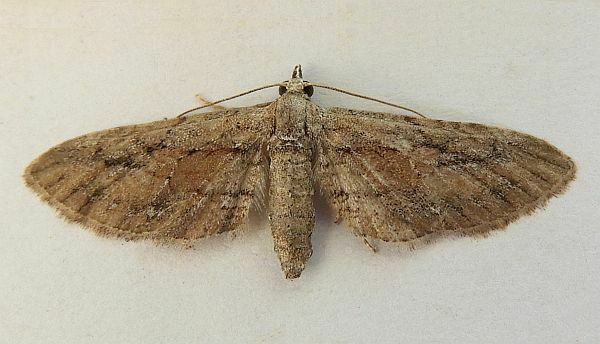
(c) jimeckert49, some rights reserved (CC BY) · licence
Family: Geometridae · Class: Insecta · Order: Lepidoptera
Eupithecia placidata (Flat Eupithecia) is a California animal in the Geometridae family.
The Flat Eupithecia (Eupithecia placidata) is a small moth in the family Geometridae, subfamily Larentiinae. As with most members of the genus Eupithecia, this species exhibits the characteristic subdued coloration and compact wing pattern typical of geometrid moths. Adults display a wingspan of approximately 20-25 mm, with forewings showing intricate cross-banded patterns in muted browns and grays. The species name 'placidata' refers to the relatively flat or placid appearance of the wing markings compared to other Eupithecia species. Eupithecia placidata occurs across western North America from British Columbia south to California. Within California, the species has been documented from various locations, though specific distributional records remain scattered. The species appears to have a relatively broad latitudinal range along the Pacific coast, suggesting adaptation to diverse climatic conditions across this geographic span. Documentation from Montana lepidopterists indicates the species also extends eastward into the northern Rocky Mountain region (Moth Photographers Group records). Habitat preferences for this species have not been thoroughly documented, though like many Eupithecia species, it likely inhabits areas supporting its larval host plants. The genus Eupithecia is notable for its diverse host plant associations, with different species often specializing on specific plant families or genera. Adults are typically attracted to ultraviolet lights, as evidenced by photodocumentation records from Helena, Montana, where specimens were captured at UV light stations (Montana Lepidoptera Survey 2014). Adult flight periods vary geographically but generally occur during spring and early summer months. Montana records indicate activity from April through June, with peak emergence likely coinciding with host plant phenology. Like other geometrid moths, larvae are likely folivorous, feeding on leaves, flowers, or developing seeds of their host plants. The cryptic wing patterns of adults suggest diurnal resting behavior on tree bark or similar substrates where their coloration provides effective camouflage. Eupithecia placidata lacks formal conservation status designation at federal or state levels. The species appears to maintain stable populations across its known range, though comprehensive population monitoring has not been conducted. As with many microlepidopteran species, the primary conservation concern relates to habitat loss and fragmentation, particularly in developed areas of California where native plant communities face ongoing pressure from urbanization and agricultural conversion. The species' apparently broad geographic range may provide some resilience against localized habitat disturbances. Detailed ecological studies of this species remain limited. The taxonomic complexity of the genus Eupithecia, combined with the cryptic nature of many species, has resulted in incomplete documentation of host plant relationships and life history parameters. Species identification often requires examination of genitalic structures, as wing patterns alone may not provide sufficient diagnostic characters to separate closely related taxa.
Classification
Class: Insecta · Order: Lepidoptera · Family: Geometridae
Frequently asked questions
How is Eupithecia placidata classified?
Eupithecia placidata belongs to class Insecta, order Lepidoptera, family Geometridae.
What family does Eupithecia placidata belong to?
Eupithecia placidata is in the Geometridae family.
What is Eupithecia placidata?
The Flat Eupithecia (Eupithecia placidata) is a small moth in the family Geometridae, subfamily Larentiinae.
Is Eupithecia placidata found in California?
Yes. Eupithecia placidata is recorded in California in The California Species Project's catalogue.
Related species
Other California species in the same genus, family, or bioregion.
Data from The California Species Project — 14,000+ California species with verified data from CNPS, CDFW, USFWS, and more.