Eupithecia rotundopuncta
Round-spotted Eupithecia
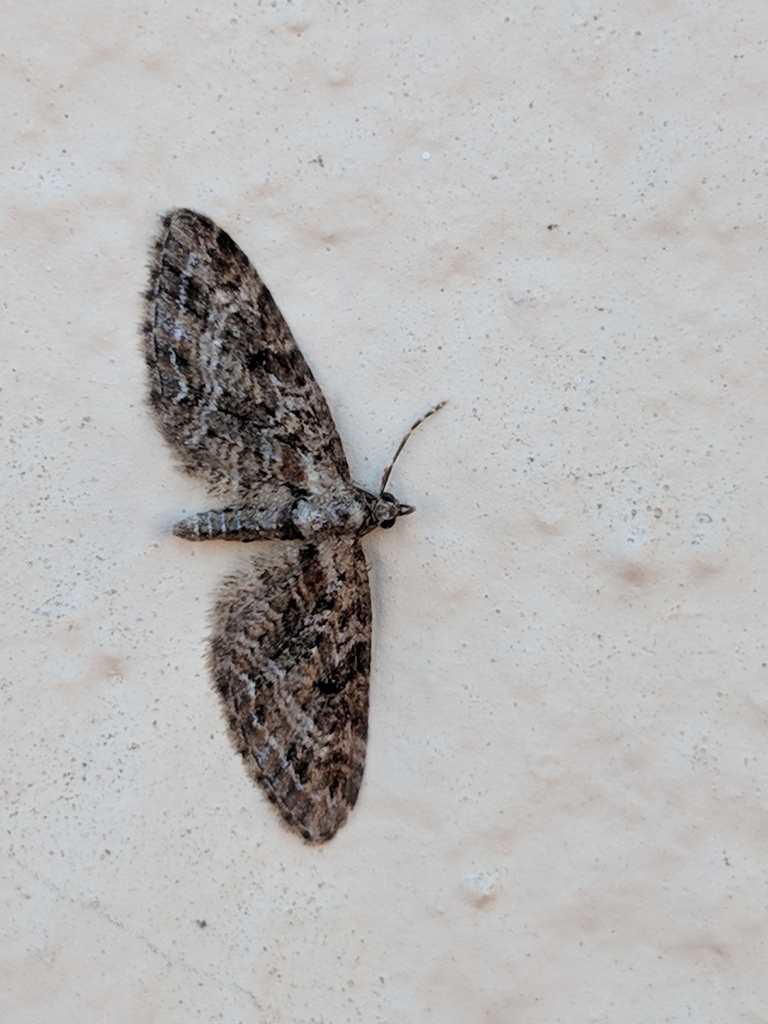
(c) Martin Kalfatovic, some rights reserved (CC BY) · licence
Family: Geometridae · Class: Insecta · Order: Lepidoptera
Eupithecia rotundopuncta (Round-spotted Eupithecia) is a California animal in the Geometridae family.
The Round-spotted Eupithecia (Eupithecia rotundopuncta) is a small geometrid moth belonging to the family Geometridae. Adults are characterized by their compact wingspan and cryptic coloration patterns typical of the Eupithecia genus. The forewings display subtle gray-brown tones with distinctive round spots that give the species its common name, though specific morphometric measurements have not been well documented in the literature. This species exhibits a broad western North American distribution, ranging from Arizona through the Pacific coast states and extending northward to Vancouver Island, British Columbia. According to BugGuide observations, the species has been documented across multiple states including California, Oregon, and Washington, with records also from British Columbia (BugGuide 2025). The species appears to maintain stable populations throughout this range, though comprehensive population assessments have not been conducted. Habitat preferences for E. rotundopuncta have not been extensively studied, but like other Eupithecia species, it likely inhabits areas that support its larval host plants. The species appears to occur across various elevational zones within its range, from coastal regions to inland areas. Specific microhabitat requirements and substrate preferences remain poorly documented, representing a significant knowledge gap for this species. Flight period data from BugGuide observations indicate distinct seasonal activity patterns across different regions (BugGuide 2025). In British Columbia, adults are recorded primarily in May and June. California populations show activity from February through May, with peak observations in March and April. Oregon records span March through May, while Washington observations occur from April through June. This temporal variation likely reflects regional climatic differences and local adaptation to environmental conditions. Like other Eupithecia species, larvae are presumed to be external feeders on flowers and developing seeds of herbaceous plants, though specific host plant relationships for E. rotundopuncta have not been documented. The genus is known for its specialized feeding behaviors, with many species exhibiting narrow host plant specificity. Adult moths are typically nocturnal and attracted to artificial light sources, facilitating detection and study by lepidopterists. The Round-spotted Eupithecia currently lacks formal conservation status designations at federal or state levels. No specific threats have been identified, and the species appears to maintain stable populations throughout its documented range. However, like many small moths, it may face localized pressures from habitat modification, urbanization, and climate change effects on host plant communities. The limited ecological data available for this species highlights the need for additional research into its biology, host plant relationships, and habitat requirements to better assess its conservation needs and population trends across its range.
Classification
Class: Insecta · Order: Lepidoptera · Family: Geometridae
Frequently asked questions
How is Eupithecia rotundopuncta classified?
Eupithecia rotundopuncta belongs to class Insecta, order Lepidoptera, family Geometridae.
What family does Eupithecia rotundopuncta belong to?
Eupithecia rotundopuncta is in the Geometridae family.
What is Eupithecia rotundopuncta?
The Round-spotted Eupithecia (Eupithecia rotundopuncta) is a small geometrid moth belonging to the family Geometridae.
Is Eupithecia rotundopuncta found in California?
Yes. Eupithecia rotundopuncta is recorded in California in The California Species Project's catalogue.
Related species
Other California species in the same genus, family, or bioregion.
Data from The California Species Project — 14,000+ California species with verified data from CNPS, CDFW, USFWS, and more.