Eupithecia sierrae
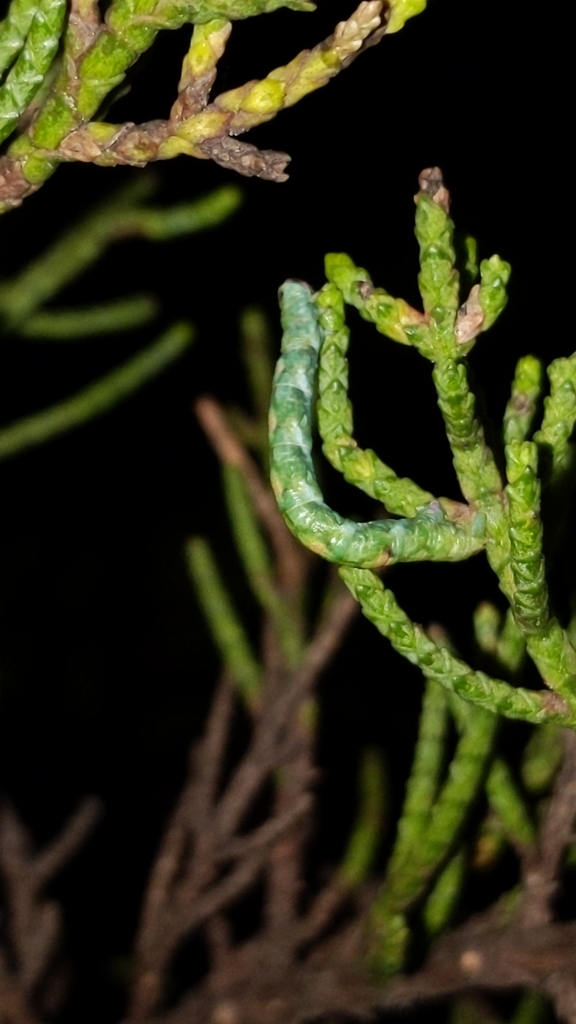
(c) Alan Rockefeller, some rights reserved (CC BY) · licence
Family: Geometridae · Class: Insecta · Order: Lepidoptera
Eupithecia sierrae is a California animal in the Geometridae family.
Eupithecia sierrae is a small moth in the family Geometridae, commonly known as geometrid moths or inchworm moths. This species belongs to the genus Eupithecia, which contains numerous small, cryptically colored moths that are often difficult to distinguish from one another without close examination. Adult E. sierrae likely measures 15-25 mm in wingspan, typical for members of this genus, with forewings displaying subtle patterns of gray, brown, or mottled coloration that provide effective camouflage against tree bark and other natural surfaces. The species is endemic to California's Sierra Nevada mountain range, as suggested by its specific epithet 'sierrae.' The exact distribution within the Sierra Nevada requires further documentation, but geometrid moths of this genus typically occupy montane and subalpine zones. Many Eupithecia species have restricted ranges tied to specific host plant associations and elevation zones, suggesting E. sierrae may similarly have a limited geographic distribution within California's mountainous regions. Habitat requirements for E. sierrae are not well-documented in current literature, but based on congeneric species patterns, this moth likely inhabits forested or shrubland environments within the Sierra Nevada. Eupithecia moths typically occur in areas where their larval host plants are present, often in mixed conifer forests, oak woodlands, or chaparral communities at various elevations. The species may be associated with specific vegetation zones characterized by particular plant communities that serve as larval food sources. The larvae of Eupithecia species are known as geometrid caterpillars or 'inchworms' due to their characteristic looping locomotion. These caterpillars typically feed on flowers, developing seeds, or young shoots of specific host plants. Adult moths are generally nocturnal and may be attracted to artificial lights. Flight periods for Sierra Nevada geometrids often coincide with the growing season of their host plants, typically occurring from late spring through early fall depending on elevation and local climate conditions. Pupation usually occurs in leaf litter or shallow soil, with the species likely having one generation per year in the montane environment. The conservation status of Eupithecia sierrae is not well-established due to limited research and documentation of this species. Like many small moth species, it may be vulnerable to habitat loss, climate change effects on montane ecosystems, and potential impacts from forest management practices. The Sierra Nevada region faces ongoing threats from wildfire, drought, and warming temperatures that could affect the distribution and population stability of endemic moths. Without comprehensive surveys and ecological studies, the current population status and specific conservation needs of E. sierrae remain unknown. This knowledge gap highlights the need for additional research on California's diverse but understudied Geometridae fauna, particularly endemic species with potentially restricted ranges in montane environments.
Classification
Class: Insecta · Order: Lepidoptera · Family: Geometridae
Frequently asked questions
How is Eupithecia sierrae classified?
Eupithecia sierrae belongs to class Insecta, order Lepidoptera, family Geometridae.
What family does Eupithecia sierrae belong to?
Eupithecia sierrae is in the Geometridae family.
What is Eupithecia sierrae?
Eupithecia sierrae is a small moth in the family Geometridae, commonly known as geometrid moths or inchworm moths.
Is Eupithecia sierrae found in California?
Yes. Eupithecia sierrae is recorded in California in The California Species Project's catalogue.
Related species
Other California species in the same genus, family, or bioregion.
Data from The California Species Project — 14,000+ California species with verified data from CNPS, CDFW, USFWS, and more.