Eupithecia tripunctaria
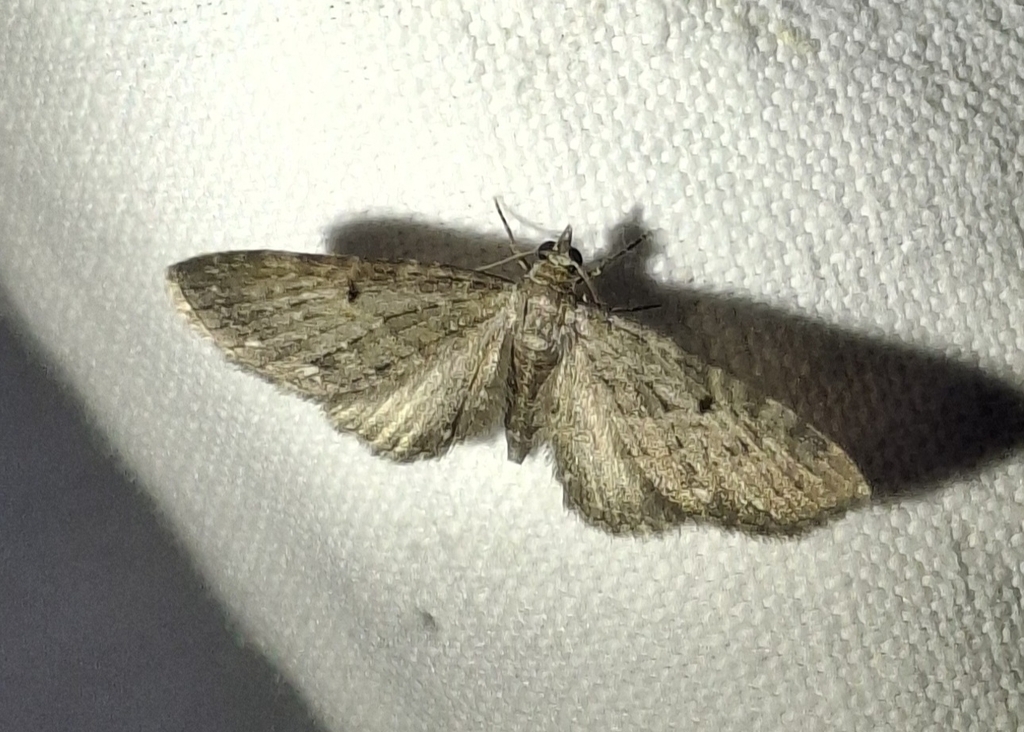
(c) Jean-Silouane Rebours, some rights reserved (CC BY) · licence
Family: Geometridae · Class: Insecta · Order: Lepidoptera
Eupithecia tripunctaria is a California animal in the Geometridae family.
Eupithecia tripunctaria is a small moth species in the family Geometridae, commonly known as the Three-spotted Pug. Adults typically measure 18-22 mm (0.7-0.9 inches) in wingspan. The forewings are grayish-brown with distinctive markings including three dark spots that give the species its common name, though spot visibility can vary among individuals. The hindwings are typically paler with subtle cross-lines. Like other members of the genus Eupithecia, this species has a relatively compact body with broad, rounded wings held horizontally when at rest. The species has a Holarctic distribution, occurring across North America and Europe. In North America, E. tripunctaria is found from southern Canada south through the United States, with documented populations extending into mountainous regions of the western states. The European range includes most of temperate Europe, from the British Isles eastward through Scandinavia and into Russia. This broad distribution suggests the species is well-adapted to temperate climates across different continents. Eupithecia tripunctaria inhabits diverse temperate environments, typically associated with areas where its host plants occur. The species shows preference for woodland edges, clearings, gardens, and disturbed habitats where flowering plants are abundant. Adults are found from lowland areas to moderate elevations, generally below 2,000 meters. The moth's habitat requirements are closely tied to the presence of suitable host plants for larval development. Adults are primarily nocturnal and are attracted to artificial lights. The flight period varies by geographic location but typically occurs from late spring through early autumn, with peak activity during summer months. Larvae are specialized feeders, developing within flower heads and seed capsules of their host plants. This cryptic feeding behavior, known as endophagous development, is characteristic of many Eupithecia species. The larvae consume developing seeds and flower parts, remaining concealed within the plant structures throughout their development. Pupation typically occurs in the soil or leaf litter near the host plant. The species completes one or two generations per year, depending on local climate conditions. Eggs are deposited directly on or near flower buds of host plants. The larvae's specialized feeding habits make them vulnerable to changes in host plant availability and flowering phenology. Currently, E. tripunctaria does not appear to have any special conservation status at federal or state levels in California or elsewhere in its range. The species' broad distribution across two continents suggests relatively stable populations, though local abundances may fluctuate with habitat changes and host plant availability. As with many moth species, populations may be affected by habitat fragmentation, pesticide use, and light pollution, which can disrupt natural behavior patterns. The species serves as a pollinator in adult form and plays a role in seed dispersal regulation through larval feeding activities.
Classification
Class: Insecta · Order: Lepidoptera · Family: Geometridae
Frequently asked questions
How is Eupithecia tripunctaria classified?
Eupithecia tripunctaria belongs to class Insecta, order Lepidoptera, family Geometridae.
What family does Eupithecia tripunctaria belong to?
Eupithecia tripunctaria is in the Geometridae family.
What is Eupithecia tripunctaria?
Eupithecia tripunctaria is a small moth species in the family Geometridae, commonly known as the Three-spotted Pug.
Is Eupithecia tripunctaria found in California?
Yes. Eupithecia tripunctaria is recorded in California in The California Species Project's catalogue.
Related species
Other California species in the same genus, family, or bioregion.
Data from The California Species Project — 14,000+ California species with verified data from CNPS, CDFW, USFWS, and more.