Euproserpinus phaeton
Phaeton primrose sphinx moth
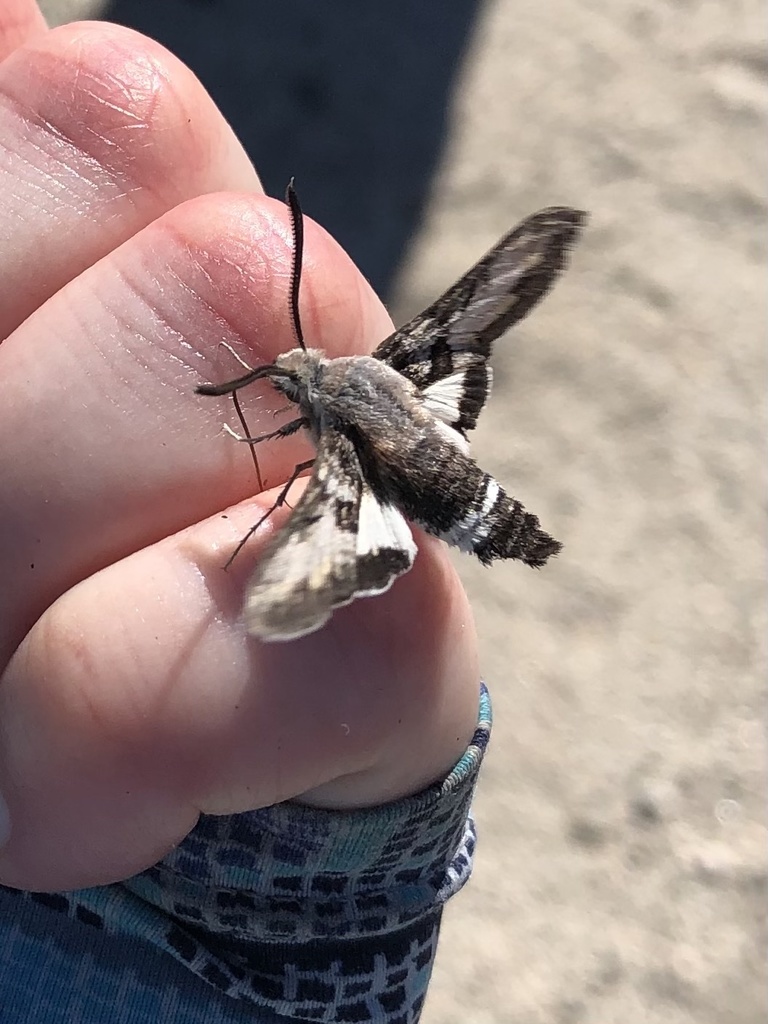
(c) Ellen Eiriksson, some rights reserved (CC BY) · licence
Family: Sphingidae · Class: Insecta · Order: Lepidoptera
Euproserpinus phaeton (Phaeton primrose sphinx moth) is a California animal in the Sphingidae family.
The Phaeton primrose sphinx moth (Euproserpinus phaeton) is a medium-sized hawkmoth in the family Sphingidae. Adults have a wingspan of approximately 32-38 mm (1.3-1.5 inches), making them one of the smaller sphinx moths. The forewings are olive-brown to grayish-brown with darker crosslines and a distinctive white discal spot. The hindwings are bright orange-red with black borders, creating a striking contrast when the wings are spread. The body is robust and covered in olive-brown scales, with the abdomen showing alternating light and dark bands. This species occurs in Nevada and California south to Baja California Sur, Mexico. In California, populations are documented from the Mojave and Sonoran deserts, including areas in Riverside, Imperial, and San Bernardino counties. The species also extends into southern Nevada and throughout much of Baja California. Historical records indicate the moth was once more widely distributed but current populations appear fragmented across suitable habitat. Phaeton primrose sphinx moths inhabit desert and semi-desert environments, typically at elevations below 1,000 meters (3,280 feet). They are found in areas with scattered shrubland and desert washes where host plants occur. The species shows strong fidelity to habitats containing evening primrose family plants (Onagraceae), particularly in areas with sandy or gravelly soils that support these plant communities. Adults are most commonly encountered in desert flats and bajadas with sparse to moderate vegetation cover. Larvae feed exclusively on various plants in the evening primrose family (Onagraceae), including desert willow-herb (Epilobium canum), evening primrose species (Oenothera), and related genera. The caterpillars are typically green with yellow lateral stripes and develop through five instars before pupating in the soil. Adults are day-flying moths, active during morning and late afternoon hours when temperatures are moderate. Flight period varies by location but generally occurs from March through May, coinciding with host plant flowering periods. Males patrol host plant areas searching for females, which lay eggs singly on young shoots and leaves. The conservation status of Euproserpinus phaeton appears stable but has not been formally evaluated by state or federal agencies. The species faces potential threats from habitat loss due to urban development, agriculture, and renewable energy projects in desert regions. Climate change may affect the distribution and phenology of both the moth and its host plants. Off-road vehicle activity and invasive plant species also pose localized threats to habitat quality. The moth's dependence on specific host plant families makes it vulnerable to ecosystem changes that affect Onagraceae populations. Continued monitoring of populations and habitat conditions would help assess long-term conservation needs for this desert-adapted specialist.
Classification
Class: Insecta · Order: Lepidoptera · Family: Sphingidae
Frequently asked questions
How is Euproserpinus phaeton classified?
Euproserpinus phaeton belongs to class Insecta, order Lepidoptera, family Sphingidae.
What family does Euproserpinus phaeton belong to?
Euproserpinus phaeton is in the Sphingidae family.
What is Euproserpinus phaeton?
The Phaeton primrose sphinx moth (Euproserpinus phaeton) is a medium-sized hawkmoth in the family Sphingidae.
Is Euproserpinus phaeton found in California?
Yes. Euproserpinus phaeton is recorded in California in The California Species Project's catalogue.
Related species
Other California species in the same genus, family, or bioregion.
Data from The California Species Project — 14,000+ California species with verified data from CNPS, CDFW, USFWS, and more.