Eupteryx decemnotata
Ligurian Leafhopper
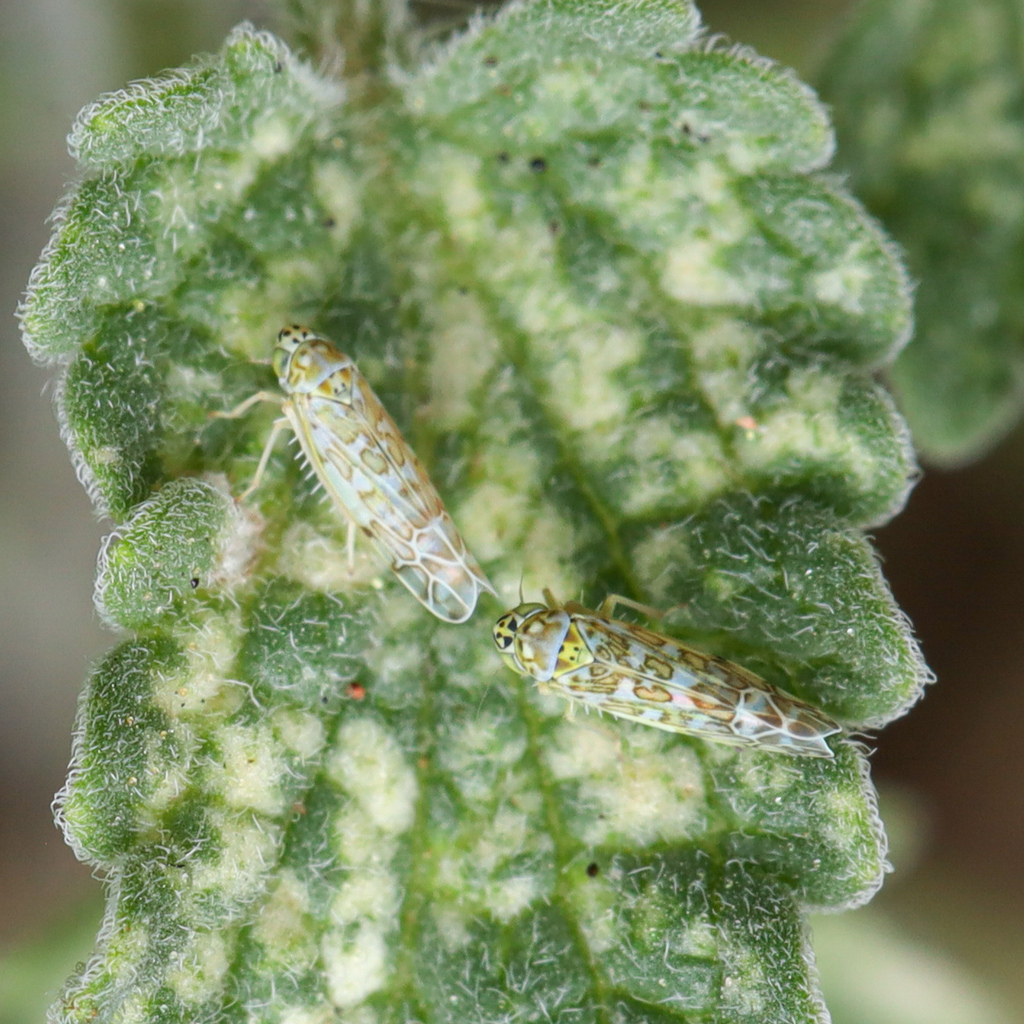
(c) Adrienne van den Beemt, some rights reserved (CC BY) · licence
Family: Cicadellidae · Class: Insecta · Order: Hemiptera
Eupteryx decemnotata (Ligurian Leafhopper) is a California animal in the Cicadellidae family.
The Ligurian leafhopper is a small hemipteran insect measuring 2 to 3 mm in length. Adults display pale green to yellowish coloration typical of the subfamily Typhlocybinae, with delicate, translucent wings held roof-like over the body when at rest. The species belongs to the genus Eupteryx, characterized by their minute size and distinctive jumping ability when disturbed. Native to the Mediterranean region, Eupteryx decemnotata has rapidly expanded its range across Europe and established populations in North America. In California, the species has been documented in Napa and Riverside Counties, representing an adventive population that has successfully colonized suitable habitat (Rung et al.). The Mediterranean origin suggests the species is well-adapted to warm, dry climates similar to California's conditions. The Ligurian leafhopper inhabits areas where its preferred host plants occur, particularly ornamental and native plants in the mint family (Lamiaceae). Documented host plants include rosemary and various other herbs and ornamental species within this plant family (BugGuide). The species has been observed in cultivated gardens and naturalized areas where suitable Lamiaceae hosts are present. A 2023 observation from the Emerald Necklace native plant garden in Monrovia, Los Angeles County, indicates the species may be expanding its California range beyond the initially documented counties. Adults are active from May through October in similar climates, suggesting a extended flight period in California's Mediterranean climate zones. Like other members of the Typhlocybinae, Ligurian leafhoppers feed by piercing plant tissues with their needle-like mouthparts and extracting plant fluids. They typically feed on leaf undersides, causing stippling damage that appears as small white or yellow spots on host plant foliage. The species exhibits the characteristic jumping behavior of leafhoppers when disturbed, using powerful hind legs to propel themselves away from threats. Reproduction likely follows the pattern of related Eupteryx species, with females inserting eggs into plant tissue during the growing season. Development proceeds through five nymphal instars before reaching adulthood. The extended adult activity period suggests multiple generations per year may occur in California's favorable climate. As an introduced species, the Ligurian leafhopper is not afforded protection under state or federal conservation legislation. However, its establishment in California represents a recent colonization event that warrants monitoring. The species' preference for Lamiaceae hosts could potentially impact native plant communities or agricultural crops within this plant family. Current distribution appears limited to specific counties, but the Los Angeles County observation suggests continued range expansion may be occurring. No specific management programs target this species, though general integrated pest management practices may limit populations in agricultural or horticultural settings where damage to cultivated Lamiaceae occurs.
Classification
Class: Insecta · Order: Hemiptera · Family: Cicadellidae
Frequently asked questions
How is Eupteryx decemnotata classified?
Eupteryx decemnotata belongs to class Insecta, order Hemiptera, family Cicadellidae.
What family does Eupteryx decemnotata belong to?
Eupteryx decemnotata is in the Cicadellidae family.
What is Eupteryx decemnotata?
The Ligurian leafhopper is a small hemipteran insect measuring 2 to 3 mm in length.
Is Eupteryx decemnotata found in California?
Yes. Eupteryx decemnotata is recorded in California in The California Species Project's catalogue.
Related species
Other California species in the same genus, family, or bioregion.
Data from The California Species Project — 14,000+ California species with verified data from CNPS, CDFW, USFWS, and more.