Eurema boisduvaliana
Boisduval's Yellow
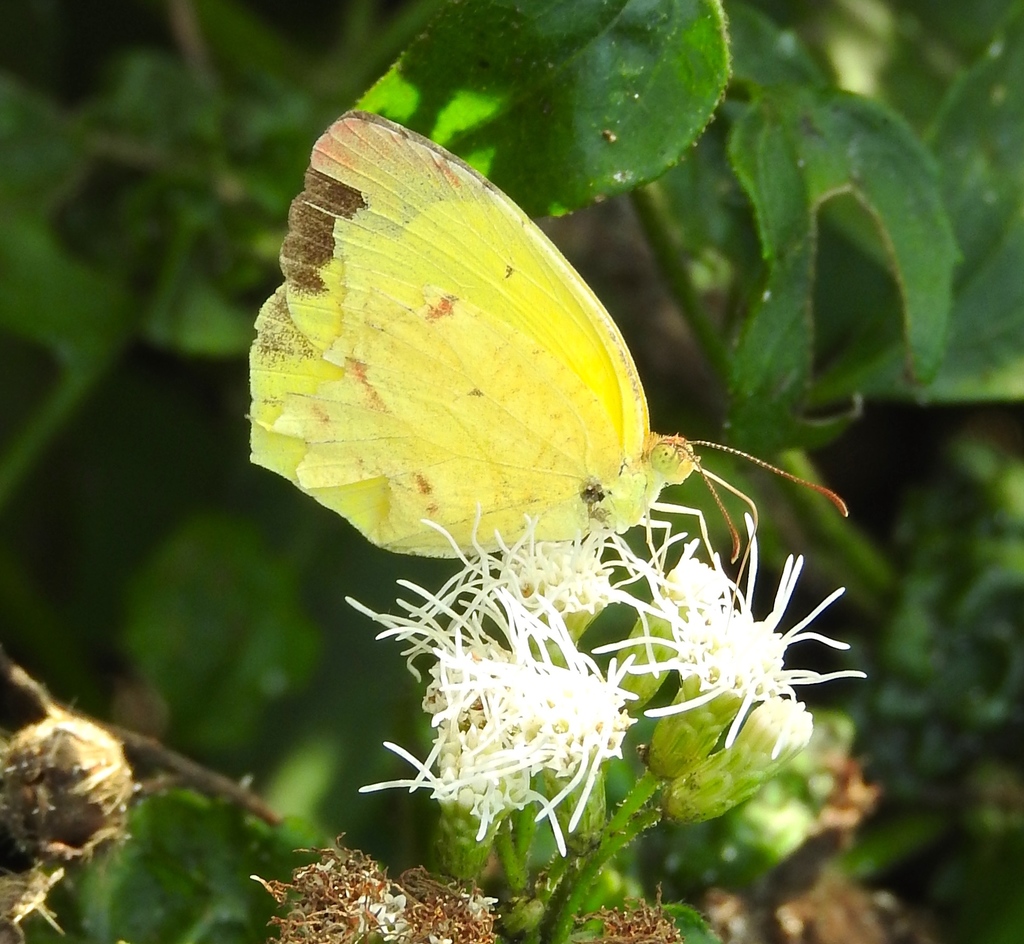
(c) Francisco Farriols Sarabia, some rights reserved (CC BY) · licence
Family: Pieridae · Class: Insecta · Order: Lepidoptera
Eurema boisduvaliana (Boisduval's Yellow) is a California animal in the Pieridae family.
Boisduval's Yellow is a small to medium-sized butterfly in the family Pieridae, characterized by bright yellow wings with distinctive black markings. Males typically display more vibrant yellow coloration on the dorsal wing surfaces, while females often exhibit paler yellow or whitish hues with more pronounced dark borders. The wingspan ranges from 32 to 44 mm (1.3 to 1.7 inches). The undersides of the wings are pale yellow to white with subtle markings that help distinguish this species from similar yellows in the genus Eurema. The species ranges from Costa Rica northward through Central America and Mexico. In the United States, Boisduval's Yellow is rare in south Florida, with only two documented records from the Florida Keys. The butterfly occurs as a regular migrant in the southwestern United States, particularly in southeast Arizona, southwest New Mexico, and South Texas. These populations likely represent northward dispersal from established breeding populations in Mexico rather than permanent resident colonies. Boisduval's Yellow inhabits tropical and subtropical regions where its host plants occur. The species is typically found in open areas, including disturbed habitats, roadsides, gardens, and forest edges where Cassia species thrive. In Arizona and New Mexico, migrants are most commonly encountered in desert washes, riparian corridors, and urban areas with ornamental plantings. The butterfly shows a preference for areas with abundant flowering plants that provide nectar sources for adults. Adults feed on nectar from various flowering plants, showing particular attraction to small, clustered flowers. Males engage in patrolling behavior, flying along linear features such as washes or fence lines in search of females. Mating typically occurs during warmer parts of the day when both sexes are most active. Females deposit eggs singly on young leaves or flower buds of host plants in the genus Cassia (family Fabaceae). Larvae feed on the leaves, developing through five instars before pupating. The species is multivoltine in tropical regions, producing several generations per year, while northern migrants may produce only one or two broods depending on climatic conditions. Boisduval's Yellow is not currently listed under federal or state endangered species legislation. The species appears stable throughout most of its range in Central America and Mexico. In the United States, populations are primarily dependent on successful migration events from southern source populations. Climate variability and habitat modification in desert regions may affect the success of northward dispersal, but the species' adaptability to disturbed habitats and association with commonly planted ornamental Cassia species may provide some resilience. The rarity of records in Florida suggests that establishment of breeding populations in that region remains unlikely, with occurrences probably representing occasional vagrants carried by weather systems.
Classification
Class: Insecta · Order: Lepidoptera · Family: Pieridae
Frequently asked questions
How is Eurema boisduvaliana classified?
Eurema boisduvaliana belongs to class Insecta, order Lepidoptera, family Pieridae.
What family does Eurema boisduvaliana belong to?
Eurema boisduvaliana is in the Pieridae family.
What is Eurema boisduvaliana?
Boisduval's Yellow is a small to medium-sized butterfly in the family Pieridae, characterized by bright yellow wings with distinctive black markings.
Is Eurema boisduvaliana found in California?
Yes. Eurema boisduvaliana is recorded in California in The California Species Project's catalogue.
Related species
Other California species in the same genus, family, or bioregion.
Data from The California Species Project — 14,000+ California species with verified data from CNPS, CDFW, USFWS, and more.