Eusarca falcata
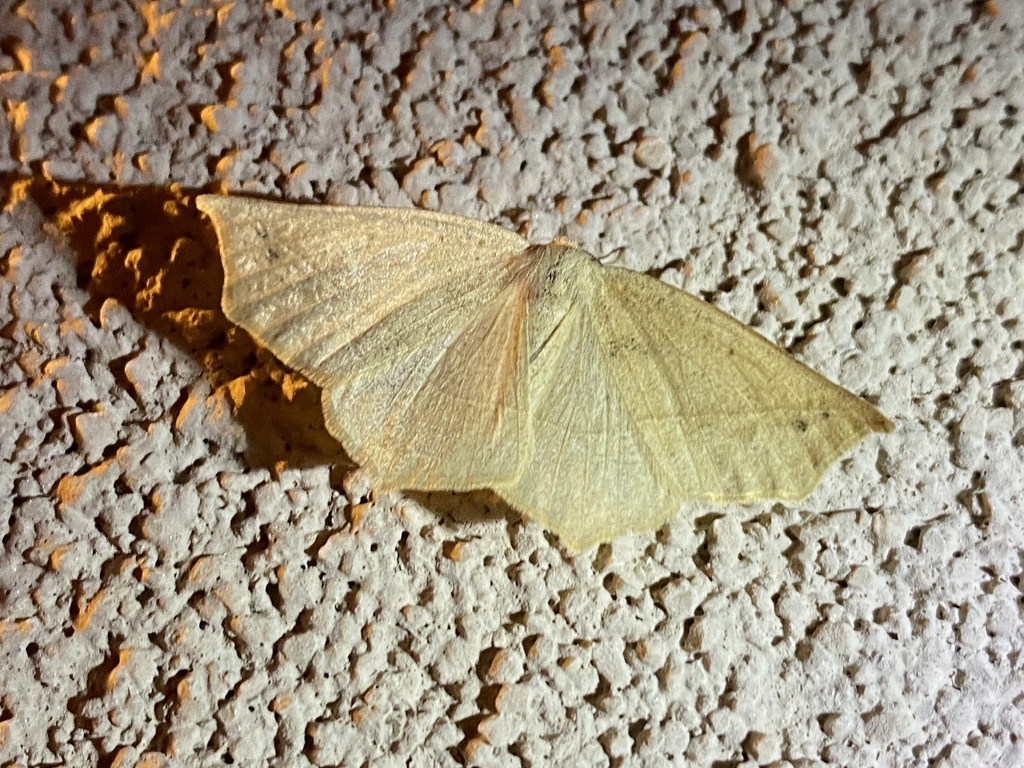
(c) Elliott Gordon, some rights reserved (CC BY) · licence
Family: Geometridae · Class: Insecta · Order: Lepidoptera
Eusarca falcata is a California animal in the Geometridae family.
Eusarca falcata is a geometrid moth in the family Geometridae, subfamily Ennominae. This species belongs to a genus of moderate-sized moths characterized by angular wing shapes and cryptic coloration patterns. Adult moths typically display muted earth tones with intricate linear markings across both forewings and hindwings. The wings exhibit the characteristic angular profile common to many geometrid species, with falcate or hook-shaped forewings that give the species its name. The species occurs in lowland western California, representing a regional endemic with a restricted geographic distribution. The range encompasses the coastal plains, interior valleys, and foothills of western California, typically at elevations below 1,500 feet. This distribution pattern suggests adaptation to Mediterranean climate conditions characteristic of lowland California ecosystems. Eusarca falcata inhabits a variety of lowland plant communities including coastal sage scrub, chaparral margins, oak woodlands, and riparian zones. The species shows preference for areas with diverse shrub and tree species that provide both larval host plants and adult nectar sources. These moths are typically found in areas with moderate canopy cover that offers protection during daylight hours while maintaining open spaces for nocturnal flight activity. Adult moths are nocturnal and attracted to artificial lights during their flight period. Like other geometrid species, Eusarca falcata undergoes complete metamorphosis with egg, larval, pupal, and adult stages. The larvae, commonly called inchworms or loopers, move in the characteristic arching motion typical of Geometridae caterpillars. Larval development occurs on woody plant hosts, though specific host plant associations for this species require further documentation. Adults likely emerge during spring and early summer months, coinciding with optimal environmental conditions and host plant phenology. Reproductive behavior follows typical geometrid patterns, with females releasing pheromones to attract males for mating. Eggs are deposited on or near host plants, where larvae will feed upon hatching. The species likely completes one generation per year, though voltinism patterns may vary with local climate conditions and elevation. Currently, Eusarca falcata lacks formal conservation status designations at federal, state, or international levels. This absence of listing status may reflect insufficient survey data rather than stable population conditions. Many geometrid moths remain poorly studied, with limited information available regarding population trends, threats, and conservation needs. The species' restriction to lowland western California makes it potentially vulnerable to habitat loss from urban development, agricultural conversion, and climate change impacts. Coastal and valley regions of California have experienced significant habitat modification, which could affect populations of specialized endemic species like E. falcata. Additional research is needed to assess population status, habitat requirements, and conservation priorities for this regional endemic moth species.
Classification
Class: Insecta · Order: Lepidoptera · Family: Geometridae
Frequently asked questions
How is Eusarca falcata classified?
Eusarca falcata belongs to class Insecta, order Lepidoptera, family Geometridae.
What family does Eusarca falcata belong to?
Eusarca falcata is in the Geometridae family.
What is Eusarca falcata?
Eusarca falcata is a geometrid moth in the family Geometridae, subfamily Ennominae.
Is Eusarca falcata found in California?
Yes. Eusarca falcata is recorded in California in The California Species Project's catalogue.
Related species
Other California species in the same genus, family, or bioregion.
Data from The California Species Project — 14,000+ California species with verified data from CNPS, CDFW, USFWS, and more.