Euthyatira lorata
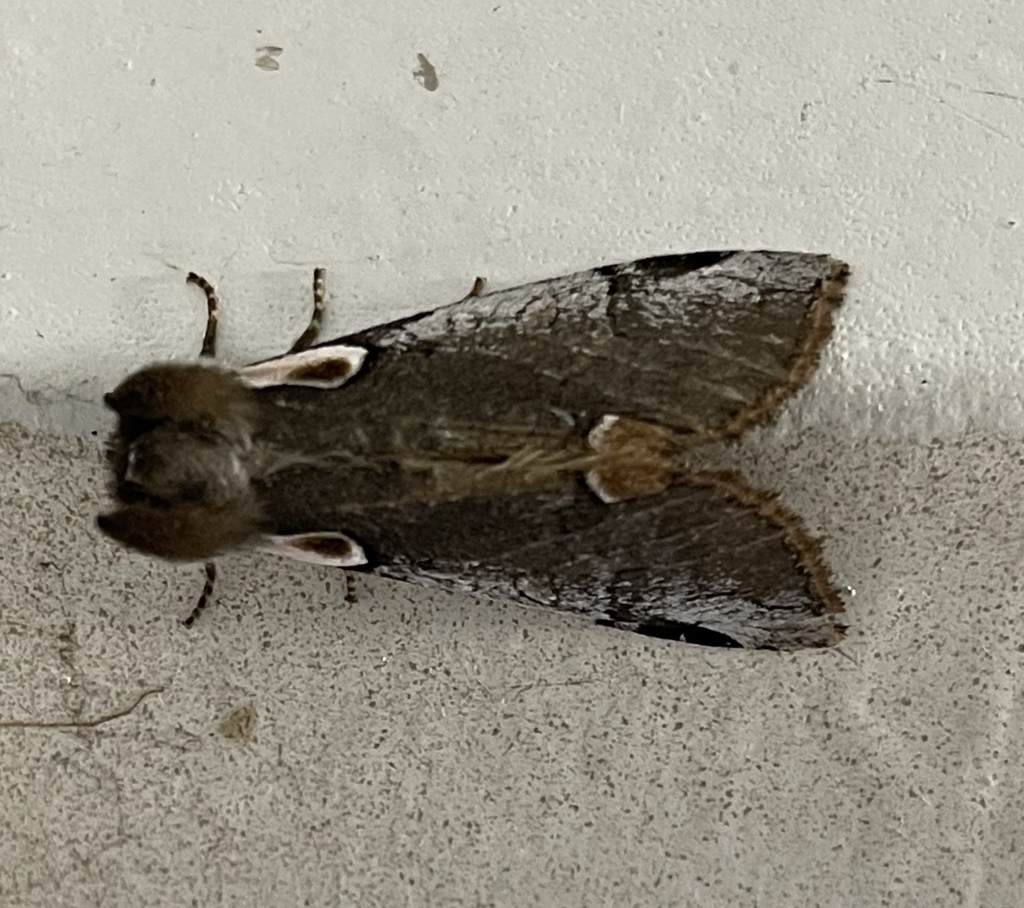
(c) Barbara Banfield, some rights reserved (CC BY) · licence
Family: Thyatiridae · Class: Insecta · Order: Lepidoptera
Euthyatira lorata is a California animal in the Thyatiridae family.
Euthyatira lorata is a moth species in the family Thyatiridae, commonly known as hooktip moths. This species belongs to the subfamily Thyatirinae, characterized by forewings with distinctive angular projections and cryptic wing patterns. Adult moths display mottled brown and gray coloration with darker crosslines and subtle geometric patterns that provide effective camouflage against tree bark. The forewings typically measure 15-20 mm in length, with the characteristic hooked apex that gives the family its common name. Males possess feathery antennae, while females have thread-like antennae. Euthyatira lorata occurs across eastern and central North America, with records extending from southeastern Canada south to Florida and west to the Great Plains. In California, the species appears to be present but distribution records are limited. The western extent of its range includes portions of the Rocky Mountain region, though specific California county records require further documentation. This species inhabits deciduous and mixed forests where its host plant, dogwood (Cornus species), occurs naturally. Dogwood trees grow in understory and edge habitats, typically in moist, well-drained soils at elevations from sea level to approximately 2,000 meters. The moth requires access to various dogwood species including flowering dogwood (Cornus florida), Pacific dogwood (Cornus nuttallii), and red-osier dogwood (Cornus sericea), depending on regional availability. Larvae of Euthyatira lorata are specialist feeders on dogwood foliage, with caterpillars displaying cryptic green coloration with longitudinal stripes. The species likely produces one to two generations annually, with adults active from late spring through early fall. Moths are nocturnal, attracted to artificial lights during evening hours. Females deposit eggs singly on dogwood leaves, and larvae feed externally on leaf surfaces before pupating in leaf litter or soil. The species overwinters as pupae in the ground. Euthyatira lorata does not currently hold federal or state conservation status in California. However, the species' dependence on dogwood host plants makes it potentially vulnerable to habitat loss and forest fragmentation. Urban development, logging practices, and climate change may affect dogwood distribution and abundance, indirectly impacting moth populations. Dogwood trees face additional threats from introduced diseases such as dogwood anthracnose, which has caused significant mortality in some regions. Conservation of mature forest habitats with diverse understory components, including native dogwood populations, supports this species and other forest-dependent moths. Monitoring programs for Lepidoptera in California forests would benefit from including this species to better understand its current distribution and population trends within the state.
Classification
Class: Insecta · Order: Lepidoptera · Family: Thyatiridae
Frequently asked questions
How is Euthyatira lorata classified?
Euthyatira lorata belongs to class Insecta, order Lepidoptera, family Thyatiridae.
What family does Euthyatira lorata belong to?
Euthyatira lorata is in the Thyatiridae family.
What is Euthyatira lorata?
Euthyatira lorata is a moth species in the family Thyatiridae, commonly known as hooktip moths.
Is Euthyatira lorata found in California?
Yes. Euthyatira lorata is recorded in California in The California Species Project's catalogue.
Related species
Other California species in the same genus, family, or bioregion.
Data from The California Species Project — 14,000+ California species with verified data from CNPS, CDFW, USFWS, and more.