Eutricopis nexilis
White-spotted Midget Moth
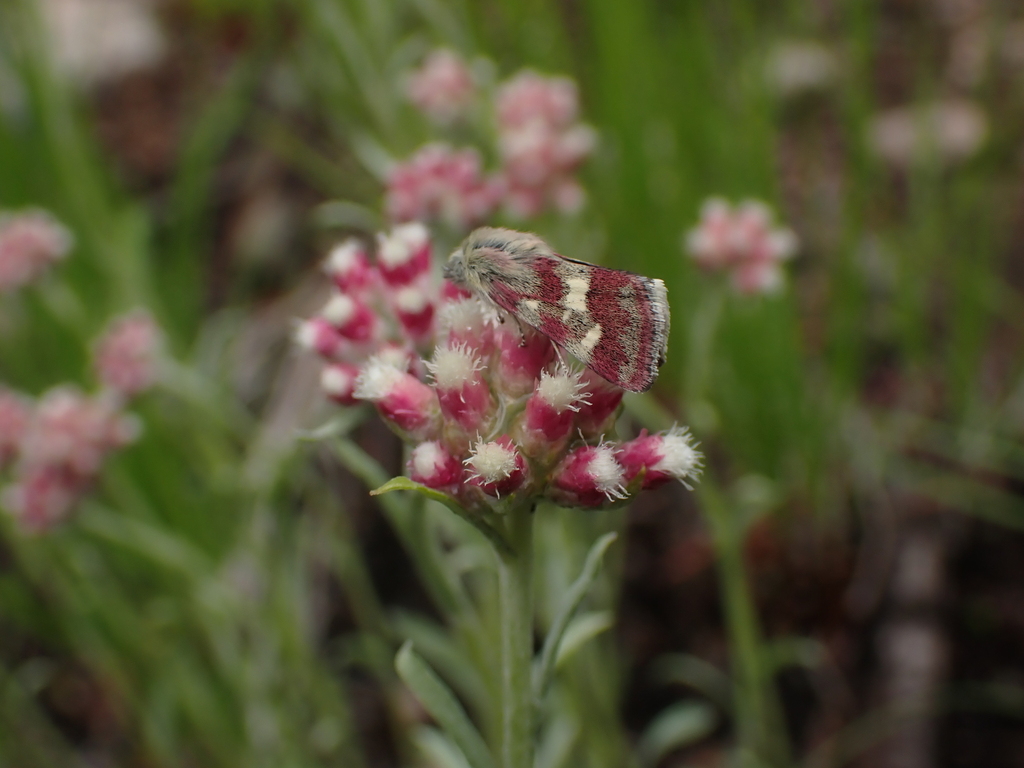
no rights reserved · CC0
Family: Noctuidae · Class: Insecta · Order: Lepidoptera
Eutricopis nexilis (White-spotted Midget Moth) is a California animal in the Noctuidae family.
The White-spotted Midget Moth (Eutricopis nexilis) is a small noctuid moth in the family Noctuidae. This species was originally described by Morrison in 1875 and represents one of the smaller members of its taxonomic group. Adults are characterized by their diminutive size and distinctive white spotting pattern that gives the species its common name. Eutricopis nexilis occurs across western North America, with documented populations in California, Colorado, Michigan, and other western states. In California, the species has been recorded from various counties including those in the Sierra Nevada region. The moth's range extends from lower elevations into montane areas, demonstrating considerable altitudinal tolerance. Historical records indicate the species may be more widespread than current documentation suggests, as many small noctuid moths remain under-surveyed. The species inhabits diverse habitats ranging from grasslands to forest edges and montane meadows. Adults have been documented at elevations from near sea level to over 8,900 feet, as recorded from Stanford cabin south of Dory Hill in Colorado (Lepidopterists' Society News 1998). The moth appears to favor areas with abundant flowering plants, particularly those in the family Asteraceae. Behaviorally, White-spotted Midget Moths are nocturnal and strongly attracted to artificial lights. Adults have been observed feeding on wild strawberry blossoms and have been collected at ultraviolet light traps (Lepidopterists' Society News 1972). The species has been successfully reared from Antennaria species (pussytoes), indicating this plant genus serves as a larval host. Flight period extends from spring through late summer, with records spanning from May through September depending on location and elevation. Like many noctuid moths, adults likely feed on nectar from various flowering plants while larvae develop as herbivores on their host plants. The conservation status of Eutricopis nexilis has not been formally assessed by state or federal agencies. The species lacks federal or state listing status, and no specific population data or trend information is currently available. As with many small moths, the species may be more common than collection records suggest, as these insects are often overlooked by casual observers and require specialized collecting techniques for detection. The moth's apparent ability to utilize multiple habitat types and its broad elevational range may provide some resilience against habitat loss, though specific threats have not been documented. Climate change effects on montane populations remain unknown, and the species would benefit from targeted surveys to better understand its current distribution and population status. The lack of comprehensive biological data highlights the need for additional research on this and other small noctuid moths to inform potential conservation needs.
Classification
Class: Insecta · Order: Lepidoptera · Family: Noctuidae
Frequently asked questions
How is Eutricopis nexilis classified?
Eutricopis nexilis belongs to class Insecta, order Lepidoptera, family Noctuidae.
What family does Eutricopis nexilis belong to?
Eutricopis nexilis is in the Noctuidae family.
What is Eutricopis nexilis?
The White-spotted Midget Moth (Eutricopis nexilis) is a small noctuid moth in the family Noctuidae.
Is Eutricopis nexilis found in California?
Yes. Eutricopis nexilis is recorded in California in The California Species Project's catalogue.
Related species
Other California species in the same genus, family, or bioregion.
Data from The California Species Project — 14,000+ California species with verified data from CNPS, CDFW, USFWS, and more.