Euxoa albipennis
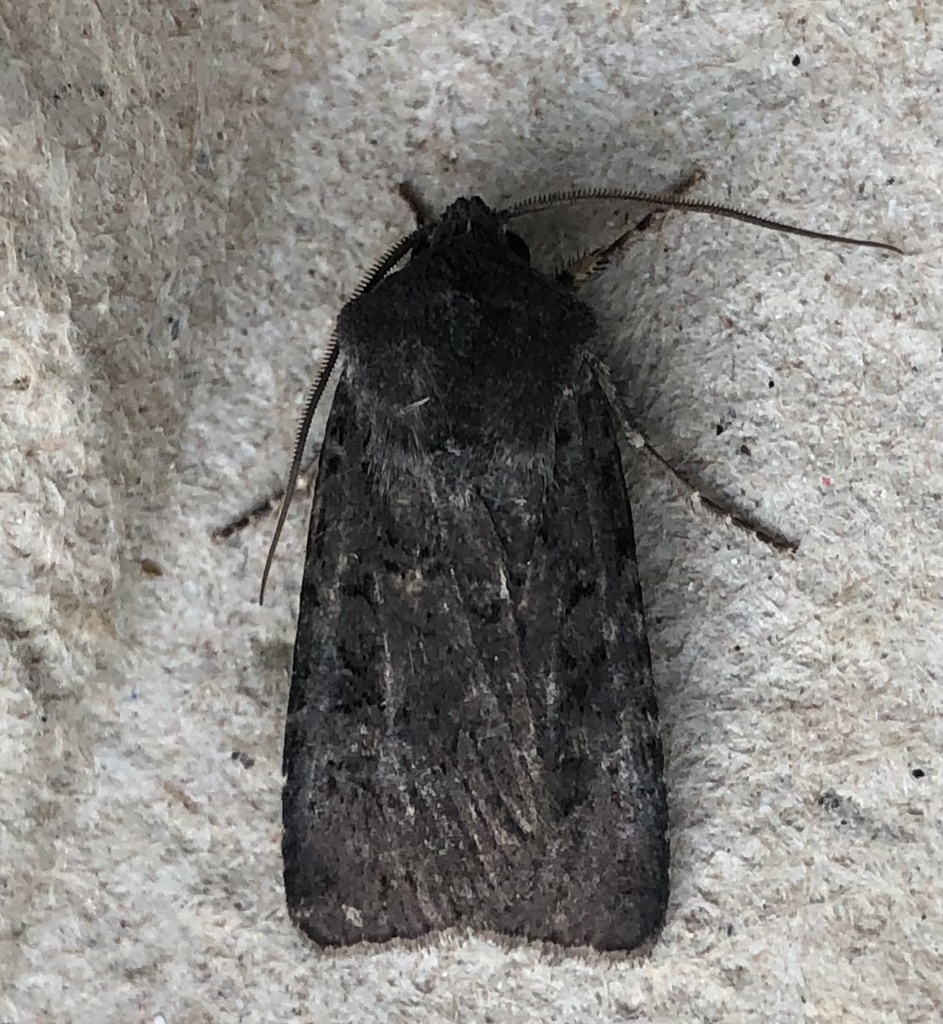
(c) Alan Macnaughton, some rights reserved (CC BY) · licence
Family: Noctuidae · Class: Insecta · Order: Lepidoptera
Euxoa albipennis is a California animal in the Noctuidae family.
Euxoa albipennis is a moth species in the family Noctuidae, subfamily Noctuinae. This species belongs to the genus Euxoa, commonly known as dart moths or cutworm moths, which comprises numerous species found throughout North America. The genus name Euxoa is derived from Greek, meaning 'well-armed,' referring to the robust nature of these moths. Adult Euxoa albipennis exhibits the typical noctuid moth characteristics, with forewings that are generally brownish-gray to pale gray in coloration. The species name 'albipennis' suggests white or pale wing features, though specific morphological details require further taxonomic study. Like other Euxoa species, adults likely have a wingspan ranging from 25 to 40 millimeters (1.0 to 1.6 inches). The forewings typically display subtle patterns including reniform and orbicular spots characteristic of noctuids, while the hindwings are usually paler or whitish. The distribution and range of Euxoa albipennis appear to be poorly documented in readily available literature. Many Euxoa species have restricted distributions in western North America, often associated with specific habitat types or elevation zones. Without verified occurrence records, the precise range within California or other states cannot be definitively stated. Habitat preferences for Euxoa albipennis remain unclear from available sources. Related Euxoa species typically inhabit diverse environments including grasslands, shrublands, desert areas, and montane zones. Many species in this genus are associated with sandy soils or specific plant communities. Elevation ranges vary widely among Euxoa species, from sea level to high montane environments exceeding 3,000 meters. The larval ecology of Euxoa albipennis follows the general pattern of dart moths. Larvae are typically subterranean feeders, living in soil and feeding on plant roots, lower stems, or fallen organic matter. The caterpillars are often called cutworms due to their habit of cutting plant stems at ground level. Adult flight periods vary among Euxoa species but commonly occur during late summer and fall months. Adults are nocturnal and attracted to artificial lights. The conservation status of Euxoa albipennis is not well-established in current databases or species assessments. The species does not appear on federal or state endangered species lists as of December 2025. However, the apparent lack of recent records or taxonomic attention suggests this species may be uncommon or have a restricted range. Many Euxoa species face threats from habitat conversion, agricultural practices, and urban development, particularly in areas with specialized soil or plant community requirements. Further taxonomic and ecological research is needed to clarify the distribution, habitat requirements, and conservation needs of Euxoa albipennis. The species represents part of the diverse but poorly studied nocturid fauna of western North America.
Classification
Class: Insecta · Order: Lepidoptera · Family: Noctuidae
Frequently asked questions
How is Euxoa albipennis classified?
Euxoa albipennis belongs to class Insecta, order Lepidoptera, family Noctuidae.
What family does Euxoa albipennis belong to?
Euxoa albipennis is in the Noctuidae family.
What is Euxoa albipennis?
Euxoa albipennis is a moth species in the family Noctuidae, subfamily Noctuinae.
Is Euxoa albipennis found in California?
Yes. Euxoa albipennis is recorded in California in The California Species Project's catalogue.
Related species
Other California species in the same genus, family, or bioregion.
Data from The California Species Project — 14,000+ California species with verified data from CNPS, CDFW, USFWS, and more.