Euxoa atomaris
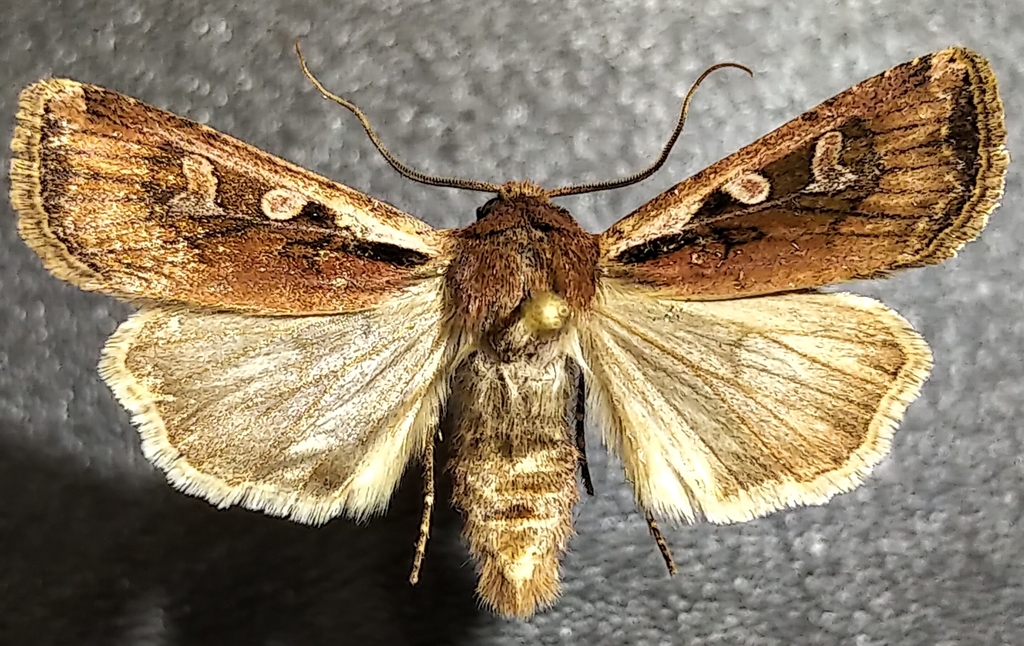
(c) Doug Macaulay, some rights reserved (CC BY) · licence
Family: Noctuidae · Class: Insecta · Order: Lepidoptera
Euxoa atomaris is a California animal in the Noctuidae family.
Euxoa atomaris is a nocturnal moth in the family Noctuidae, commonly known as cutworm moths. This species belongs to the genus Euxoa, which comprises numerous moth species found throughout North America. Adult moths typically display the characteristic forewings of noctuids, with mottled brown and gray coloration that provides effective camouflage against tree bark and soil surfaces. The forewings feature subtle patterning including reniform and orbicular spots, though specific morphological details for E. atomaris require further taxonomic verification. Wing span measurements and detailed descriptions of this particular species are not well-documented in readily accessible literature. The geographic range of Euxoa atomaris appears to be limited, though precise distribution data remains unclear from current sources. Many Euxoa species demonstrate restricted ranges within specific ecological regions of western North America, including California. Without verified occurrence records, the historical and current distribution of this species cannot be definitively stated. Field surveys and museum collections would be necessary to establish accurate range maps and determine if populations have experienced any geographic shifts over time. Like other members of the genus Euxoa, this species likely inhabits areas with suitable host vegetation and appropriate soil conditions for larval development. Euxoa larvae are typically subterranean, feeding on plant roots and lower stems, which influences adult habitat selection. Many cutworm moths prefer areas with native grasslands, shrublands, or open woodland environments where host plants occur naturally. Elevation preferences and specific vegetation associations for E. atomaris have not been documented in available literature. The life cycle of Euxoa atomaris presumably follows the typical noctuid pattern, with adults active during nighttime hours when they engage in mating and egg-laying activities. Females likely deposit eggs in soil or on vegetation near suitable larval food sources. The larval stage, known as cutworms, would develop underground or at ground level, feeding on plant material before pupating in soil chambers. Seasonal activity patterns, flight periods, and generational cycles specific to this species remain undocumented. Adult moths are typically attracted to artificial lights and may be collected using standard lepidopteran sampling methods including light traps and sugar baits. The conservation status of Euxoa atomaris is currently unknown, as this species lacks formal state or federal listing designations. Without comprehensive population surveys or ecological studies, the stability of populations cannot be assessed. Many moth species face threats from habitat loss, light pollution, pesticide use, and climate change, but the specific vulnerabilities of E. atomaris have not been evaluated. The limited available information about this species highlights the need for additional taxonomic research and field studies to better understand its biology, distribution, and conservation needs. Systematic surveys of noctuid moths in California would help clarify the status and ecological requirements of this and other poorly-known species.
Classification
Class: Insecta · Order: Lepidoptera · Family: Noctuidae
Frequently asked questions
How is Euxoa atomaris classified?
Euxoa atomaris belongs to class Insecta, order Lepidoptera, family Noctuidae.
What family does Euxoa atomaris belong to?
Euxoa atomaris is in the Noctuidae family.
What is Euxoa atomaris?
Euxoa atomaris is a nocturnal moth in the family Noctuidae, commonly known as cutworm moths.
Is Euxoa atomaris found in California?
Yes. Euxoa atomaris is recorded in California in The California Species Project's catalogue.
Related species
Other California species in the same genus, family, or bioregion.
Data from The California Species Project — 14,000+ California species with verified data from CNPS, CDFW, USFWS, and more.