Euxoa brunneigera
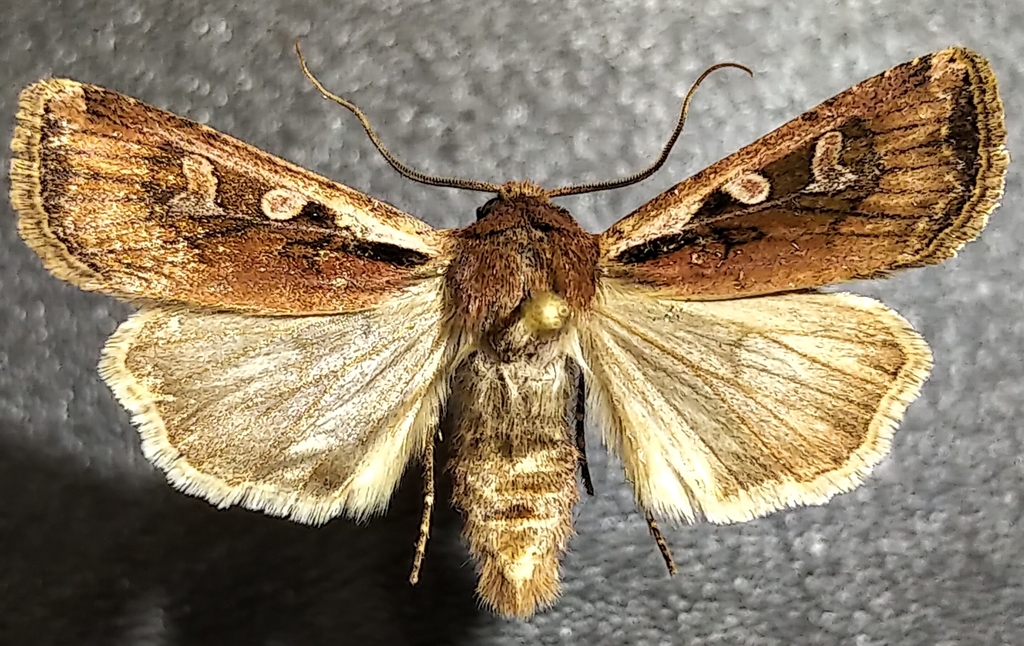
(c) Doug Macaulay, some rights reserved (CC BY) · licence
Family: Noctuidae · Class: Insecta · Order: Lepidoptera
Euxoa brunneigera is a California animal in the Noctuidae family.
Euxoa brunneigera is a moth in the family Noctuidae, part of the diverse cutworm moth group. This nocturnal species belongs to a genus containing numerous cryptic species that are often difficult to distinguish without genetic analysis or careful examination of genitalia structures. Adult moths display the typical robust body form characteristic of cutworms, with forewings that exhibit muted earth tones and subtle patterning that provides effective camouflage when resting on soil or bark surfaces during daylight hours. The species occurs across western North America, with a documented range extending from British Columbia south through California (iNaturalist). This distribution pattern is typical of many Pacific Northwest Lepidoptera that follow the coastal mountain ranges and associated forest ecosystems. Within California, the species likely occurs in multiple biogeographic regions, though specific county-level distribution data remains poorly documented in the scientific literature. Habitat preferences for E. brunneigera have not been thoroughly studied, but like most Euxoa species, it likely inhabits areas with suitable host plants for larval development. Cutworm moths in this genus typically prefer open to semi-open habitats including grasslands, shrublands, and forest edges where their caterpillars can access herbaceous vegetation. The larvae probably feed on various grasses and forbs, following the generalist feeding patterns common among cutworms, though specific host plant relationships have not been documented. Adult flight periods and breeding behaviors remain undocumented for this species. Most Euxoa species are univoltine, producing one generation per year, with adults typically active during late summer and fall months when they mate and females deposit eggs in soil near host plants. Larvae likely overwinter in the soil, emerging in spring to feed on available vegetation before pupating. Males are probably attracted to artificial lights, a common behavior among nocturnal moths that can aid in detection and study. Conservation status information for E. brunneigera is limited. According to available assessments, the species appears to be apparently secure in Idaho with an S4 ranking and vulnerable to apparently secure in British Columbia with an S3S4 ranking (Grokipedia). No global conservation rank has been established, and the species has no special federal or state conservation designations. This lack of conservation attention likely reflects the limited research on this species rather than abundance, as many nocturnal moths remain poorly studied despite potential population pressures from habitat loss, light pollution, and climate change. Scientific documentation for this species remains extremely limited despite its broad geographic range. The information presented here is based on available sources including taxonomic databases and regional species lists. If you have additional verified information about this species' biology, distribution, or ecology, please contact us to help improve this species account.
Classification
Class: Insecta · Order: Lepidoptera · Family: Noctuidae
Frequently asked questions
How is Euxoa brunneigera classified?
Euxoa brunneigera belongs to class Insecta, order Lepidoptera, family Noctuidae.
What family does Euxoa brunneigera belong to?
Euxoa brunneigera is in the Noctuidae family.
What is Euxoa brunneigera?
Euxoa brunneigera is a moth in the family Noctuidae, part of the diverse cutworm moth group.
Is Euxoa brunneigera found in California?
Yes. Euxoa brunneigera is recorded in California in The California Species Project's catalogue.
Related species
Other California species in the same genus, family, or bioregion.
Data from The California Species Project — 14,000+ California species with verified data from CNPS, CDFW, USFWS, and more.