Euxoa cicatricosa
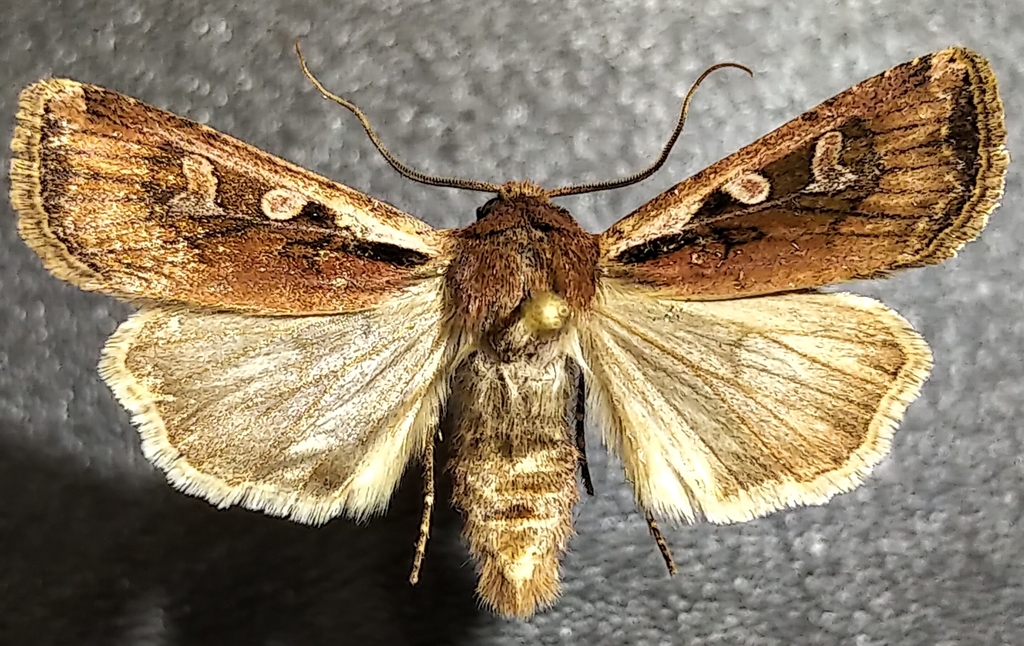
(c) Doug Macaulay, some rights reserved (CC BY) · licence
Family: Noctuidae · Class: Insecta · Order: Lepidoptera
Euxoa cicatricosa is a California animal in the Noctuidae family.
The Scarred Dart (Euxoa cicatricosa) is a moth in the family Noctuidae first described by Augustus Radcliffe Grote and Coleman Townsend Robinson in 1865. Like other members of the genus Euxoa, this species is part of the diverse group commonly known as dart moths or cutworm moths. Adult moths typically display the muted brown and gray coloration characteristic of noctuids, with wing patterns that provide effective camouflage against bark and soil substrates during daytime roosting. The species exhibits a broad distribution across western North America, ranging from south-central Saskatchewan west to southern interior British Columbia, and extending south through the western United States to southern California, Arizona, New Mexico, and western Texas. The eastern extent of its range reaches western Nebraska and North Dakota (iNaturalist). Within California, Euxoa cicatricosa occurs primarily in the interior regions, though specific county-level distribution data remains limited in the literature. Habitat requirements for the Scarred Dart appear to encompass a variety of arid and semi-arid environments typical of the western United States. The species likely inhabits grasslands, shrublands, and open woodland areas where suitable host plants for larval development are present. Elevation ranges and specific microhabitat preferences have not been comprehensively documented in available sources, representing a significant knowledge gap for this species. The life cycle follows the typical noctuid pattern, with adult moths emerging during specific flight periods that vary by geographic location and local climate conditions. Larvae, commonly referred to as cutworms, likely feed on the roots and lower stems of herbaceous plants, though specific host plant relationships for Euxoa cicatricosa have not been well documented in the scientific literature. Adult moths are nocturnal and are attracted to artificial light sources, making them occasionally observable to moth enthusiasts and researchers conducting nighttime surveys. Like many members of the genus Euxoa, males are likely equipped with specialized scent scales and pheromone-detecting antennae for locating females during the breeding season. Mating typically occurs during nighttime hours, with females subsequently depositing eggs on or near suitable larval host plants. The timing of reproduction and number of generations per year likely varies across the species' extensive geographic range. No specific conservation status has been assigned to the Scarred Dart at federal or state levels. The species' wide distribution across multiple states and provinces suggests relatively stable populations, though localized impacts from habitat modification and agricultural practices may affect some populations. Climate change effects on arid and semi-arid habitats throughout the western United States could potentially influence future distribution patterns. Scientific documentation for this species remains limited compared to more extensively studied moths. The information presented here is based on available taxonomic databases and regional surveys. Additional research on host plant relationships, habitat preferences, and population status would enhance understanding of this western North American species.
Classification
Class: Insecta · Order: Lepidoptera · Family: Noctuidae
Frequently asked questions
How is Euxoa cicatricosa classified?
Euxoa cicatricosa belongs to class Insecta, order Lepidoptera, family Noctuidae.
What family does Euxoa cicatricosa belong to?
Euxoa cicatricosa is in the Noctuidae family.
What is Euxoa cicatricosa?
The Scarred Dart (Euxoa cicatricosa) is a moth in the family Noctuidae first described by Augustus Radcliffe Grote and Coleman Townsend Robinson in 1865.
Is Euxoa cicatricosa found in California?
Yes. Euxoa cicatricosa is recorded in California in The California Species Project's catalogue.
Related species
Other California species in the same genus, family, or bioregion.
Data from The California Species Project — 14,000+ California species with verified data from CNPS, CDFW, USFWS, and more.