Euxoa costata
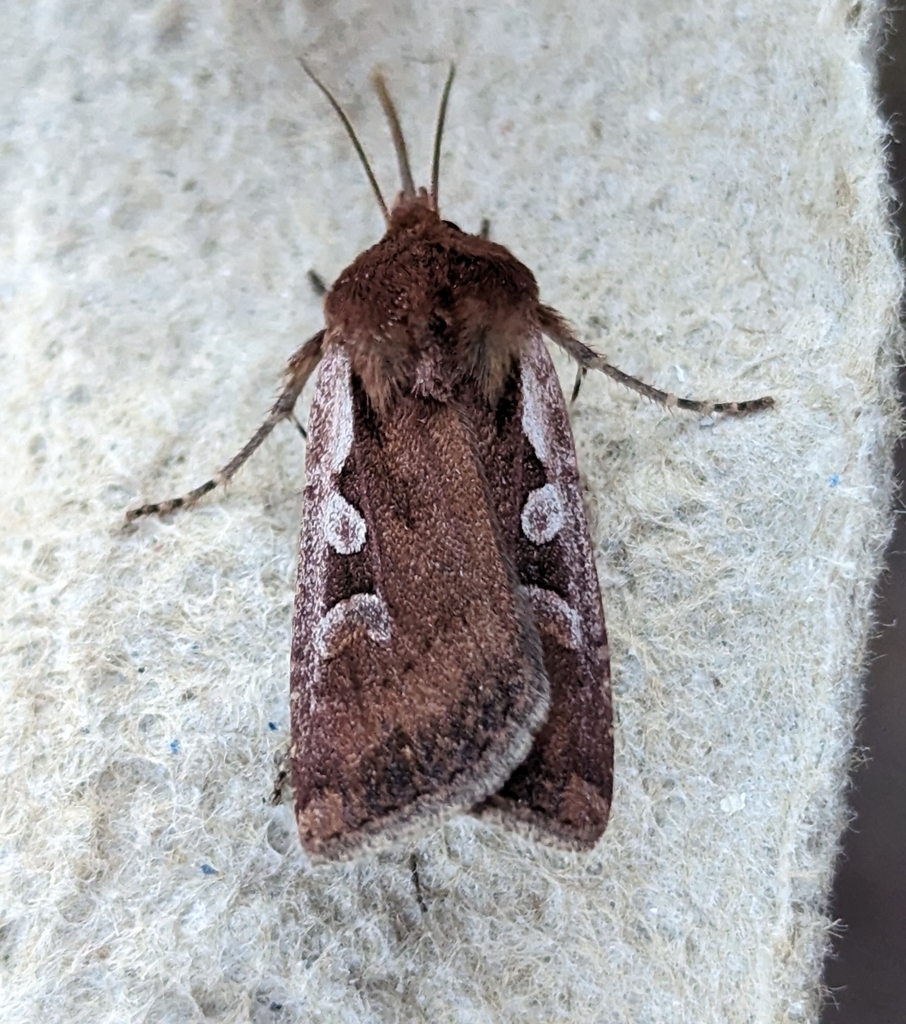
no rights reserved · CC0
Family: Noctuidae · Class: Insecta · Order: Lepidoptera
Euxoa costata is a California animal in the Noctuidae family.
Euxoa costata is a species of cutworm moth in the family Noctuidae. This moth belongs to the genus Euxoa, which contains numerous species of ground-dwelling nocturnal moths whose larvae are commonly known as cutworms. Adult moths typically measure 12-16 mm (0.47-0.63 inches) in forewing length. The forewings display a mottled pattern of brown, gray, and tan coloration that provides effective camouflage against soil and plant debris. Like other Euxoa species, E. costata exhibits the characteristic reniform and orbicular spots on the forewings, though specific markings may vary among individuals. The hindwings are typically pale with darker marginal bands. The geographic distribution of Euxoa costata encompasses portions of western North America, including areas of California. The species' range extends through various ecological zones typical of western cutworm moths, though specific locality records require further documentation. Distribution patterns in this genus often correlate with host plant availability and suitable soil conditions for larval development. Euxoa costata inhabits environments where its host plants occur, typically in areas with well-drained soils suitable for larval burrowing. The species is associated with open habitats including grasslands, shrublands, and disturbed areas. Elevation preferences appear to vary across the range, though many Euxoa species occur from sea level to moderate elevations in montane zones. Larvae require loose soil or organic matter for constructing underground chambers where they pupate. Adult moths are nocturnal and are attracted to artificial lights during their flight period. Males locate females through detection of sex pheromones released at night. Mating typically occurs during late evening or early morning hours. Females deposit eggs in soil or at the base of host plants. The larvae are subterranean, emerging at night to feed on plant material near the soil surface. Cutworm larvae are characterized by their C-shaped resting posture and their behavior of cutting through plant stems at ground level. Development includes multiple larval instars before pupation occurs in earthen cells constructed below ground. The species likely completes one generation per year, as is typical for most Euxoa species in temperate climates. The conservation status of Euxoa costata has not been formally assessed by major conservation organizations. No federal or state listing status has been assigned to this species as of December 2025. Population trends and specific threats remain poorly documented, reflecting the limited research attention given to many moth species. Like other nocturnal Lepidoptera, potential threats may include habitat loss, pesticide use, and light pollution that disrupts natural behavior patterns. Climate change may affect the species through alterations to host plant distributions and phenological timing. The species' conservation needs would benefit from systematic surveys to determine population status and habitat requirements across its range.
Classification
Class: Insecta · Order: Lepidoptera · Family: Noctuidae
Frequently asked questions
How is Euxoa costata classified?
Euxoa costata belongs to class Insecta, order Lepidoptera, family Noctuidae.
What family does Euxoa costata belong to?
Euxoa costata is in the Noctuidae family.
What is Euxoa costata?
Euxoa costata is a species of cutworm moth in the family Noctuidae.
Is Euxoa costata found in California?
Yes. Euxoa costata is recorded in California in The California Species Project's catalogue.
Related species
Other California species in the same genus, family, or bioregion.
Data from The California Species Project — 14,000+ California species with verified data from CNPS, CDFW, USFWS, and more.