Euxoa henretta
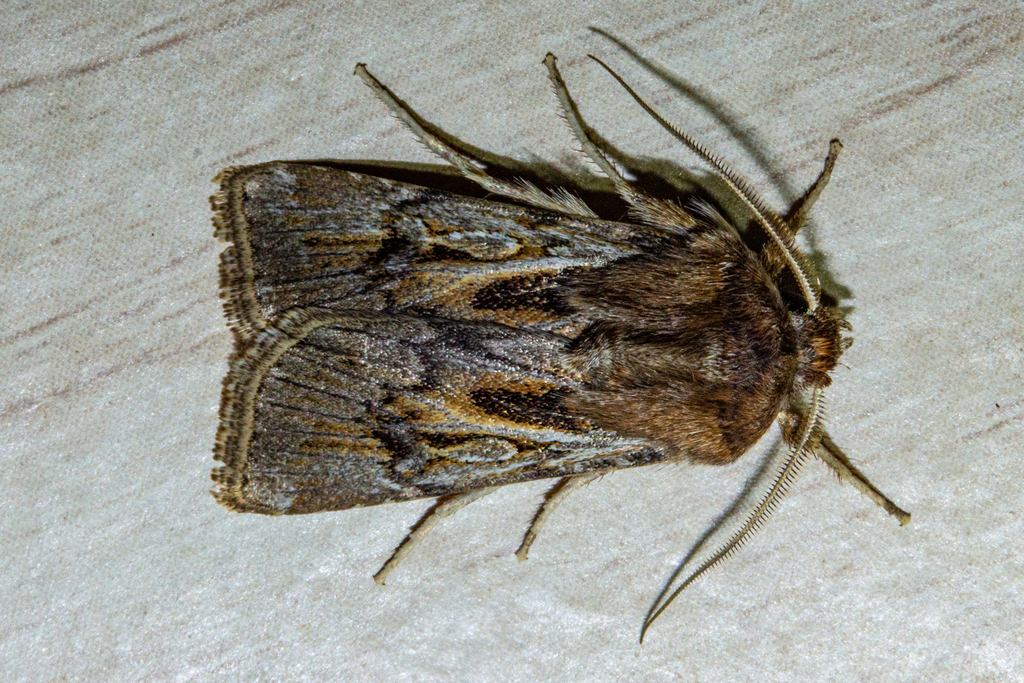
no rights reserved · CC0
Family: Noctuidae · Class: Insecta · Order: Lepidoptera
Euxoa henretta is a California animal in the Noctuidae family.
Euxoa henretta is a noctuid moth in the cutworm genus Euxoa, family Noctuidae. This species belongs to a large genus of moths whose larvae are commonly known as cutworms due to their habit of cutting plant stems at ground level. The adult moth displays the typical noctuoid wing pattern with forewings that are generally brown or gray with distinctive kidney-shaped reniform spots and oval orbicular spots, though specific morphological details for E. henretta require further documentation. The geographic range and distribution of Euxoa henretta remains poorly documented in the scientific literature. Many Euxoa species are found throughout western North America, including California, but specific locality records for E. henretta are limited. The species may occur in montane or desert regions typical of other members of this genus, though verified occurrence data is needed to establish its precise range within California or elsewhere. Habitat requirements for Euxoa henretta are not well-established in current literature. Members of the genus Euxoa typically inhabit diverse environments including grasslands, shrublands, desert areas, and montane zones. Many species in this genus are associated with open habitats where their host plants occur. Adults are generally nocturnal and attracted to artificial lights, following the typical behavior pattern of noctuoid moths. The larval host plants and specific ecological requirements of E. henretta are not documented in readily available sources. Cutworm larvae in the genus Euxoa are typically polyphagous, feeding on a wide variety of herbaceous plants including grasses, forbs, and sometimes woody plant seedlings. The larvae are fossorial, spending daylight hours in soil chambers and emerging at night to feed on plant material at or near ground level. Adult flight periods vary among Euxoa species but often correspond with optimal conditions for larval development and host plant availability. The conservation status of Euxoa henretta is not established, as the species lacks formal state or federal listing status. This absence of conservation ranking may reflect limited survey effort, taxonomic uncertainty, or genuinely stable populations. Many noctuid moths face threats from habitat loss, agricultural intensification, and light pollution, which can disrupt natural behavioral patterns. Urban development and conversion of natural habitats to agriculture may impact populations of ground-dwelling cutworm species. The taxonomic status and species boundaries within the genus Euxoa require ongoing revision, as traditional morphological identification can be challenging and molecular techniques are increasingly used to clarify species relationships. Some nominal species may represent synonyms or subspecies of more widespread taxa. Additional research is needed to establish the valid taxonomic status, distribution, ecology, and conservation needs of E. henretta. Field surveys targeting appropriate habitats and flight periods would help establish occurrence records and ecological requirements for this species.
Classification
Class: Insecta · Order: Lepidoptera · Family: Noctuidae
Frequently asked questions
How is Euxoa henretta classified?
Euxoa henretta belongs to class Insecta, order Lepidoptera, family Noctuidae.
What family does Euxoa henretta belong to?
Euxoa henretta is in the Noctuidae family.
What is Euxoa henretta?
Euxoa henretta is a noctuid moth in the cutworm genus Euxoa, family Noctuidae.
Is Euxoa henretta found in California?
Yes. Euxoa henretta is recorded in California in The California Species Project's catalogue.
Related species
Other California species in the same genus, family, or bioregion.
Data from The California Species Project — 14,000+ California species with verified data from CNPS, CDFW, USFWS, and more.