Euxoa hollemani
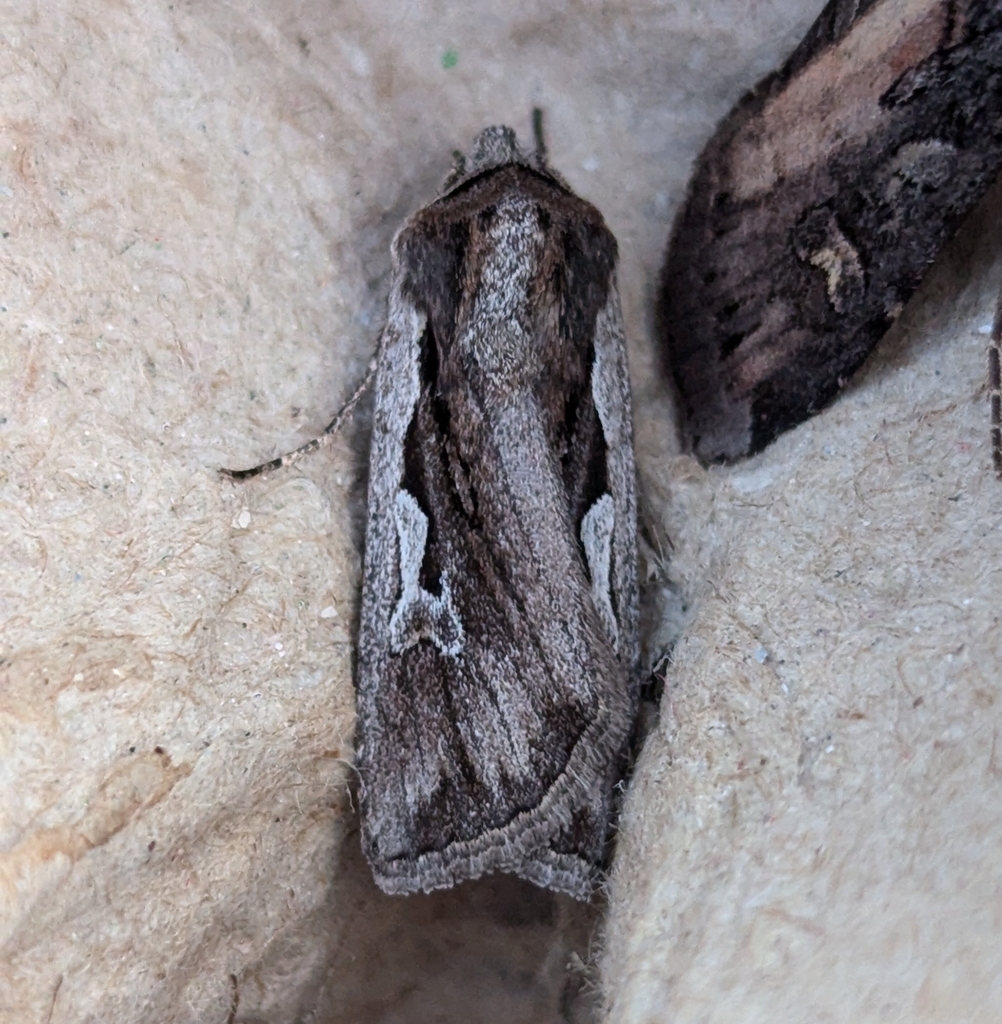
no rights reserved · CC0
Family: Noctuidae · Class: Insecta · Order: Lepidoptera
Euxoa hollemani is a California animal in the Noctuidae family.
Euxoa hollemani is a moth species in the family Noctuidae, commonly known as cutworm moths or dart moths. This species belongs to a large genus of nocturnal moths that includes over 100 species in North America. The taxonomic classification places it within the order Lepidoptera, which encompasses all butterflies and moths. As with most Euxoa species, E. hollemani likely exhibits the typical cutworm moth morphology, featuring earth-toned forewings with cryptic patterns that provide camouflage during daytime rest periods. The forewings typically display a mottled brown to gray coloration with darker transverse lines and pale-outlined reniform and orbicular spots characteristic of the Noctuidae family. The hindwings are generally paler, often whitish or light gray with darker marginal areas. Adult wingspan measurements for this species are not readily available in current literature, though most Euxoa species range from 25 to 40 millimeters across the forewings. The geographic distribution of Euxoa hollemani appears to be poorly documented in accessible databases and recent literature. The species was originally described from scientific specimens, but comprehensive range data is not currently available through major lepidopteran databases or state wildlife agencies. This lack of distributional information suggests either a restricted range, recent taxonomic changes, or limited survey efforts for this particular species. Habitat requirements for E. hollemani remain largely undocumented in current literature. Most Euxoa species inhabit open areas including grasslands, prairies, agricultural fields, and disturbed sites where their larval host plants occur. The larvae, known as cutworms, typically feed on herbaceous plants and may cut stems at ground level, giving the group its common name. Without specific host plant data for E. hollemani, it is difficult to predict precise habitat associations. The life cycle of E. hollemani likely follows the typical Euxoa pattern, with adults active during late summer or fall months. Most species in this genus are univoltine, producing one generation per year. Adults are nocturnal, attracted to artificial lights, and females deposit eggs on or near host plants. Larvae develop through several instars before pupating in soil chambers. The overwintering stage varies among Euxoa species but commonly occurs as pupae or mature larvae. The conservation status of Euxoa hollemani is not documented in federal or state databases as of December 2025. The species does not appear on the U.S. Fish and Wildlife Service's list of threatened or endangered species, nor is it included in California's Special Animals List maintained by the Department of Fish and Wildlife. This absence from conservation lists may indicate either stable populations, insufficient survey data, or taxonomic uncertainty. The lack of readily available ecological and distributional information highlights the need for additional research to assess the species' conservation needs and determine appropriate management strategies.
Classification
Class: Insecta · Order: Lepidoptera · Family: Noctuidae
Frequently asked questions
How is Euxoa hollemani classified?
Euxoa hollemani belongs to class Insecta, order Lepidoptera, family Noctuidae.
What family does Euxoa hollemani belong to?
Euxoa hollemani is in the Noctuidae family.
What is Euxoa hollemani?
Euxoa hollemani is a moth species in the family Noctuidae, commonly known as cutworm moths or dart moths.
Is Euxoa hollemani found in California?
Yes. Euxoa hollemani is recorded in California in The California Species Project's catalogue.
Related species
Other California species in the same genus, family, or bioregion.
Data from The California Species Project — 14,000+ California species with verified data from CNPS, CDFW, USFWS, and more.