Euxoa murdocki
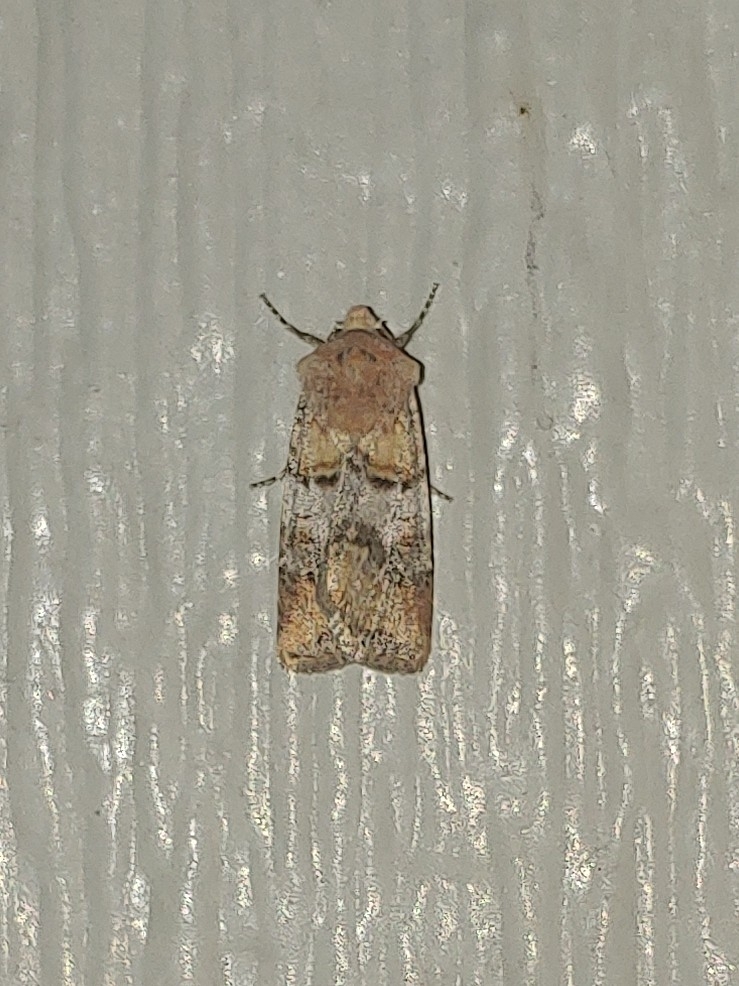
(c) Tom and T Herman, some rights reserved (CC BY) · licence
Family: Noctuidae · Class: Insecta · Order: Lepidoptera
Euxoa murdocki is a California animal in the Noctuidae family.
Euxoa murdocki is a nocturnal moth species in the family Noctuidae, belonging to the diverse genus Euxoa, commonly known as dart moths or cutworm moths. This species represents one of many Euxoa taxa found in western North America, though specific morphological details distinguishing it from closely related species require expert taxonomic examination. The physical characteristics of E. murdocki follow the general pattern of Euxoa moths, with adults typically measuring 15 to 20 mm in forewing length. Like other members of the genus, adults likely display cryptic coloration with mottled brown, gray, or tan forewings that provide camouflage against bark and soil substrates. The hindwings are typically paler, often whitish or light gray with darker marginal bands. Specific diagnostic features distinguishing E. murdocki from related species would include details of wing venation, genital structures, and forewing patterns that require microscopic examination for reliable identification. The distribution and range of E. murdocki remain poorly documented in current literature. The species appears to be associated with western North American habitats, consistent with the biogeographic patterns of many Euxoa species. However, specific locality records, elevation ranges, and habitat preferences require additional field surveys and taxonomic verification to establish with certainty. Based on the ecological patterns of related Euxoa species, E. murdocki likely inhabits arid to semi-arid environments typical of the western United States. Many dart moths in this genus are associated with grasslands, shrublands, desert margins, and open woodland areas. The species may occur across a range of elevations, potentially from valley floors to montane zones, though specific elevation limits have not been documented. The life history and behavior of E. murdocki presumably follow the general pattern of Euxoa species. Adults are nocturnal and likely active during late spring through early fall, with flight periods varying by elevation and local climate conditions. Larvae, known as cutworms, typically develop in soil and feed on roots and lower stems of herbaceous plants. The larval host plants for E. murdocki have not been specifically documented, though related species often utilize grasses, forbs, and shrubs as larval food sources. Adults likely feed on nectar from night-blooming flowers and may be attracted to artificial lights. The conservation status of E. murdocki is currently undetermined due to limited distributional and ecological data. The species lacks federal or state listing status, and its global conservation rank has not been assessed. Like many moth species, E. murdocki may face threats from habitat loss due to urban development, agricultural conversion, and altered fire regimes. Climate change may also affect the species through shifts in temperature and precipitation patterns that influence host plant availability and suitable habitat distribution. Additional research is needed to assess population trends, habitat requirements, and conservation needs for this poorly known species.
Classification
Class: Insecta · Order: Lepidoptera · Family: Noctuidae
Frequently asked questions
How is Euxoa murdocki classified?
Euxoa murdocki belongs to class Insecta, order Lepidoptera, family Noctuidae.
What family does Euxoa murdocki belong to?
Euxoa murdocki is in the Noctuidae family.
What is Euxoa murdocki?
Euxoa murdocki is a nocturnal moth species in the family Noctuidae, belonging to the diverse genus Euxoa, commonly known as dart moths or cutworm moths.
Is Euxoa murdocki found in California?
Yes. Euxoa murdocki is recorded in California in The California Species Project's catalogue.
Related species
Other California species in the same genus, family, or bioregion.
Data from The California Species Project — 14,000+ California species with verified data from CNPS, CDFW, USFWS, and more.