Euxoa nostra
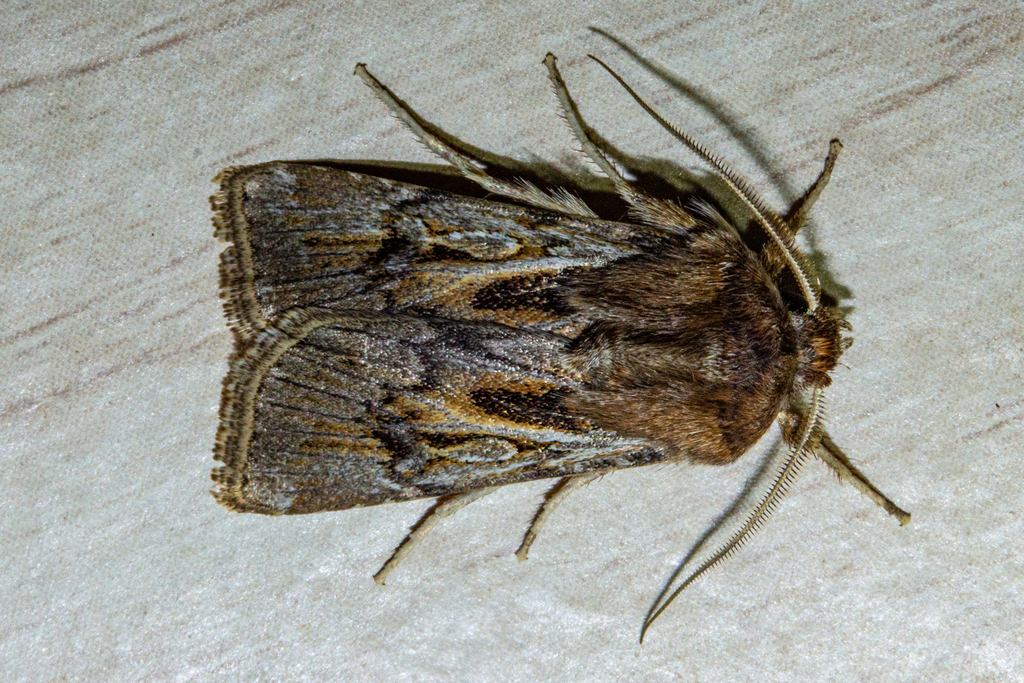
no rights reserved · CC0
Family: Noctuidae · Class: Insecta · Order: Lepidoptera
Euxoa nostra is a California animal in the Noctuidae family.
Euxoa nostra is a moth species in the family Noctuidae, subfamily Noctuinae. This cutworm moth belongs to a genus known for its cryptic coloration and nocturnal habits. Adult moths typically display the characteristic wing patterns common to the genus Euxoa, with forewings that range from pale brown to dark gray with distinctive markings including orbicular and reniform spots. The hindwings are generally lighter in color, often pale gray to whitish. Wing span measurements for this species have not been well documented in available literature, though related Euxoa species typically range from 25 to 40 mm across the forewings. The distribution and range of Euxoa nostra remain poorly documented in current taxonomic and lepidopteran databases. The species appears to have a limited distribution, though specific locality records and range boundaries have not been comprehensively catalogued in major North American moth databases including the Moth Photographers Group or Butterflies and Moths of North America project. This lack of detailed distribution data suggests either a highly restricted range or insufficient survey effort for this particular species. Habitat preferences for Euxoa nostra have not been well characterized in the available literature. Other species in the genus Euxoa typically inhabit open areas including grasslands, prairies, agricultural fields, and disturbed sites. Many Euxoa species show preferences for areas with sandy or well-drained soils where larval development can occur. The moths are generally associated with herbaceous plant communities rather than forested environments. The life cycle of Euxoa nostra follows the typical pattern for noctuoid moths. Adults are presumed to be active during nighttime hours when they engage in mating behaviors and nectar feeding at flowers. Like other cutworm moths, larvae likely develop in soil or leaf litter, feeding on roots and lower stems of herbaceous plants. The specific host plant relationships for this species have not been documented, though related Euxoa species utilize a variety of grasses and forbs. Seasonal flight periods and voltinism patterns remain unknown for this species. The conservation status of Euxoa nostra has not been formally assessed by state, federal, or international conservation organizations. The species does not appear on current listings from the U.S. Fish and Wildlife Service, California Department of Fish and Wildlife, or the International Union for Conservation of Nature as of December 2025. This absence from conservation databases may reflect either stable population status or insufficient taxonomic and ecological research to warrant assessment. The limited available information about distribution, abundance, and ecological requirements represents a significant knowledge gap that hampers effective conservation planning for this species. Further research is needed to establish basic biological and ecological parameters for Euxoa nostra, including detailed distribution mapping, habitat requirements, host plant associations, and population status assessment. Such information would be essential for determining whether conservation measures are necessary for this poorly known moth species.
Classification
Class: Insecta · Order: Lepidoptera · Family: Noctuidae
Frequently asked questions
How is Euxoa nostra classified?
Euxoa nostra belongs to class Insecta, order Lepidoptera, family Noctuidae.
What family does Euxoa nostra belong to?
Euxoa nostra is in the Noctuidae family.
What is Euxoa nostra?
Euxoa nostra is a moth species in the family Noctuidae, subfamily Noctuinae.
Is Euxoa nostra found in California?
Yes. Euxoa nostra is recorded in California in The California Species Project's catalogue.
Related species
Other California species in the same genus, family, or bioregion.
Data from The California Species Project — 14,000+ California species with verified data from CNPS, CDFW, USFWS, and more.