Euxoa obeliscoides
Obelisk Dart Moth
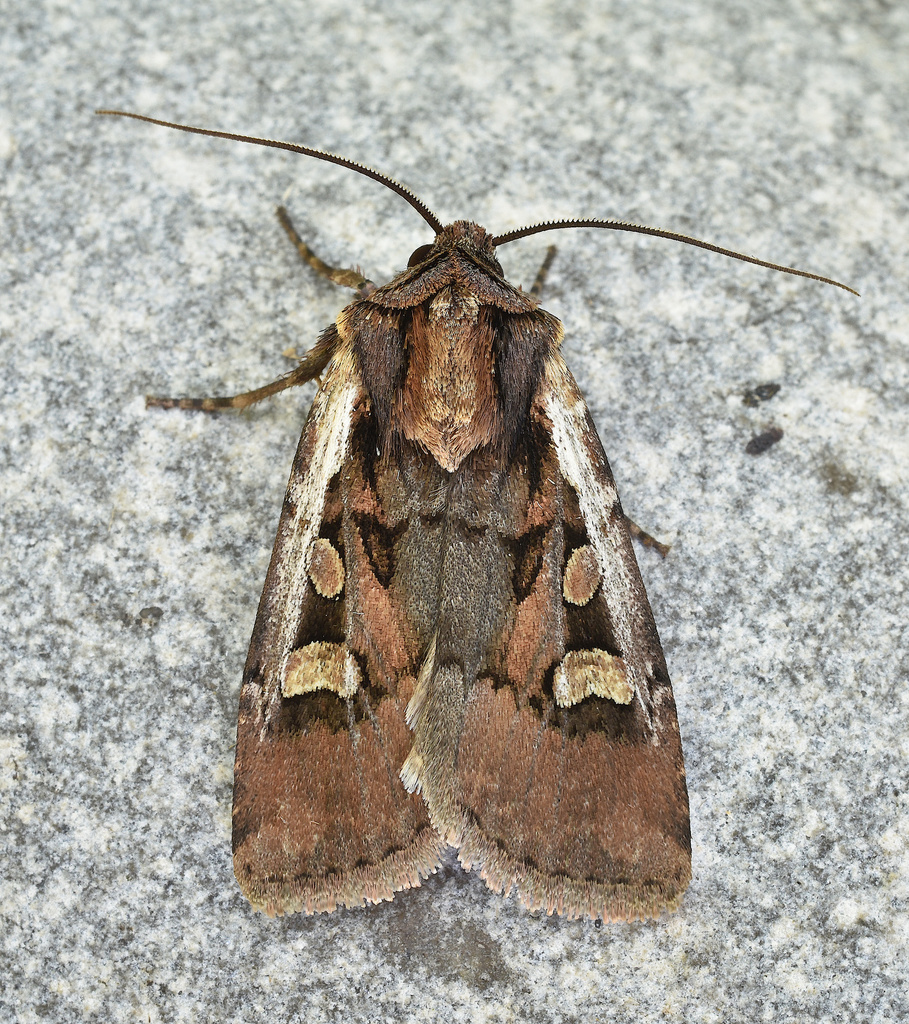
(c) brendanboyd, some rights reserved (CC BY) · licence
Family: Noctuidae · Class: Insecta · Order: Lepidoptera
Euxoa obeliscoides (Obelisk Dart Moth) is a California animal in the Noctuidae family.
The Obelisk Dart Moth (Euxoa obeliscoides) is a species of cutworm or dart moth in the family Noctuidae. Also known as the square-spot dart, this nocturnal species belongs to a large genus of moths commonly called dart moths due to their streamlined appearance and rapid flight patterns. Adult Obelisk Dart Moths display the typical dart moth body plan with forewings that are generally brown to gray in coloration. The species name "obeliscoides" likely refers to distinctive wing markings, though specific morphological details for identification have not been well documented in available literature. Like other Euxoa species, adults have a robust thorax and relatively narrow forewings adapted for swift nocturnal flight. The species has an extensive North American range, distributed from British Columbia to Quebec and Maine, extending south in eastern regions to New England and Illinois, and in western areas to California, Arizona, New Mexico, and Texas. This broad continental distribution suggests adaptability to diverse climatic conditions across multiple biogeographic regions. In the Pacific Northwest, populations occur in native grasslands, oak savanna, and oak woodlands west of the Cascades (PNW Moths Database). Habitat preferences include grassland ecosystems and oak-associated plant communities. The species appears moderately common in suitable native grassland habitats and oak savanna or woodland environments. Its presence in these specific vegetation types suggests requirements for particular plant communities or soil conditions associated with these ecosystems. As with most cutworm moths, larvae likely feed on herbaceous plants and grasses, though specific host plants remain unknown according to current documentation. Adult flight periods and larval biology have not been thoroughly documented in available sources. The larvae, typical of the Euxoa genus, presumably develop as subterranean cutworms, feeding on plant roots and lower stems during nocturnal activity periods. Adults are attracted to artificial lights during their active season. Conservation status indicates the species is relatively secure across its range. Idaho Fish and Game assigns it a state conservation rank of S4 (apparently secure) and global conservation rank of G5 (secure), suggesting stable populations without immediate conservation concerns (Idaho Fish and Game). The species has no federal or state listing status and is not considered threatened or endangered. One source notes the species may be less common during wet years, suggesting population fluctuations may correlate with precipitation patterns, though this relationship requires further study. The Obelisk Dart Moth appears to maintain stable populations across its extensive range, with no known economic importance or significant conservation concerns. However, like many grassland-associated species, it may face habitat pressures from agricultural conversion and urban development in portions of its range. Scientific documentation for specific aspects of this species' biology, including detailed morphological descriptions, host plant relationships, and life cycle timing, remains limited.
Classification
Class: Insecta · Order: Lepidoptera · Family: Noctuidae
Frequently asked questions
How is Euxoa obeliscoides classified?
Euxoa obeliscoides belongs to class Insecta, order Lepidoptera, family Noctuidae.
What family does Euxoa obeliscoides belong to?
Euxoa obeliscoides is in the Noctuidae family.
What is Euxoa obeliscoides?
The Obelisk Dart Moth (Euxoa obeliscoides) is a species of cutworm or dart moth in the family Noctuidae.
Is Euxoa obeliscoides found in California?
Yes. Euxoa obeliscoides is recorded in California in The California Species Project's catalogue.
Related species
Other California species in the same genus, family, or bioregion.
Data from The California Species Project — 14,000+ California species with verified data from CNPS, CDFW, USFWS, and more.